THE DIXONS — the Reverend James Dixon and Caroline Dixon — run Greater Deliverance Baptist Church, right in the heart of Bankhead. For Caroline Dixon, the problem of litter and trash in the area seems to never end.
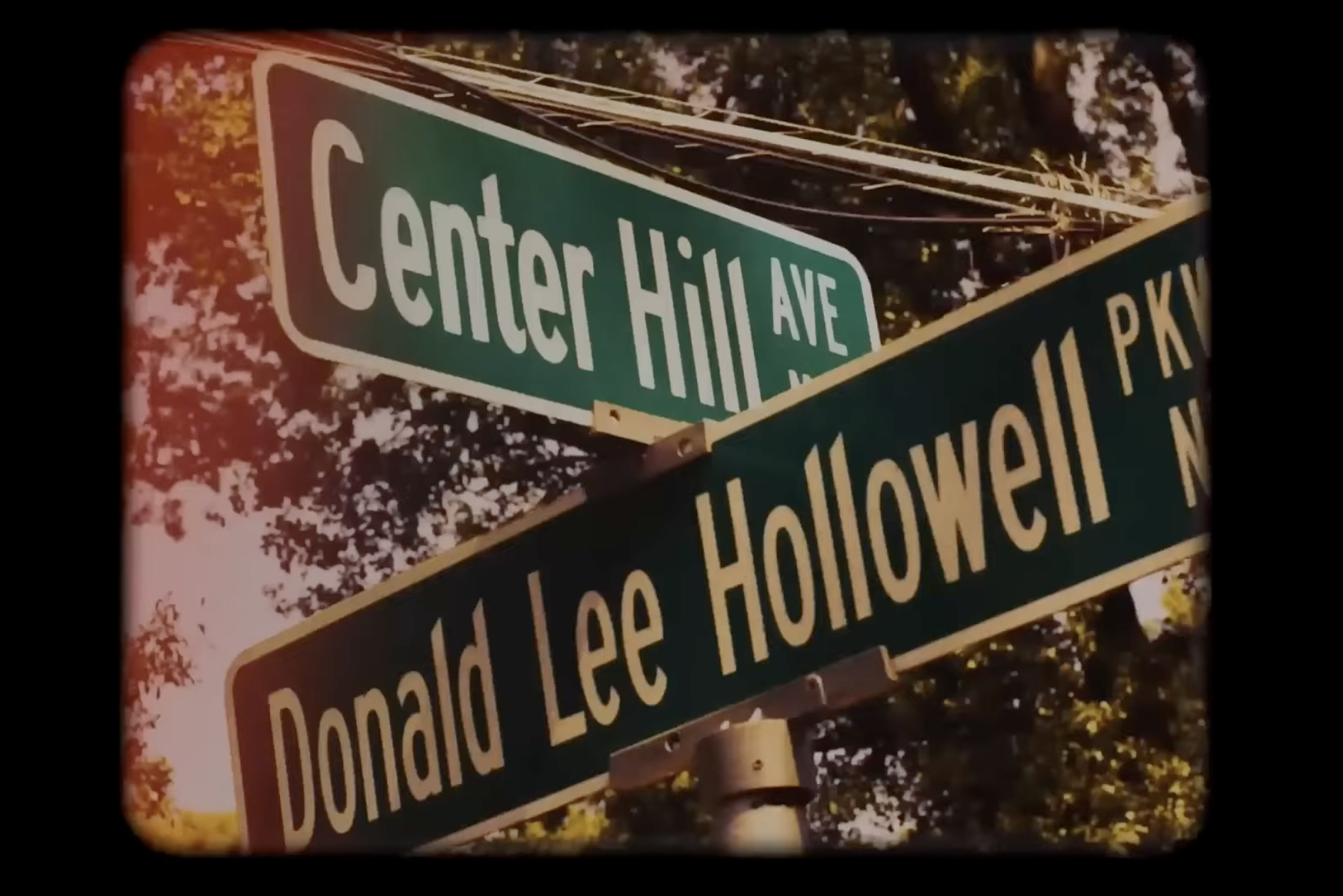
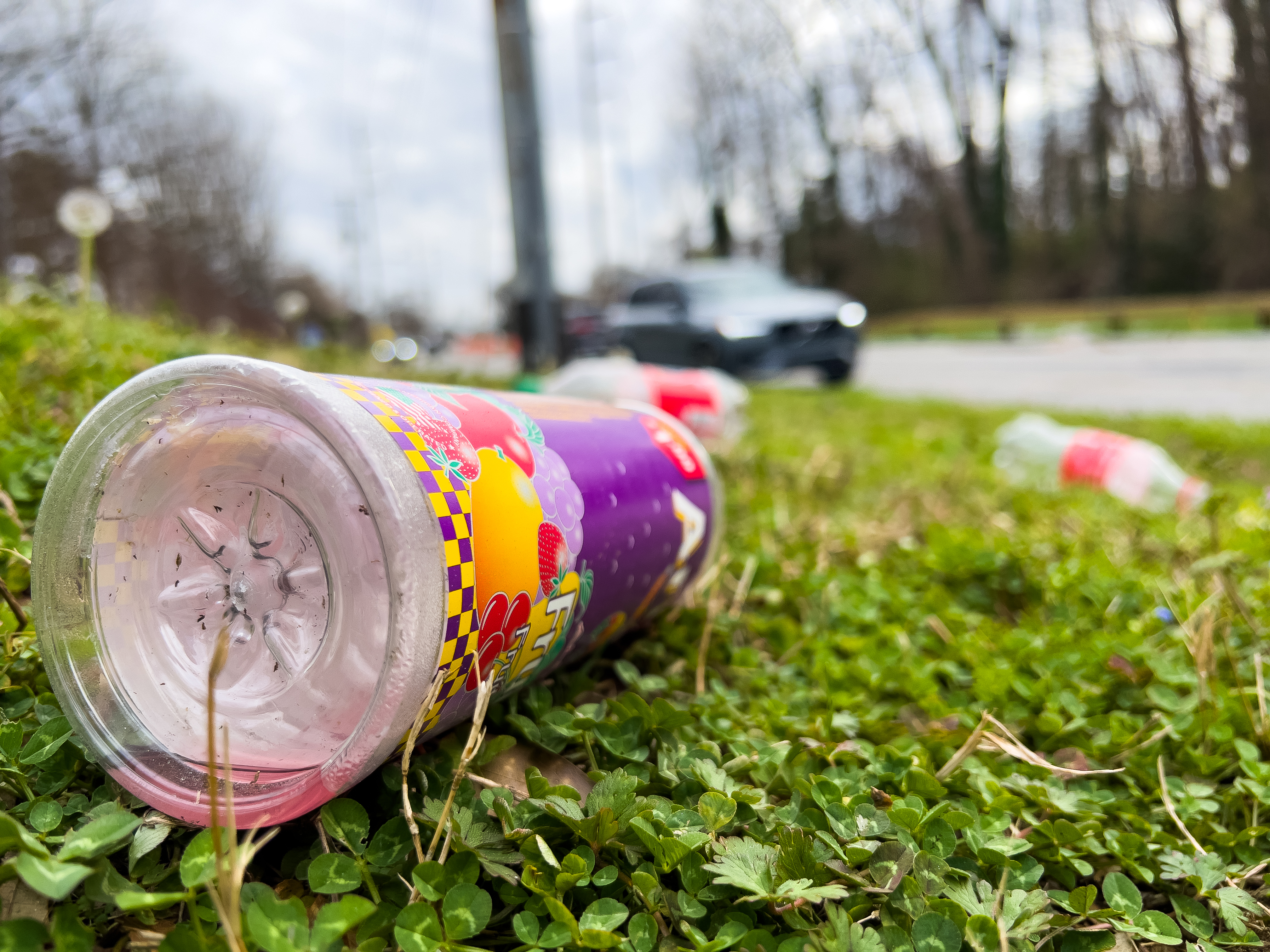
To start, she says restaurants right down the block like K&K Soul Food generate trash from patrons tossing takeout containers and cups. Then there’s the foot and street traffic running down Donald Lee Hollowell Parkway. She says trash even ends up on the doorstep of the church.
And that doesn’t even include the problem on Lindsay Street, just behind the church.
“We’ve had old sofas and chairs dumped on Lindsay Street, and it just seems that area is forgotten,” says Dixon. “Even if the community did clean up, it’s like pulling teeth to get the City to come out there and discard it.”
Dixon feels like the area is drowning in trash, no matter how much she and other concerned members of the community continue to clean up. She’s reached a point of desperation in trying to get the City to provide assistance.
“The taxpayers are paying you all to do what you’re supposed to do. But you can call them and they won’t come out no more than when it’s time for elections,” she says. “They will flood you when it’s time for elections, and then, now when you want them to deliver, they’re nowhere to be found—you can’t even get them on the phone, you can’t get them on the email, you can’t do anything.”
Tim Cook, chair of the Beautification and Sustainability Committee for the Grove Park Neighborhood Association and a resident of Grove Park, has organized numerous community cleanups.
When it comes to the cyclical nature of this problem, he says what he feels most is sadness.
“It’s hard to believe that there are people in 2022 that still believe that is an okay way to dispose of your trash—to just throw it out,” says Cook.
And while the community is fighting for solutions, this isn’t just a problem that stays hyper-local, according to Dr. Carrie Freeman, an associate professor of communications at Georgia State University, whose published work and research include studies on communicating environmental issues.
The plastics that build up on streets and clog storm drains often make their way into local creeks and streams—even into oceans. That’s how photos of wildlife, like fish or birds, tangled up and endangered by plastic, come to life.
“When it’s in our face, in our neighborhoods, it’s a local problem; it’s ugly, and it’s depressing. But even more depressing is the thought of it ending up killing [wildlife]. And so this is a global problem too,” says Freeman.
“When it’s in our face, in our neighborhoods, it’s a local problem; it’s ugly, and it’s depressing. But even more depressing is the thought of it ending up killing [wildlife]. And so this is a global problem too.”
— Carrie Freeman, associate professor at Georgia State University

Measuring the problem
“EVERYONE, FIRST OF ALL, deserves to live in a safe, clean, and beautiful community—regardless of your geographic or socioeconomic status. And if the presence of litter is there, it tends to attract more litter,” says Kanika Greenlee, executive director of the Keep Atlanta Beautiful Commission (KABC).
The KABC, the local affiliate of the Keep America Beautiful network, publishes an annual Litter Index to assess and document citywide litter conditions.
According to the city’s latest data from 2021—measured on a scale from one to four—areas like Donald Lee Hollowell Parkway, which runs through Bankhead and Grove Park, received scores of mostly twos, indicating “slightly littered.” At the highest, there were a few scores of three, which the KABC considers “littered.”
Residents say the city data doesn’t tell the whole story.
Dixon says one of the biggest contributors to trash that she sees is from local restaurants and takeout. Cook agrees, and says not all of the trash comes from residents. Some, he says, is thrown from people’s cars as they drive through.
Another place that litter collects is around encampments of people experiencing housing insecurity, according to community members. But for Cook, addressing this issue isn’t even about the litter problem—-it’s about helping the unhoused people and addressing that systemic issue more directly, which would in turn also help with the lower-priority litter problem.
“I think that the people who are homeless are trying to survive. It’s not a priority for them to recycle,” he says.
“We’ve had old sofas and chairs dumped on Lindsay Street and it just seems that area is forgotten. Even if the community did clean up, it’s like pulling teeth to get the city to come out there and discard it.”
— Caroline Dixon, from Greater Deliverance Baptist Church in Bankhead

The trash can dilemma
THE CITY OF ATLANTA currently services 2,000 trash cans. Two of those receptacles are in Bankhead and seven are in Grove Park, most of them placed in areas lighter on foot traffic, like the main thoroughfare, Donald Lee Hollowell Parkway.
Cook thinks that, though it isn’t the only answer, adding more trash cans to the area could be part of the solution.
“But Parks and Public Works don’t actually want to put them in. If you want them you have to buy them yourself. I mean we could spend our entire annual operating budget to put in five trash cans along [Donald Lee] Hollowell,” he says.
Community requests for more trash cans must be made through the KABC. But here’s one problem: According to Greenlee, the City has no budget for trash cans.
“We work with whoever is requesting the trash can to help them access grant funding to get trash cans—or they may be able to use their own budget for their project,” says Greenlee. “Sometimes they work with their city council representative to help them purchase the trash cans.”
Greenlee adds that trash cans aren’t cheap, and range from $400 to $1,200. This means residents in areas with less disposable income and resources may struggle to get the sanitation resources they need.
Under the current model, trash cans are typically purchased by individuals, groups, neighborhood organizations, or Neighborhood Planning Units. From there, the Department of Public Works provides the final approval and services the trash cans.
However, Greenlee insists trash cans aren’t a silver bullet, as not all litter comes from pedestrians.
“It’s hard to believe that there are people in 2022 that still believe that is an okay way to dispose of your trash — to just throw it out.”
— Tim Cook, chair of the Beautification and Sustainability committee for the Grove Park Neighborhood Association
The city leadership’s response
THE MAJORITY OF BANKHEAD and a large portion of Grove Park fall within City Council District 3, under Councilman Byron Amos. The remaining areas fall within District 9, under Dustin Hillis.
Amos says that, in regard to the allocation of City sanitation services, there is a “perception of inequality.”
“If you’re just riding and you see one or two trash cans, and then you go to Buckhead and see five or six, then, of course, you’re thinking that there’s more resources going into those areas,” says Amos.
At the center of the disconnect is how the trash cans are distributed, which, according to Amos, is through partnerships with local businesses and residents. Because receptacles come at the expense of the community, some will inherently have more than others.
The “heavy lifting,” Amos says, is the responsibility of the City, but the councilman added that no one from the Bankhead or Grove Park area has come to him directly about the trash issue.
Hillis says if residents in the community wants an area studied for additional trash cans, they can call or email his office.
“At the end of the day, if the citizens feel as if their needs are not being met and they’re not getting the proper resources, then it is up to the City of Atlanta and the leadership to address those issues,” Amos says.
But the city has its own challenges.
“One of the biggest issues is the vacancies we currently have in the Department of Public Works, which is tasked with litter collection and cutting our city’s right-of-ways. We are continually looking to fill those vacancies so DPW can do those activities more frequently,” Hillis says. “In the meantime, I have partnered with an organization called Georgia Works, a jobs program that does litter and scrap tire collection.”
He says they are currently in the process of organizing a fifth cleanup under the Georgia Works program. The four previous cleanups resulted in 336 bags of trash collected, 1300 scrap tires removed, 75 total streets cleaned, and 12 illegal dumping areas remediated.
New urban renewal perpetuates old patterns of displacement, leaving Black residents in Grove Park and Bankhead looking for real solutions.
So, who is responsible?
THE QUESTION OF responsibility is twofold: It comes down to communities working together and their elected officials providing support.
“I don’t think there is enough communication about what’s really going on and how people can get involved to help to keep the surrounding areas nice,” Dixon says.
Cook is on the same page. He also says money isn’t necessarily the core problem. What would really help is having more volunteers and more efforts to generate public awareness around the issue.
“It is something that affects all of our quality of lives on a daily basis that, in theory, shouldn’t be hard to change,” he says.
Greenlee also sees the importance of communities and governments working together to solve the problem.
“It’s a three-pronged approach: citizens, businesses and governments,” she says. “We all have a hand in playing a solution to keeping our city and areas clean.”
“It’s a three-pronged approach: citizens, businesses and governments. We all have a hand in playing a solution to keeping our city and areas clean.”
— Kanika Greenlee, executive director of the Keep Atlanta Beautiful Commission

Solutions to get started
AS FOR THE Grove Park Neighborhood Association (GPNA), the beautification committee has been conducting street cleanups for about the past four years, albeit with varying frequency, according to Cook. This year he’s prioritizing less frequent but larger cleanups, holding them quarterly.
The organization also participates in Sweep the Hooch events, annual trash cleanups along the Chattahoochee River’s watershed, hosted by the Chattahoochee Riverkeeper, an environmental advocacy group. Their latest cleanup included 1,300 volunteers, who collected over 27 tons of trash across the Chattahoochee.
Volunteers can always reach out to the GPNA to get involved in upcoming cleanups, Cook says. Another option is to enlist the KABC’s aid in planning a volunteer neighborhood cleanup.
“We provide supplies: trash bags, litter grabbers, gloves, and now PPE, such as masks,” Greenlee says. “But for volunteers that are committed to cleaning up their area, we also have our ‘adopt a spot program.’ And those are groups, individuals, or organizations that are committed to cleaning up an area at least four times a year.”
You can adopt a stretch of roadway, a right-of-way triangle, or even a MARTA bus stop, according to Greenlee.
During his inauguration address, Mayor Andre Dickens announced plans for a citywide “cleanup blitz.” In this ongoing campaign, the Department of Public Works and City of Atlanta volunteers work to clean up specified areas every Friday and Saturday. The first event was held in early February, and 26 days have been planned in total. Of those, two have been spent cleaning the Bankhead area. No further activity is currently planned for the area.
A big part of the solution also has to do with the community getting on the same page about working toward change, according to Professor Freeman.
Change starts with community education about the proper ways to dispose of waste:holding recycling awareness events in the community, for example—something the city government could and should take the lead on.
Freeman says if more people see others cleaning up and taking responsibility, it will also become the social norm. The “tipping point” within the community must occur so that the people littering become the ones that stand out.
“I don’t want everything put on the individuals in the neighborhood to have to do themselves,” she says. “It’s personal responsibility, but we also need systemic changes.” ♦
Real change you can make
If you’re a Bankhead resident—or any resident of Atlanta looking to tackle the problem of litter and trash in your neighborhood—here’s how you can help.
- Contact your city councilperson about your concerns and ask for their involvement. For Bankhead and Grove Park residents, that’s Byron Amos at bdamos@atlantaga.gov, 404-330-6046, or Dustin Hillis at drhillis@atlantaga.gov, 404-330-6044.
- Schedule a community cleanup with the Keep Atlanta Beautiful Commission. Request supplies for your event at 404-330-6240 or KABC@atlantaga.gov.
- Volunteer to help the Grove Park Neighborhood Association with upcoming cleanups. Email them at info@groveparkatlanta.com for more information.
- Request help funding or acquiring a grant for trash cans within your community by contacting Keep Atlanta Beautiful Commission at 404-330-6240 or KABC@atlantaga.gov.
- Advocate for systemic change that impacts this issue, including the ban of single-use plastics and aid for people experiencing homelessness.
Canopy Atlanta’s community cleanup
Why: Instead of just writing and reading about it, let’s get feet on the ground and work alongside community members to clean up Bankhead and Grove Park.
When: Saturday, June 4, 2022 from 11 am–2 pm.
Where: Through Donald Lee Hollowell, from the cross section with English Avenue to the cross section with Mildred Place NW.
How: RSVP through our Eventbrite page so we can plan materials accordingly, and meet us at the cross section of Donald Lee Hollowell and English Avenue on June 4 at 11 am!