Canopy Atlanta asked over 100 Norcross community members about the journalism they needed. This story emerged from that feedback.
Canopy Atlanta also trains and pays community members, our Fellows, to learn reporting skills to better serve their community. Gellela Belachew, a reporter on this story, is a Canopy Atlanta Fellow.

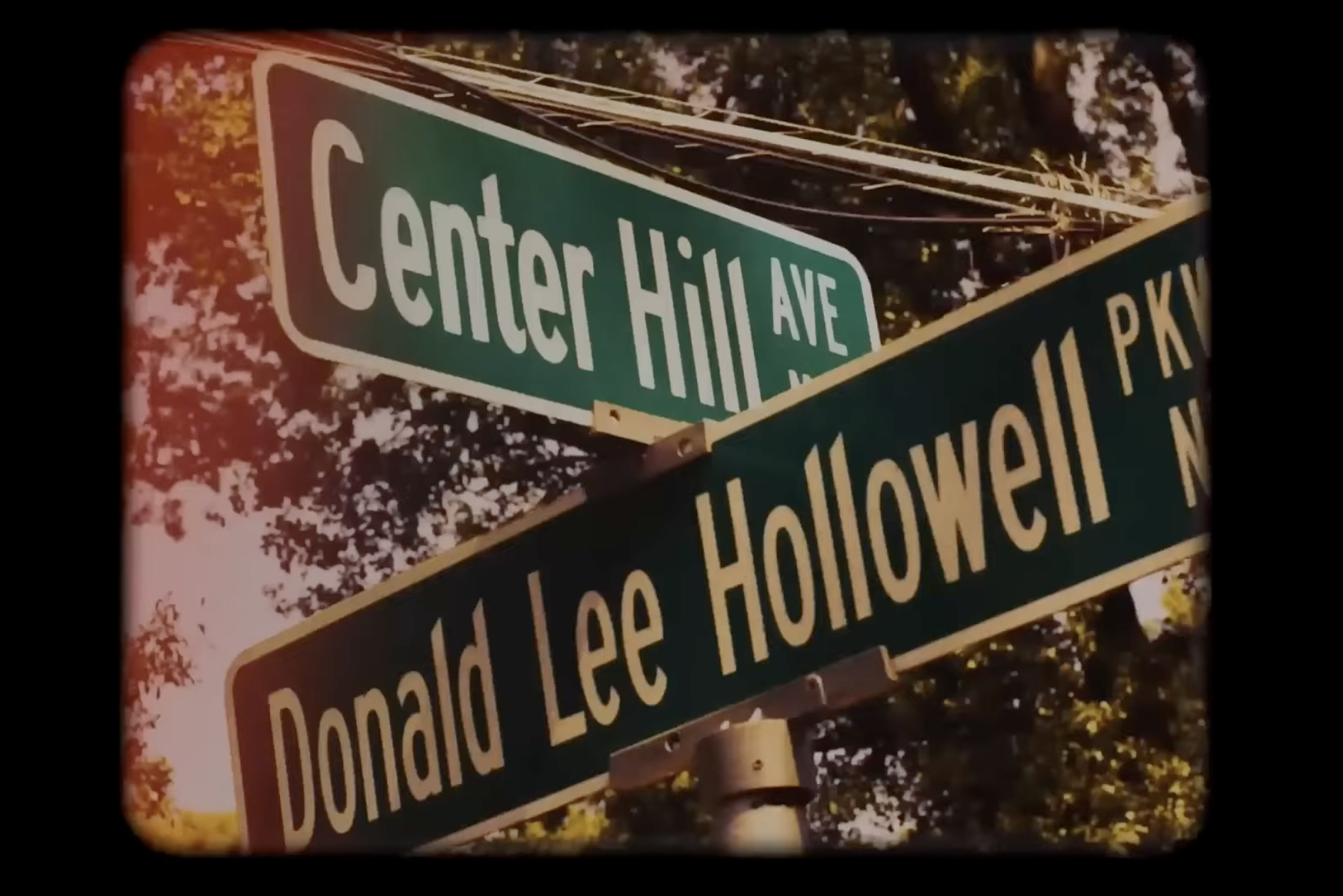
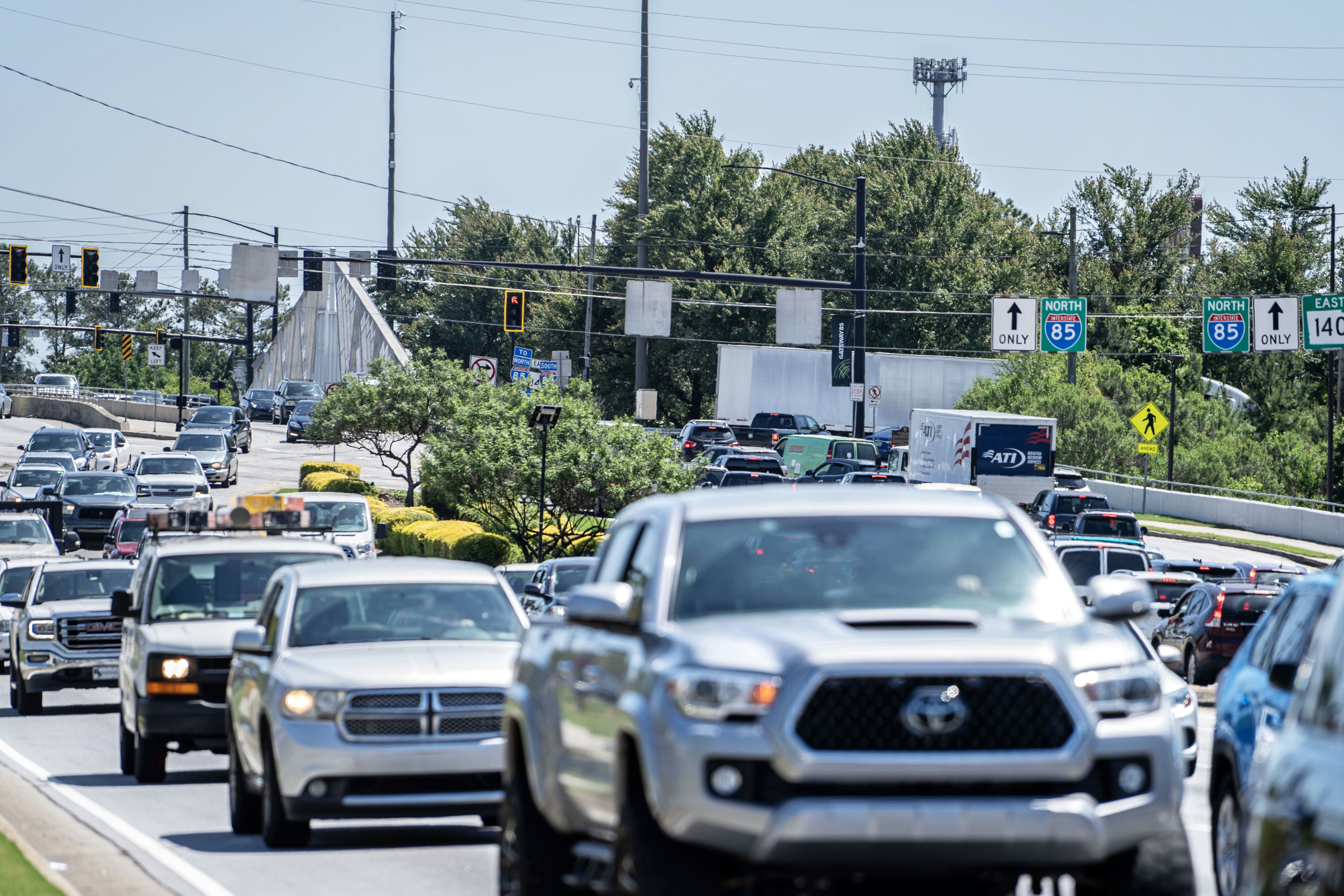
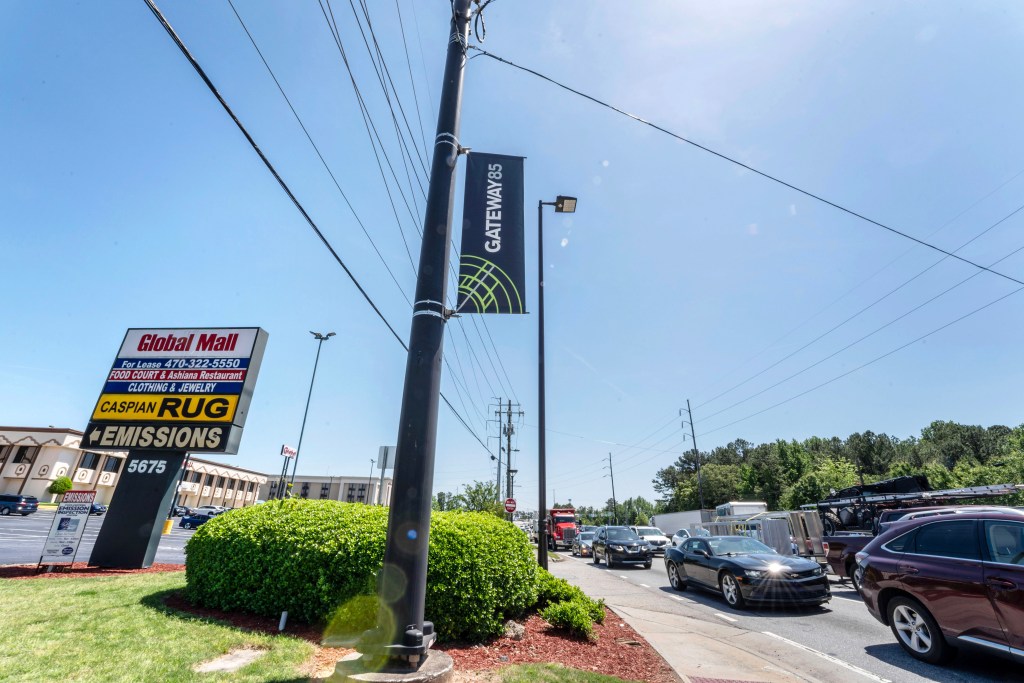
On Jimmy Carter Boulevard, which acts as the west-side border of Norcross, it can feel like rush hour never ends. Traffic is gridlocked “pretty much all the time” in front of Global Mall, owner Shiv Aggarwall said.
He thinks it must be one of the busiest intersections in the state of Georgia. And many Norcross community members agree: Infrastructure and transportation is the second biggest issue they hope to see changed, according to Canopy Atlanta’s community listening engagement sessions with over 100 people in 2023.

Experts wouldn’t call Jimmy Carter Boulevard the most congested corridor in the metro area. “But it’s certainly heavily traveled, no question about it. It probably would be one of the higher-traffic spots in metro Atlanta,” said Todd Long, Georgia Division Transportation Lead for engineering firm Atlas Technical Consultants.

There are a lot of reasons for this: an influx of new residents in recent years, the density of businesses along the corridor, and the proximity of Norcross to Interstate 285 and DeKalb County. That’s on top of the historic lack of transit across Gwinnett County, combined with fewer lane changes and updates to Interstate 85, compared to Interstate 75, over the past 15 years.
All these factors have created a perfect storm for gridlock on Jimmy Carter Boulevard—and prompted long-term plans to better manage traffic.
“Any traffic jam you’re sitting in is the worst in the world,” said Doug Turnbull, afternoon traffic reporter for WSB. But he also acknowledges: “I’ve been doing traffic in Atlanta for 20 years now, and I’ve never seen Jimmy Carter get better.”
A brief history
During the late 1970s and early ‘80s, a rapid increase in population and economic growth along Jimmy Carter Boulevard spurred new developments. The northern part of the corridor became more commercial, as residents moved out and businesses moved in. An increase in traffic congestion during this era led to the construction of the concrete median from Singleton Road to Buford Road in 1987. Although the median helped in reducing left-turn accidents, it didn’t make much of a dent in rising congestion.
Traffic was worsened by insufficient public transit options: More than two-thirds of Gwinnett voters opted against funding MARTA in 1971 and rejected a proposal to expand MARTA to the growing county in 1990. Another attempt to fund transit was voted down by Gwinnett residents in 2012.
Vacancy rates along the corridor momentarily rose in the years following the housing crash and Great Recession, Aggerwall said. But then “after 2012, traffic started building up tremendously. Occupancy improved, and the road did not improve.”
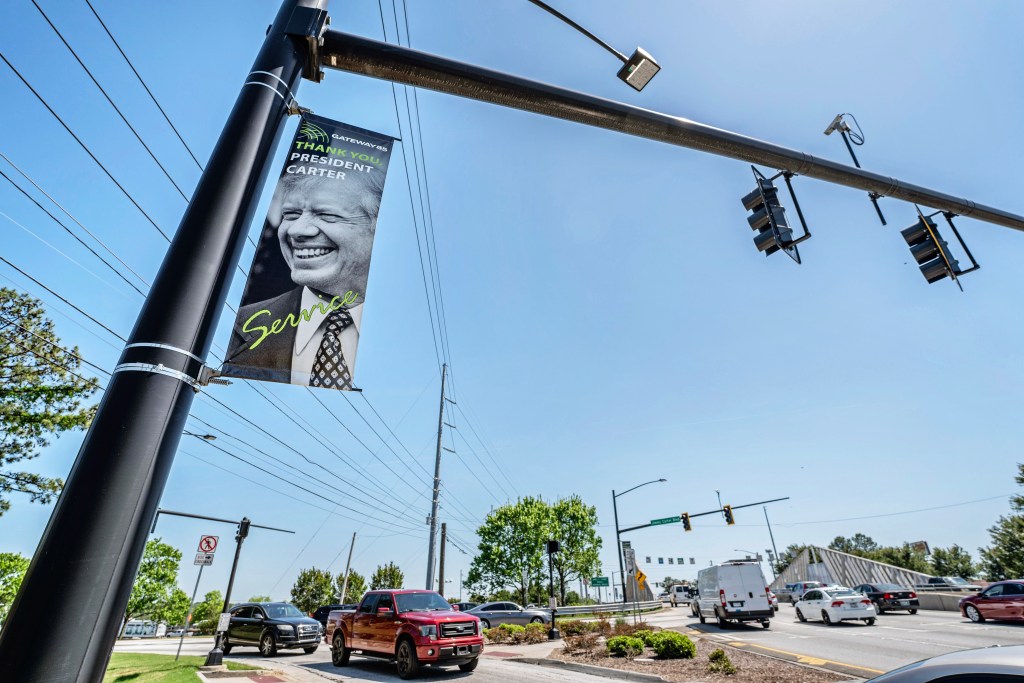
The local community improvement district (CID), Gateway85, came up with a plan to install the diverging diamond interchange at the intersection with Interstate 85. This bridge reconstruction in 2016, designed to encourage drivers to navigate the area more slowly than the 45 miles-per-hour speed limit, created the streetscape residents know and love (or love to hate) today. Because of the sheer volume of traffic, that change didn’t help very much.
In 2016, there were 1,225 crashes along Jimmy Carter Boulevard from Buford Highway down to Williams Road. That’s an increase from an average of 509 crashes annually in that stretch from 2002 to 2005, despite traffic adjustments.
“Like with any road improvement project that I’ve seen in metro Atlanta, it really doesn’t make something get better, it makes it get ‘less worse,’” Turnbull said. “There’s still a ton of volume.”
Underlying problems
As referendums for public transit in the county failed again in 2019 and 2020 (though by much smaller margins), truck traffic has only increased due to further development of industrial facilities, including warehouses and small manufacturing.
“Truck traffic is quite bad over here,” Aggarwall said. “I’m a businessman, so I consider that a positive. But at the same time, we need to come up with a plan to make sure we can provide access for all the users—trucks, and cars, and other vehicles.”
Jimmy Carter, Pleasant Hill, Lawrenceville-Suwanee Road, and Highway 20 near the Mall of Georgia are all what Turnbull calls “destination exits” along Interstate 85.
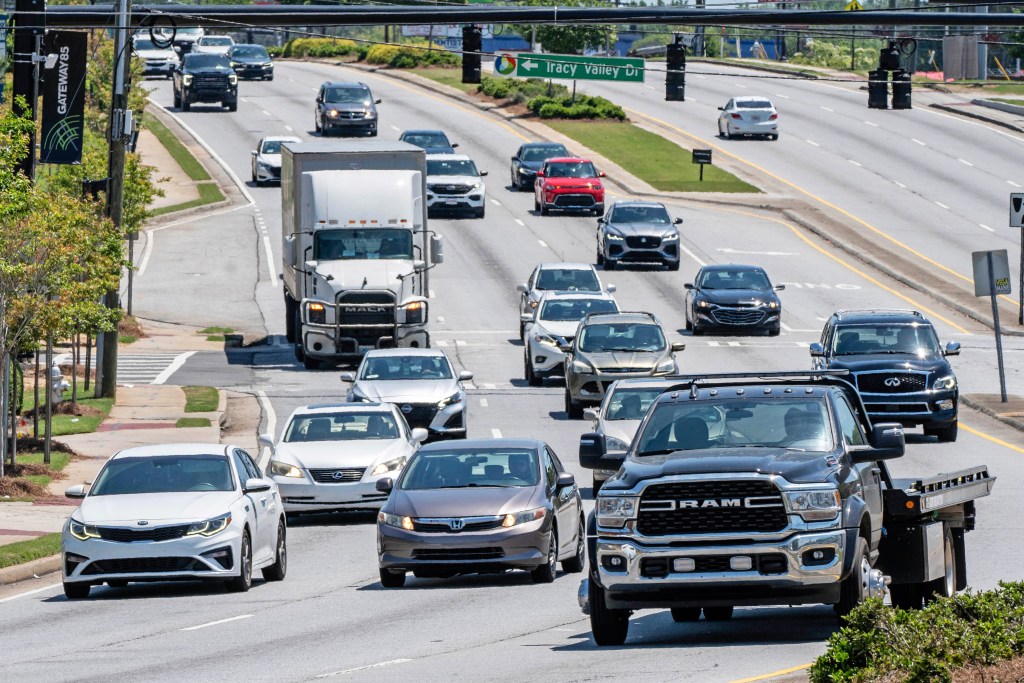

“You combine that with the number of businesses that are on Jimmy Carter, right near Buford Highway, Peachtree Industrial, and I-85, and I think you just have a recipe for big traffic,” he said. “It’s only become more and more of a destination. It’s such a hub for multiple international communities in Gwinnett County.”
Traffic has even gotten worse in Gwinnett County since the start of the Covid-19 pandemic, said Gwinnett County Commissioner Kirkland Carden. “If you look at traffic patterns, people’s travel patterns, they’re just traveling different times of the day. People are lingering around in the morning. They’re not all on the road at that one early rush hour time. And it seems to stay like that until people come home.”
“Rarely is the problem on Jimmy Carter caused by a crash, or a traffic light out, or a stall, or a chemical spill,” Turnbull said. “It’s because places are open, and people are out spending money and having a good time. It’s not bad news to sit in bad traffic. It’s just about how to help it move a little better.”
Studies and solutions
Reshaping Jimmy Carter Boulevard, as with other roadways, is a long process before construction ever begins. Long-term plans to better manage traffic are already in various stages of information-gathering, analysis, and design.
“This has been something we’ve been working on since we started the CID in 2006,” Gateway85 Executive Director Emory Morsberger said. “Ground zero is the interchange of Jimmy Carter and 85. We are working on adding lanes. We are working on better traffic light operations and have been working on this stuff for years.”
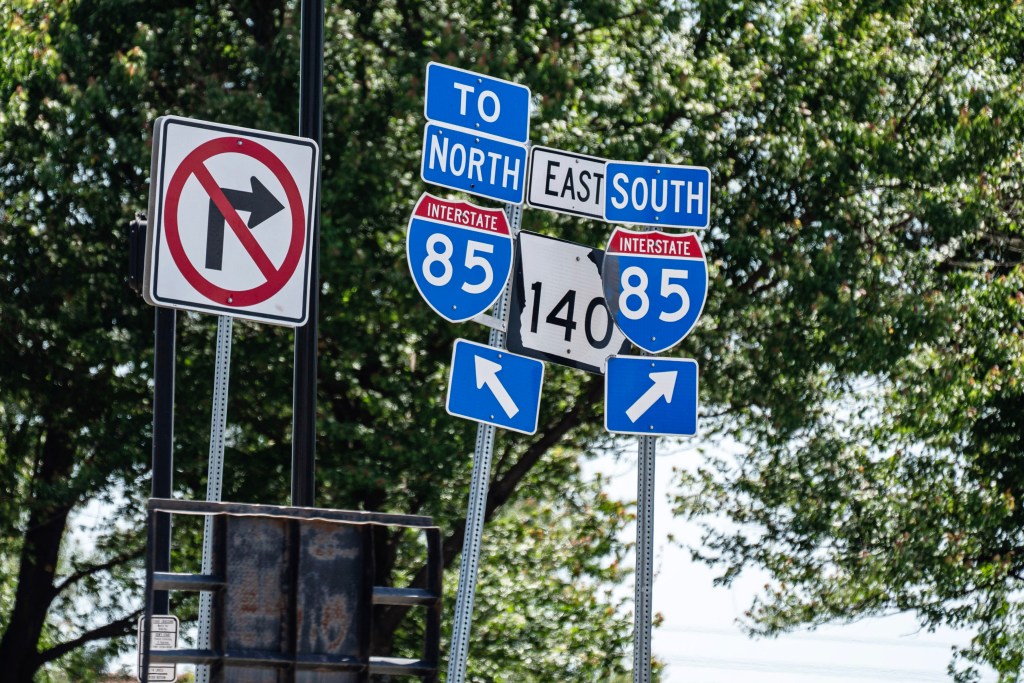
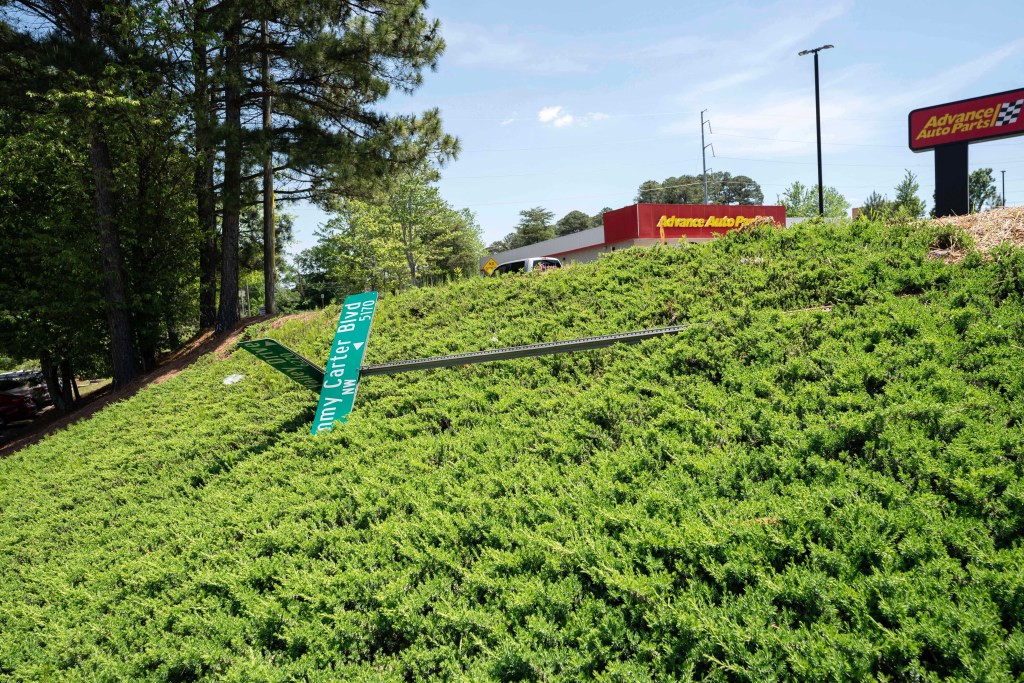
In recent weeks, Gateway85 worked with Pappadeaux Seafood Kitchen on signage improvements to make the turn-off to the restaurant and the Hampton Inn safer.
The CID is also working with the Georgia Department of Transportation and Gwinnett County to upgrade the four ramps between Interstate 85 and Jimmy Carter Boulevard to ease congestion entering and exiting the highway. Those improvements could be completed by the end of next year, Morsberger said.
In February, Long and other engineers at Atlas Technical Consultants began gathering traffic data for a Gateway85-sponsored study of the Jimmy Carter Boulevard and Interstate 85 interchange. The engineering team is also collecting information to assess truck traffic in the areas nearest to DeKalb and Doraville. The study will take four to six months before the findings are ready to share and public engagement opportunities with residents, business owners, and other stakeholders kick off, Long said.
In the long term, it will likely be necessary to replace the existing Jimmy Carter Boulevard bridge over Interstate 85 with something much larger. But those changes are nearly a decade down the road, Morsberger said.
GDOT is working on its own study, but of the Interstate 85 corridor. Once GDOT’s study produces recommendations for the entire corridor, from Buford Highway down to Rockbridge, the department can begin working on how to put them into practice.
“I think our part of metro Atlanta hasn’t gotten the same kind of TLC as 285,” Carden said. “It’s time for the state to act to see what can be done to improve traffic flow, whether it be hot lanes, dedicated trucking lanes, or dedicated [bus rapid transit (BRT)] routes.”
“Historically, under different leadership—Gwinnett’s older leadership—they focused a lot of new development on North Gwinnett. So think The Exchange, think Mall of Georgia,” Carden added. “For a long time, this area has been blighted and has not gotten the same attention for redevelopment—not development, but redevelopment—in this part of town. There’s a lot of opportunities here.”
Macro and micro changes
There’s definitely a shared vision among engineers, business owners, and residents for a more pleasant drive down Jimmy Carter Boulevard in the future, but it’s too soon to say how the road will actually look different once changes are implemented.
“It could go back to [being] more conventional but [with] more lanes. It could be that we come up with something to divert traffic to other corridors. We’re too early to tell,” Long said.
In the long term, it will likely be necessary to replace the existing Jimmy Carter Boulevard bridge over Interstate 85 with something much larger, though those changes are nearly a decade down the road, Morsberger said.
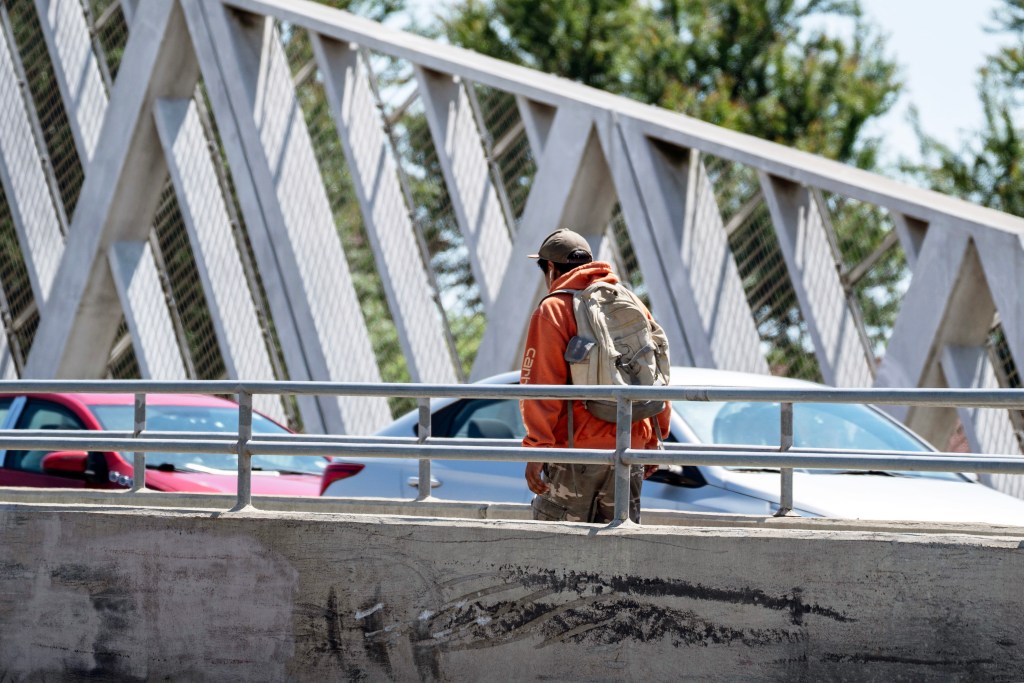
While many of the macro changes are in early stages, the Gwinnett Board of Commissioners unanimously approved a microtransit project in mid-April that will run along the Jimmy Carter Boulevard and Interstate 85 corridor—a service footprint where half of households fall below the area’s median income. (The Norcross City Council approved the initiative, which is a partnership between the county, the city, and Gateway85, in March.)
Service is expected to begin in September, with $3 ride fares for three small buses (accommodating nine passengers each) providing door-to-door transportation from 6 a.m. to 8 p.m. Monday through Saturday, except for holidays.

Gwinnett voters could have another chance to show support for public transit this November. A $17 billion proposal—which wouldn’t include MARTA services in the county, but would fund expansion of bus and microtransit routes—is expected to be on the ballot this election year.
“The key to solving any of these traffic problems is having environments that are friendly to all modes of transportation, from walking, to biking, to cars, to public transit,” Turnbull said. “Multimodal options is the general answer.”
Editor: Christina Lee
Fact Checker: Ashley Trawick
Canopy Atlanta Reader: Mariann Martin