The genesis for this story stems from a conversation conducted by Angie Uddullah, a member of of Canopy Atlanta's community engagement team, during the community listening for the Voting Barriers and Bridges Election Project. Learn more about the series and the project here.

When she finally made it to Friendship Baptist Church, she was informed that she could no longer vote there. Her polling site had changed. She had to go to Lindsey Street Baptist Church instead—more than 1.5 miles away. She walked every step and voted.
“I felt hot and [tired] from the walk,” said Lott, who endured at least a 35 minute walk in the heat between those two churches.
What happened? And why did Lott end up walking more than a mile to vote?

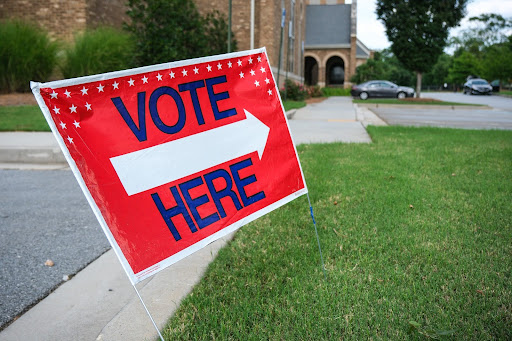
Election bylaws specify that, on voting day, Lott must vote in her registered precinct, except after 5 p.m. She could have voted at any precinct if she did so early, but, like many other residents, she had a lot on her plate.
It’s been this way since 2021, when the state legislature passed Senate Bill 202. The bill implemented various measures that restricted how citizens cast their votes. This includes the curtailing of mobile voting, except in declared emergencies, and restrictions on who can help disabled voters with mail-in ballots.
This led to a lawsuit against Georgia Governor Brian Kemp, filed by a group of voter advocacy groups. This resulted in a moratorium on the measures restricting serving food and water in poll lines, but left out-of-precinct voting the same.
Canopy Atlanta reached out to the Fulton County Department of Registration and Elections for comment about the challenges on Primary Day for Lott.
“We recognize that certain precincts, particularly those with historically low voter turnout, may present unique challenges in ensuring that all residents are notified about changes,” Regina Waller, the communications manager, said.
“By employing [targeted outreach campaigns and collaborating with community organizations and local leaders], we strive to ensure that every voter is well-informed and able to participate in the electoral process.”
The bill, however, isn’t the only obstacle to voters this year.
During the May primary, polls statewide faced a big issue with polling pads, the electronic polling system used throughout Georgia precincts. When they used the polling pad, voters in the wrong precinct would get redirected to another wrong precinct or even to the main election office, which is not an election day polling location. June primary runoffs were no different.
SB 202 says poll workers must notify voters in the wrong precinct of where to vote. With both the poll pads malfunctioning and their database down, it wasn’t possible for poll workers to follow the law.
Some counties, like Cobb, got a bottleneck of complaints to the office. When June runoffs came around, the issue still wasn’t resolved.
Jennifer Mosbacher, vice chair of the Cobb County Board of Elections and Registration, told Canopy Atlanta that this has gone on for three election cycles, and that the Secretary of State has yet to give an update on when the issue would be resolved.
An issue like this happening in November could leave a lot more voters in the dark and, especially with SB 202, “potentially disenfranchise voters,” she said.
Lott had to pass two polling locations, including Friendship Baptist Church, because they were in the wrong precinct.
Despite precinct 03T containing the Vine City MARTA Station, it’s not straightforward to travel by bus to the polls. Residents living at the other side of the district may take up to 15 minutes getting there, but even this may prove difficult for handicapped residents.
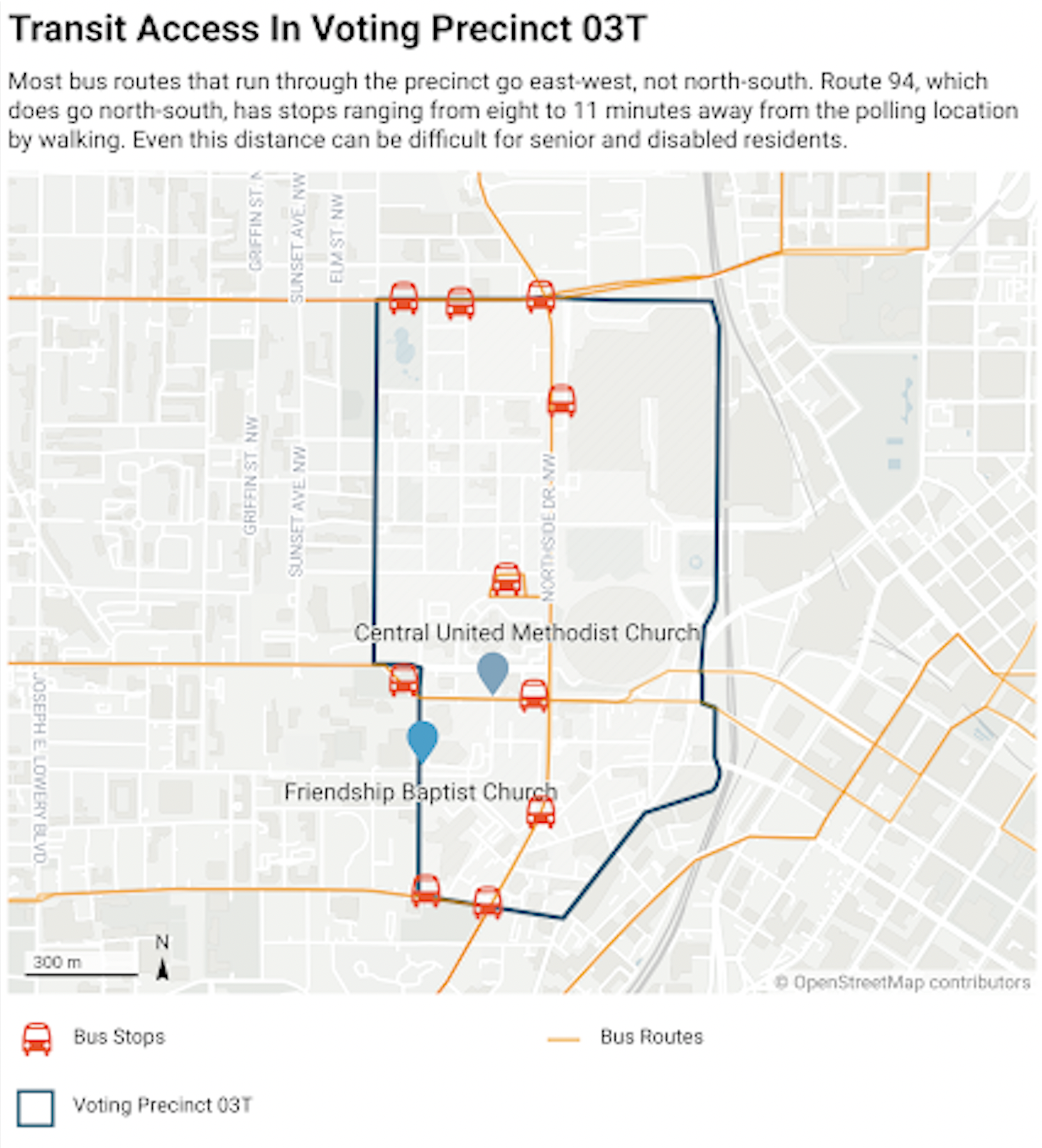
The GIS map was last updated in 2019. After cross-referencing the data with Google Maps and MARTA’s website, the author determined that the pictured bus routes have since practically stayed the same.
There are bus connections that could’ve taken Lott from Friendship Baptist Church to Lindsey Street Baptist Church, but Lott said some senior citizens can’t afford bus fare, and it can take up to thirty minutes for a bus to arrive.
“Thing is—I was in walking distance from my poll,” she explained. “I was in walking distance from my poll instead of having to wait on the bus.”
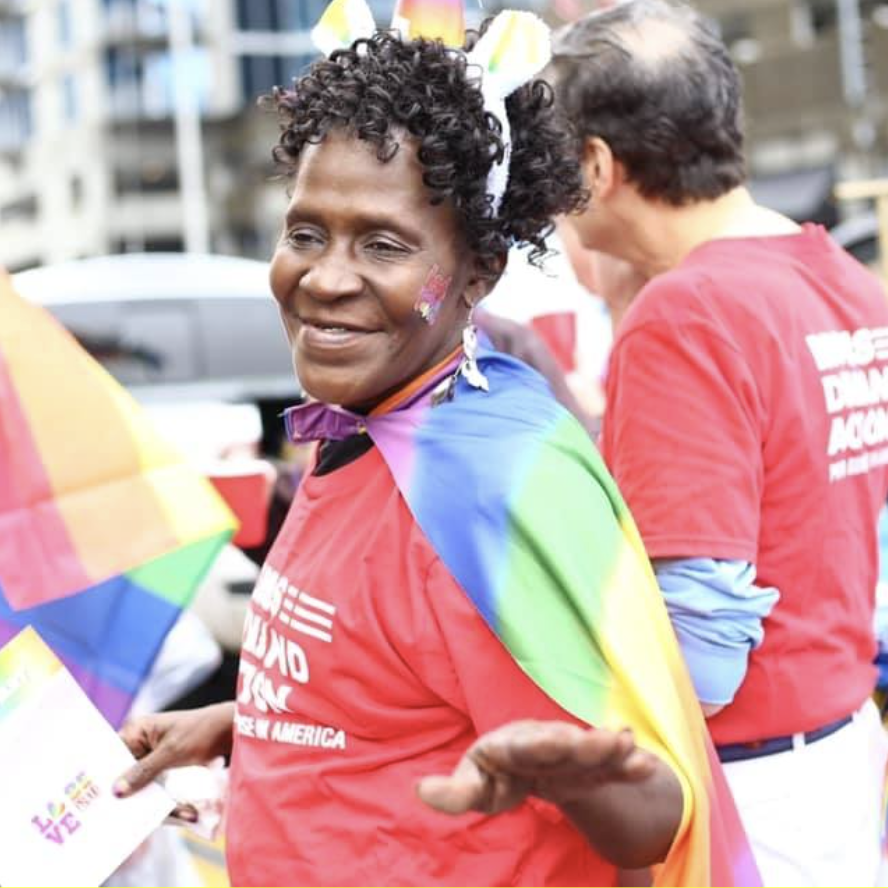
Alma Lott (pictured above) says residents have not been properly informed about poll changes. (Submitted photo)
It didn’t make sense to her to have to take the bus to a farther away polling location when there was one a few blocks from her home.
“[It] was long and hot,” Lott said. “Unfortunately, most are not able to walk. Most of our seniors couldn’t even get to the polls.”
Across the census tracts that make up 03T and 03G, more than a third of residents are over 50 years old, and nearly a fourth are over 60. More than 300 residents reported having ambulatory difficulties (i.e. trouble walking and climbing steps) according to the census. Lott talked to other voters, who said they were discouraged from placing their ballot because of the lack of access.
Mobility voting units, which could’ve brought polls closer to voters, are now heavily restricted under SB 202.
“They need to put voters back to their rightful polling place that’s in their communities,” Lott said. “Walking distance. Wheelchair distances.”
A lot of the onus is on voters ro research ahead of heading to polling sites, said LaShandra Little, Fulton County Voter Education and Outreach Manager. Voters can make a plan to vote by using the Secretary of State’s MyVoter page, which shows voters their correct precinct. On Primary Day, that site was down, according to officials.
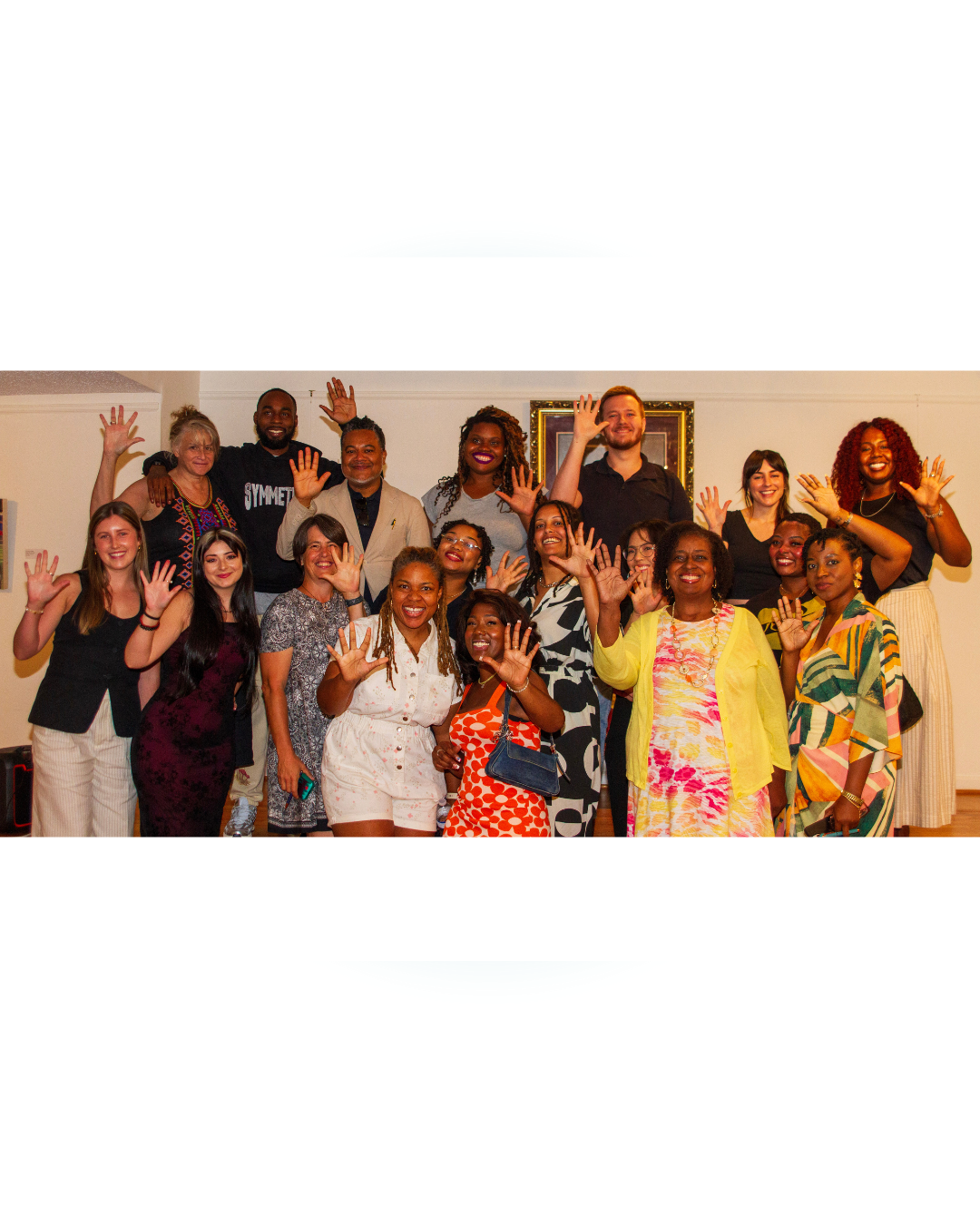
Little talked about how current laws may affect the upcoming election at Capital B Fest, a two-day summit that brought together community leaders and residents on politics, technology, business, and more.
She advised voters to stay vigilant and do their research about what goes on on Election Day.
Editor: Stephanie Toone
Contributing Writer: Angie Uddullah
Copy Editor & Fact Checker: Julianna Bragg
Canopy Atlanta Reader: Heather Buckner
I hope this story leaves you inspired by the power of community-focused journalism. Here at Canopy Atlanta, we're driven by a unique mission: to uncover and amplify the voices and stories that often go unheard in traditional newsrooms.
Our nonprofit model allows us to prioritize meaningful journalism that truly serves the needs of our community. We're dedicated to providing you with insightful, thought-provoking stories that shed light on the issues and stories that matter most to neighborhoods across Atlanta.
By supporting our newsroom, you're not just supporting journalism – you're investing in Atlanta. Small and large donations enable us to continue our vital work of uncovering stories in underrepresented communities, stories that deserve to be told and heard.
From Bankhead to South DeKalb to Norcross, I believe in the power of our journalism and the impact it can have on our city.
If you can, please consider supporting us with a small gift today. Your support is vital to continuing our mission.
Floyd Hall, co-founder