Canopy Atlanta spent summer 2024 surveying residents living in some of the lowest voting precincts in metro Atlanta. In that process, we met several voters and non-voters who were displeased with the two-party system and wanted more information about third-party candidates. This story answers some of the questions we received during Elections listening.

Some Georgians are disillusioned by the Democratic and Republican parties — leading a growing number of people to abandon them all together.
“What turned me away from the two major parties, is the fact that both parties, even though there may be some differences when it comes to the social issues, for the most part, their interests are beholden to the interests of the corporations and the billionaires in this country,” said Atlanta resident Satya Vatti.
Voters like Vatti have grown to feel unheard by the two-party system. An October 2024 Gallup poll found that 58% of U.S. adults believe a third party is needed because they say Democrats and Republicans poorly represent them. The limited choices, alienation of third-party candidates, and lack of accurate voter representation are just a few issues that voters say have tainted the democratic process.

Vatti, 31, is an Indian Immigrant who came to the United States at 13. She currently works as a nurse and an organizer for the Party for Socialism and Liberation. Less than two years ago, Vatti received her right to vote after becoming a U.S. citizen.
“When I first moved here, I did not really identify with [the] Democratic Party or the Republican Party very definitively,” said Vatti. “I think because I was not really eligible to vote, it also gave me a lot of room to actually explore my own politics.”
Third-party candidates have never garnered enough votes to secure a presidential election win. However, they have acted as spoilers, non-winning candidates whose presence on the ballot affects which candidate wins, in tightly-contested races in swing states. With Georgia including four third-party candidates on the ballot, there’s curiosity around third party’s history, current candidates and the stakes for this election.
Third-party candidates: A brief history
A third-party candidate is anyone who is not a nominee of the two major Democratic or Republican parties. As of 2021, “The Green Party, Reform Party, Libertarians, Constitution Party and Natural Law Party represent the most active third parties currently in the United States,” according to PBS. Libertarian’s —the third largest and oldest third party in the U.S.—typically focus on reduced roles of government while the Green Party centers the environment. Currently, Libertarian and Green Party candidates are on Georgia’s ballot.
Billionaire Ross Perot, who ran for president against Bill Clinton and George H.W. Bush in 1992, won almost 19% of the national vote. Perot managed to land on the ballot in all 50 states and it is debated that he took votes from both Clinton and Bush. No other third-party candidates have been this successful since.
Other third-party candidates set precedents for their respective parties, like Georgia’s own Cynthia McKinney, who ran as the Green party presidential candidate in 2008. McKinney was a Democratic member of the U.S. House of Representatives from 1993-2003 for Georgia’s 11th congressional district and again from 2005 to 2007 for Georgia’s 4th congressional district— making her the first Black woman to represent Georgia in the House.
When she left the Democratic party in 2008, her campaign focused on things like anti-war policies, environmental justice, and economic equality. Although McKinney only garnered about 0.2% of the vote, she brought mainstream attention to the Green Party.
Why voters choose third party
For a swing state like Georgia, third-party candidates have the ability to shake up the votes for the dominant two parties by a small margin. Recently, some Atlanta voters have grown to feel let down by the two-party democratic process.
Vatti, who is a co-chair for Georgia’s “Vote Socialist 2024” Claudia De La Cruz and Karina Garcia presidential campaign, attributes the rhetoric surrounding the war on terror and the media showing what was happening in Iraq and Afghanistan—and “all the war crimes that were being carried out by the U.S. government in the name of democracy”—to shifting her perspective about the two-party system. From there, she began exploring more options.
Voters dissatisfied with Democrats and Republicans say they feel that the parties are “closed-minded, dishonest, immoral, unintelligent and lazy” according to a Pew Research Center poll. Pew describes Independents as “political free agents with the potential to alleviate the nation’s rigid” party divisions. Pew also reported that less than 10% of surveyed people in the United States are free of political party affiliation or truly independent.
Although some voters are beginning to explore different options, votes for third-party candidates have remained lower than those for the two major parties. In the 2020 election, Libertarian candidates Jo Jorgensen and Spike Cohen garnered 62,229 votes as third-party candidates in Georgia. However, third-parties represented only 1.2% of the vote during Georgia’s general election.
Who’s on the 2024 ballot?
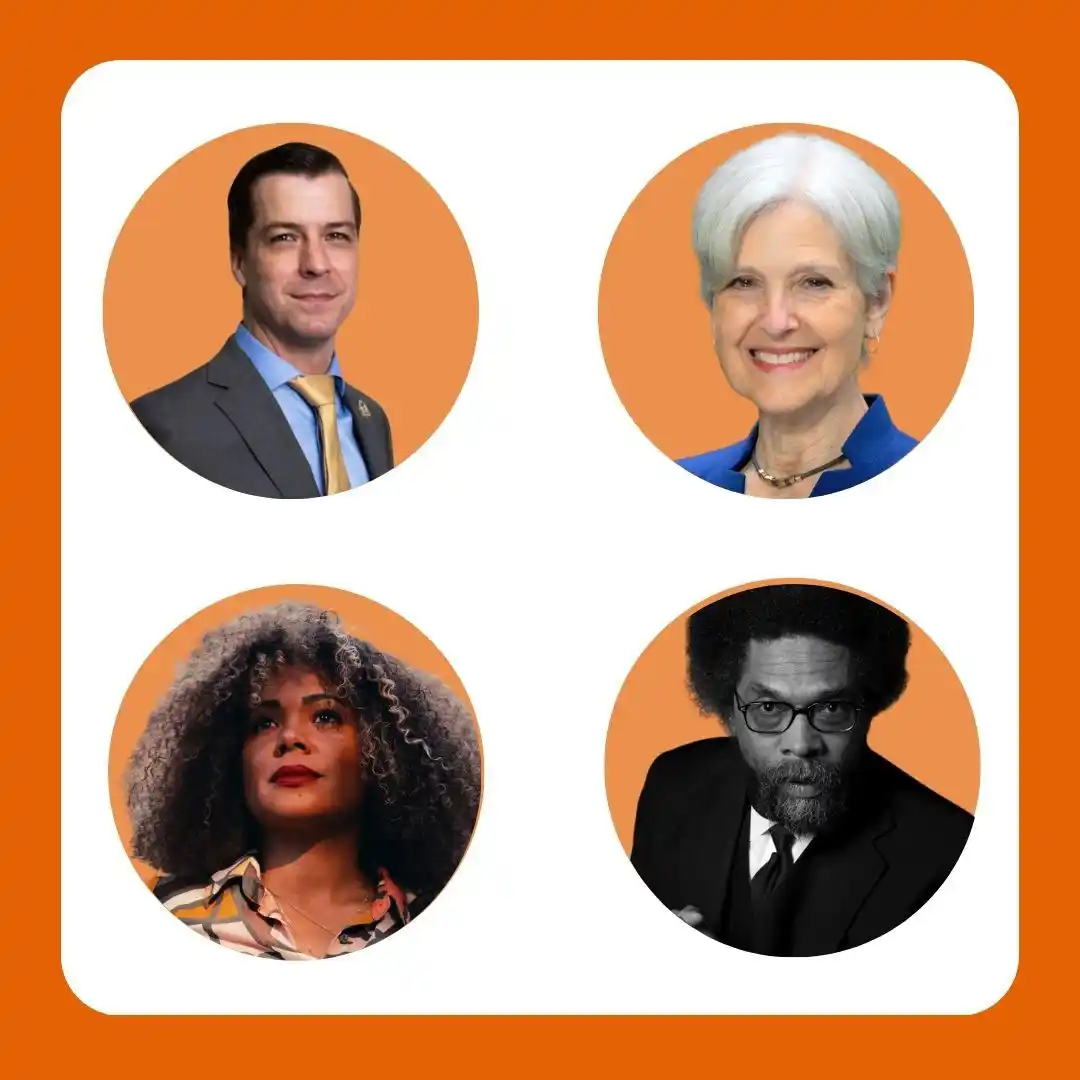
Georgia’s November ballot will feature four independent and third-party candidates. The candidates are Libertarian Chase Oliver, Socialist Party (Party for Socialism and Liberation) member Claudia De La Cruz, Green Party member Jill Stein, and Independent Cornel West.
Not all third-party candidates are represented equally, since votes towards some candidates will not count.
The Georgia Supreme Court ruled that votes for Cornel West and Claudia De La Cruz would not be counted because they failed to qualify.
The two needed 7,500 signatures to access the Georgia ballot, and only one petition per candidate was submitted. A vote for either De La Cruz or West will not go toward their totals.

Libertarian Party
Libertarian Party member Chase Oliver is running for president alongside Mike ter Maat. Oliver’s platform includes proposals to reduce the cost of living and inflation, simplify immigration policies, lower healthcare costs, abolish the Department of Education, and decriminalize abortion. Currently, 38-year-old Oliver resides in Atlanta. In 2020, he ran for Congress in Georgia’s 5th district, and then in 2022, he ran for U.S. Senate.
Green Party
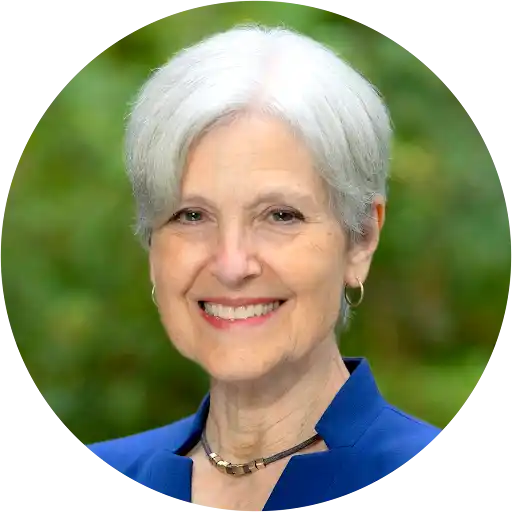
Green Party member Jill Stein is campaigning alongside her running mate Butch Ware. Stein says the two-party system has failed, and both parties are “bought and paid for.” She focuses on issues like relieving student and medical debt, creating a Green New Deal— a plan proposed to address climate change over the next decade while creating jobs in renewable energy—and ending wars and militarism.
Socialist Party
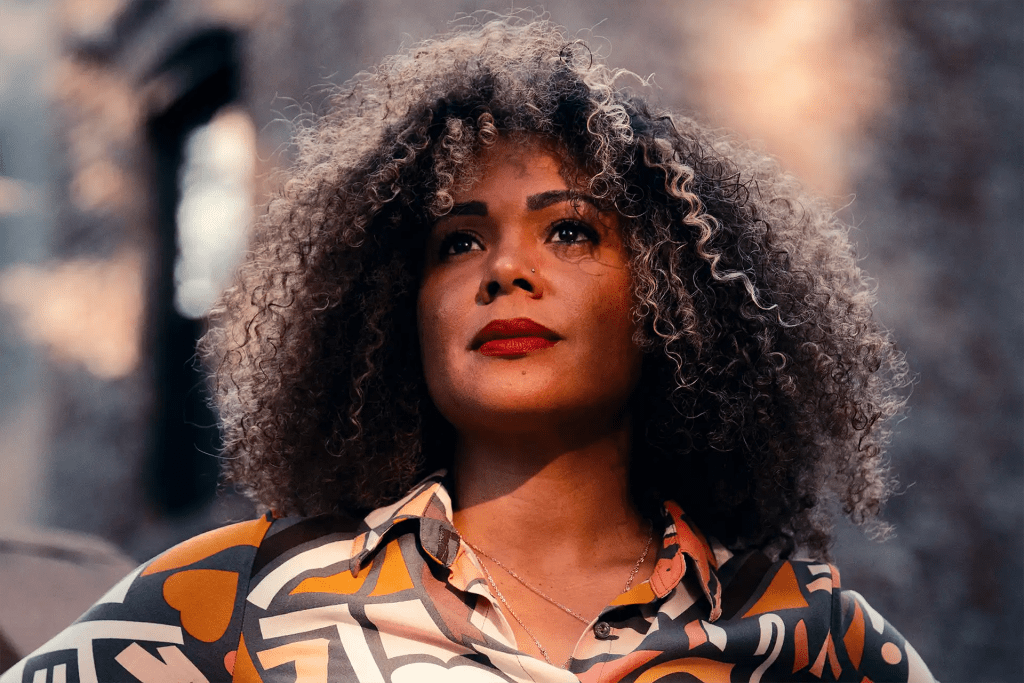
The Party for Socialism and Liberation member Claudia De la Cruz is running with Karina Garcia. De la Cruz is a Dominican community organizer and educator who advocates for giving power back to the people. Her platform stands on saving the planet from capitalism, creating a new economy and democracy to serve the working class, ending all U.S. aid to Israel, and defending women’s rights.
Independent
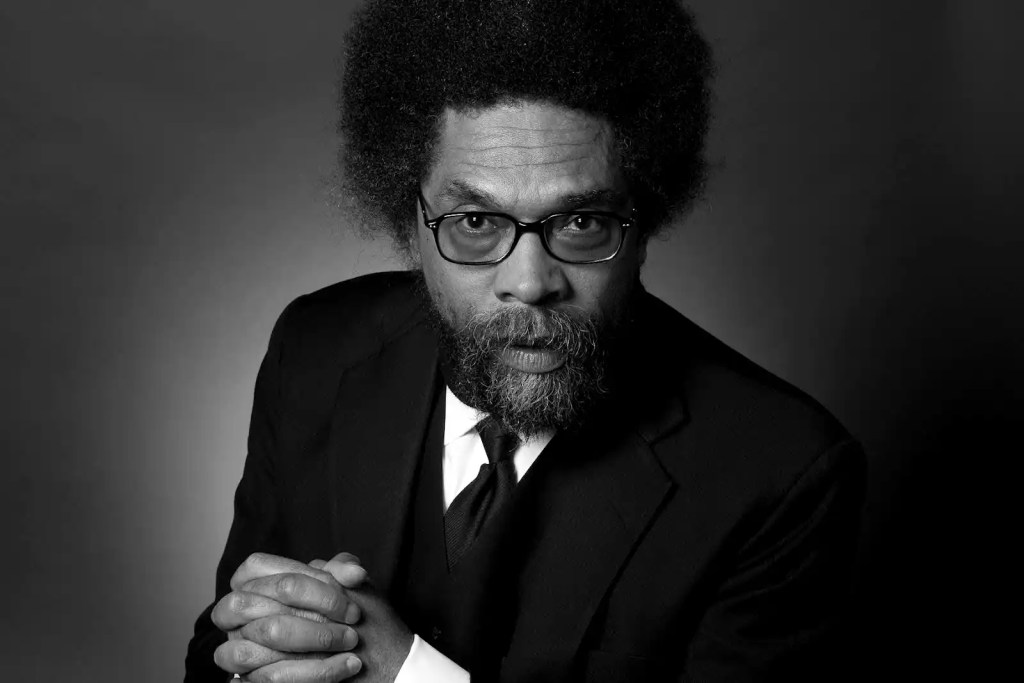
Lastly, Independent candidate Cornel West is running alongside Melina Abdullah. West is an academic, author, and advocate focusing on racial equality. His platform focuses on gaining justice in Black maternity, Immigration, LGBTQ+ rights, gun violence, and race.
Stakes are high
Georgia is a swing state. Any support for third-party candidates could fracture the already contested race between the two major parties.
Canopy Atlanta spoke to University of Georgia Political Science Professor Charles S. Bullock III about what this means for the upcoming election. In 2020, Donald Trump garnered 49.3% of votes and lost to Joe Biden, who won the state with 49.5%. This can be attributed to the third-party candidates on the ballot who won 1.2% of the votes in Georgia. As a result, Bullock says that the Republican party is now allowing third-party candidates on the ballot to level the playing field.
“The strategy here. Republicans change the law to make it easier for third, fourth, fifth parties to get on the ballot because of the loss of votes they believe to the Libertarians in 2020, costed them in Georgia,” said Bullock.
“If we end up with a 10,000-vote difference between Harris and Trump and 50,000 votes cast for Jill Stein, 20,000 cast for libertarian, Stein doing as well as she did in the primaries would tip [the state] in favor of Trump” said Bullock. “If we reverse the numbers and say the Libertarian support kept the state in favor of Harris, it can have a consequence— even though third-party nominees don’t have a sinner’s chance in hell of winning.”
Bullock explained how votes for certain third-party candidates may tip the election in favor of Democratic or Republican candidates. Most strategists believe Libertarians consider Trump a second choice, while Green Party members likely have Harris in second place, Bullock explained.
Evidently De La Cruz and West votes will not count, and Bullock says “Nonetheless, there will undoubtedly be some voters who will go to the polls and will ignore the signs [that] say, if you vote for them, you’re wasting and throwing away your ballot. I mean, you know, [they’ll] read the signs and they’ll say, ‘Well, I don’t care it’s a protest vote.’”
On election night, Georgian’s may be closely watching the margins to see just how they impact the election.The horse race that is the two-party system is still dominant; however, third-party candidates may change Georgia’s tide one vote at a time.
“Claudia De La Cruz is on the Georgia ballot, but we can’t vote for her because any vote for her doesn’t count,” Vatti said. “But despite that, you know what, I’m still actually going to go to the polls, and I’m still going to cast my vote for her even if it doesn’t technically count, because this is the program that I believe in.”
Editor: Stephanie Toone
Fact Checker: Julianna Bragg
Canopy Atlanta Readers: Kamille Whittaker and Mariann Martin
I hope this story leaves you inspired by the power of community-focused journalism. Here at Canopy Atlanta, we’re driven by a unique mission: to uncover and amplify the voices and stories that often go unheard in traditional newsrooms.
Our nonprofit model allows us to prioritize meaningful journalism that truly serves the needs of our community. We’re dedicated to providing you with insightful, thought-provoking stories that shed light on the issues and stories that matter most to neighborhoods across Atlanta.
By supporting our newsroom, you’re not just supporting journalism – you’re investing in Atlanta. Small and large donations enable us to continue our vital work of uncovering stories in underrepresented communities, stories that deserve to be told and heard.
From Bankhead to South DeKalb to Norcross, I believe in the power of our journalism and the impact it can have on our city.
If you can, please consider supporting us with a small gift today. Your support is vital to continuing our mission.
Floyd Hall, co-founder