Canopy Atlanta spent summer 2024 surveying residents living in some of the lowest voting precincts in metro Atlanta. In that process, Elections Fellow Nzingha Hall met several voters who expressed excitement and posed questions around the possibility of a Kamala Harris presidency. She followed up on those community member comments with this story.

Are Atlanta’s black women voters hyped for Kamala Harris? Voters like Gwen Lohman of Union City feel a sense of excitement when she thinks of a Harris presidency, referring to the possibility as a “yes we can” moment.
“We never thought we would see the first brown president [Barack Obama] let alone two (Harris),” Lohman tells Canopy Atlanta.
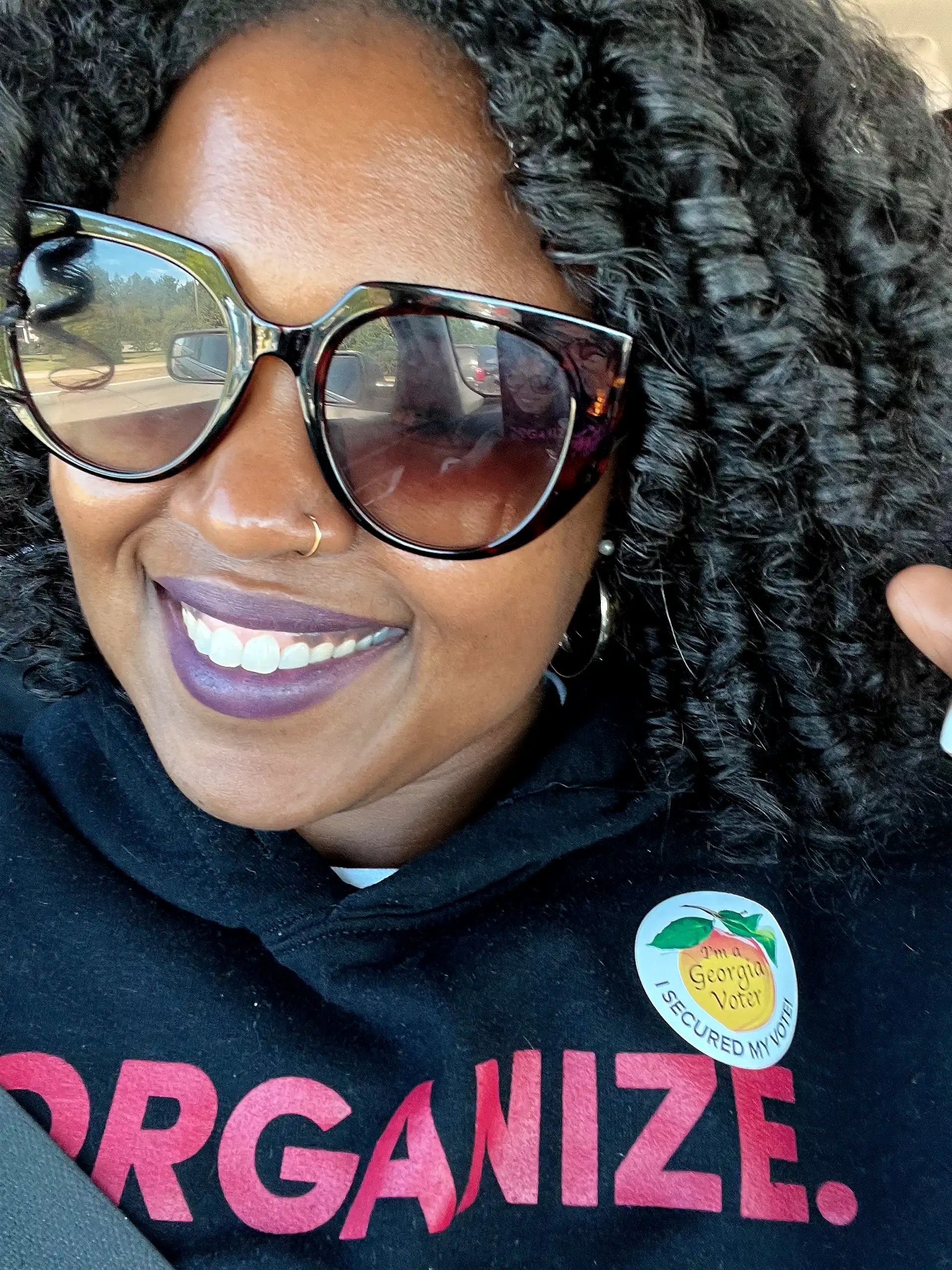
Election Day is Tuesday, and many Atlantans cast their ballots ahead of the big day. Georgia made history as 1.3 million registered voters opted to vote on the first day of early voting. As of October 30, of the more than 3 million voters who had cast their ballots, about 37 percent of early voters identified as Black and over 55 percent as women. Peach State residents are showing up to the polls in record numbers. What will that mean for the Harris and the Black women electorate?

Black women around the nation feel that voting for Harris is key to ensuring protection of democracy. In a 2024 poll by the Highland Project and brilliant corners Research & Strategies, a majority of Black women—87 percent—across party lines, ages, and education levels said they are excited to vote for Harris, the first Black woman nominee for president. In the same survey, 71 percent of respondents said that the 2024 election is more important than elections of past years and 86 percent said they will absolutely vote.

A substitution in the long game
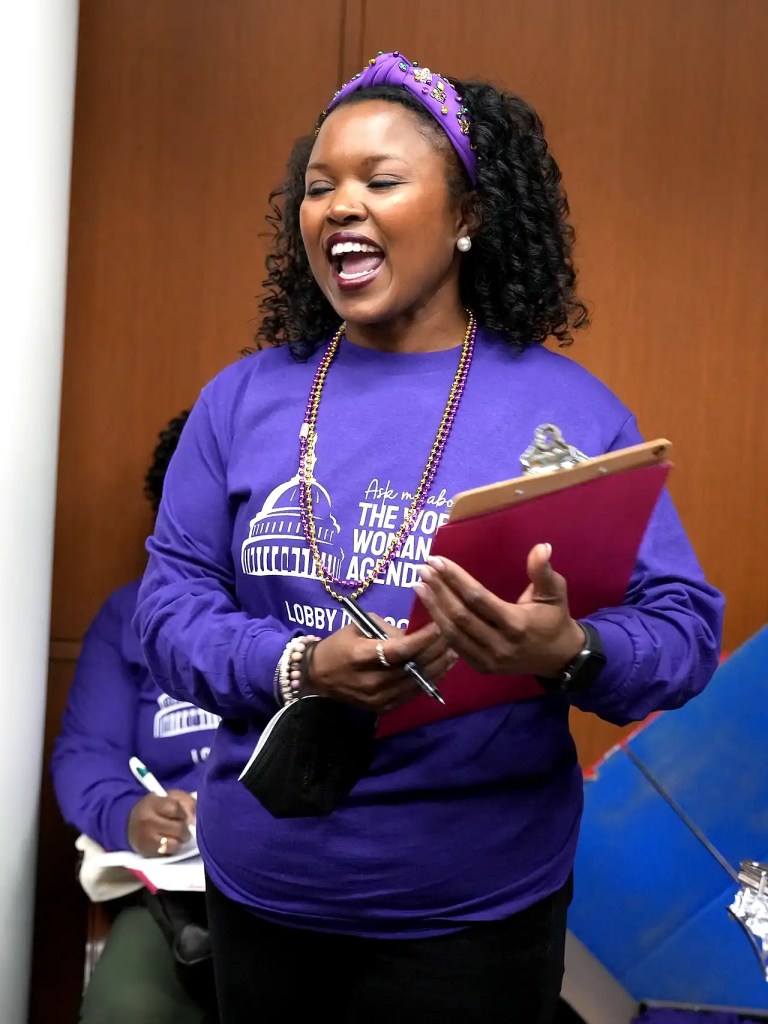
Jasmine Bowles, executive state director for the Georgia chapter of labor advocacy organization 9to5, engages directly with working women of color—an electorate that will have a huge impact this election.
“There’s a lot at stake for Black women, working women, and women of color. We have the power to swing this whole election,” Bowles says. “Healthcare, access to abortion, and reproductive rights—now is our time. This is an international movement. Women around the world are ready to be seen and heard.”
Harris, a California attorney and former senator with roots in Jamaica and India, has already made history as the first woman and first woman of color to serve as vice president. She is a former prosecutor and senator who has had active political roles since the 1990s. When President Joe Biden removed himself from the running in July, Harris became the first woman of color to lead a major-party presidential ticket. She now faces an opponent, former president Donald Trump, who also has executive branch experience, and spent decades leading multi-million-dollar international businesses.
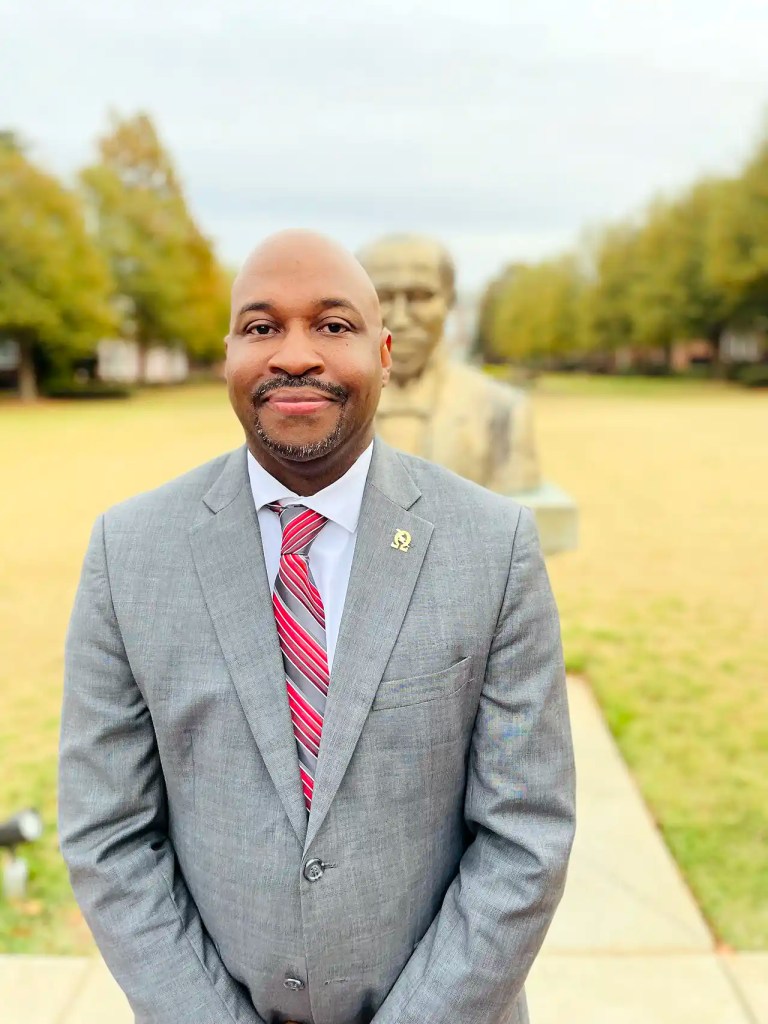
Joseph Jones, a political science professor at Clark Atlanta University, says that electing the first woman president would be a historic moment for the United States. “Breaking that glass ceiling for women I think is going to be a watershed moment in American history,” Jones says. “Symbolically, it is something that any woman anywhere would celebrate. It’s going to be a colossal moment. We need to take that moment and soak it up.”
Harris in Georgia
When it comes to Georgia politics, Harris follows in the footsteps of history makers like former House minority leader and two-time gubernatorial candidate Stacey Abrams. While Harris is the first Black woman to be a major party’s presidential nominee, Abrams was the first female minority leader in the Georgia General Assembly. Abrams, founder of voter advocacy organization Fair Fight, was also the first Black woman to be a major party’s candidate for governor. She ran for governor in 2018 and 2022 against current Georgia Governor Brian Kemp, narrowly losing in 2018 and by a broader margin in 2022.
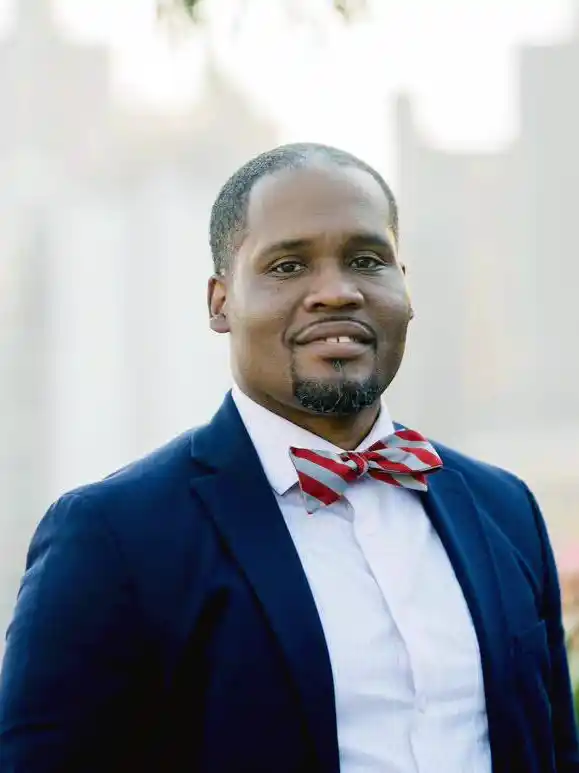
Abrams and Harris have strikingly similar backgrounds but distinct differences in campaign strategy, says Atlanta NAACP President Gerald A. Griggs. They’re both attorneys who are challenging the status quo, but Griggs says that the Harris-Walz campaign is stronger than Abrams’s during her historic run.
“They have field offices in Macon and Americus, traditionally a strong Republican base–I have seen a lot of Harris signs,” Griggs says, adding that he’s traveled across the state and country during election season.
“It shows a stronger ground game there. Abrams did lay the groundwork for what we’ve seen in Georgia,” he says. “I think there should have been better coordination and purposeful attention to regions of Georgia below Macon. I don’t think Abrams went to all of the cities she needed to go to. If you win the Black Belt, you win the state.”
On the issues that matter
Griggs says that Kamala’s platform will be crucial to the livelihoods of Black women when it comes to reproductive health care. “[Harris] literally said the name of a Black woman who suffered at the hands of a Trump abortion ban: Amber Thurman. She talks about abortion bans and maternal health care. I think her platform is relevant for healthcare and reproductive care, especially in Georgia amidst the state abortion bans, which are Republican-backed.”
Bowles agrees that health care access impacts working women in Georgia, especially mothers. Issues like housing affordability are also at the top of mind for women 9to5 serves. Bowles says that Harris’s “opportunity economy” is closely connected to her organization’s commitment to economic justice and efforts to support working mothers and families.
“More specifically in Atlanta, Georgia women are facing maternal health care crises. Our zeal for reproductive rights and maternal care are personal here in Georgia with the recent deaths like Amber Nicole Thurman and my friend Ayanna Smith,” Bowles says.

When Canopy Atlanta spoke to more than 200 residents this summer, 65 percent of respondents believed that they had enough information about the candidates and issues to make an informed decision. Economic justice is important for Alma Lee Lott, a longtime Vine City resident, who says Kamala Harris will make a great president. For her, this election is just as personal as it is communal.
“I have been out there talking to people asking them to vote. I went in the cold, I did my early voting,” Lott says. “This election means so much. I think Trump is going to take every right from women. It’s time to start smelling the coffee. Low-income communities are being forgotten about.”
Harris has advocated for a federal minimum wage of $15 an hour. The minimum wage for working Georgians is currently $7.25 per hour. She also proposed to eliminate federal income taxes on tips. Lott sees Harris’s commitment to working class families as a plus. The Vine City community activist hopes that folks choose Harris and look past some of her misgivings as a vice president.
“I know there are some things that Harris could have done, but she’s only the VP. I have had issues with her, but right now I believe she will do the right thing,” Lott says.
Jones does not think Harris will be able to enact significant policy changes, noting she would still have to counter legislators and a Supreme Court on the other side of the aisle. “I see this from the long view,” says Jones.
“We will see the Supreme Court act in the ways that favor the right wing. They will push forward decisions that will lean to Christian nationalism, prayer in school, possibly an abortion ban throughout the entire nation,” Jones says.
Outside of the government, Jones foresees the likelihood of “white resistance” if Harris is elected, as was the case after former President Barack Obama’s election. The rise of political groups like the Tea Party, a conservative populist social and political movement, is one example of that.
“We should celebrate, but we know that this moment will not last long. Xenophobia, misogyny and racism also comes with it,” Jones says. ”If she wins, the House is likely to be taken and the Senate–not sure. There are elections every two years. We will see how it goes.”
Defeat or victory?
Tonette Hunter, a College Park special education teacher, says she won’t vote for Harris. Though both major party candidates have their flaws, Hunter says she has more faith in a Trump presidency.
“We won’t have a perfect president. I am swinging with Trump, because he will do what he says. I don’t really think we have two candidates for America.”
Hunter has become disillusioned after months of congressional conversations on student debt forgiveness that did not lead to her own loans being forgiven. She does not think Trump is “well educated” in politics, but believes he will “get something done.”
“For me as an American citizen, I believe if he fights for one he fights for all. I know us as Black people, we are not supposed to vote for Trump, but I disagree,” Hunter says. “I don’t know what Harris and Biden really did. I have a student loan. I was trying to see what they would do, but nothing happened. It’s a lot of talk.”
Lohman understands the criticism for Harris, but she also recognizes the importance of her possible victory.
“This election is important because Trump will be dangerous for the country. I think he could be detrimental to the country. [Project 2025] could remove rights for women and LGBTQ+ community,” Lohman says. “This would be an opportunity for us to tell our true authentic stories—not fabricated by those who are traditionally in power.”
Editor: Stephanie Toone
Fact Checker: Adjoa Danso
Canopy Atlanta Reader: Mariann Martin and Kamille D. Whittaker
I hope this story leaves you inspired by the power of community-focused journalism. Here at Canopy Atlanta, we’re driven by a unique mission: to uncover and amplify the voices and stories that often go unheard in traditional newsrooms.
Our nonprofit model allows us to prioritize meaningful journalism that truly serves the needs of our community. We’re dedicated to providing you with insightful, thought-provoking stories that shed light on the issues and stories that matter most to neighborhoods across Atlanta.
By supporting our newsroom, you’re not just supporting journalism – you’re investing in Atlanta. Small and large donations enable us to continue our vital work of uncovering stories in underrepresented communities, stories that deserve to be told and heard.
From Bankhead to South DeKalb to Norcross, I believe in the power of our journalism and the impact it can have on our city.
If you can, please consider supporting us with a small gift today. Your support is vital to continuing our mission.
Floyd Hall, co-founder