When Canopy Atlanta asked Tri-Cities Fellow Claudia Maturell to photograph her neighborhood, she wondered where to even begin. “I’m like, how many ways can I do this? There’s so many angles,” she says.
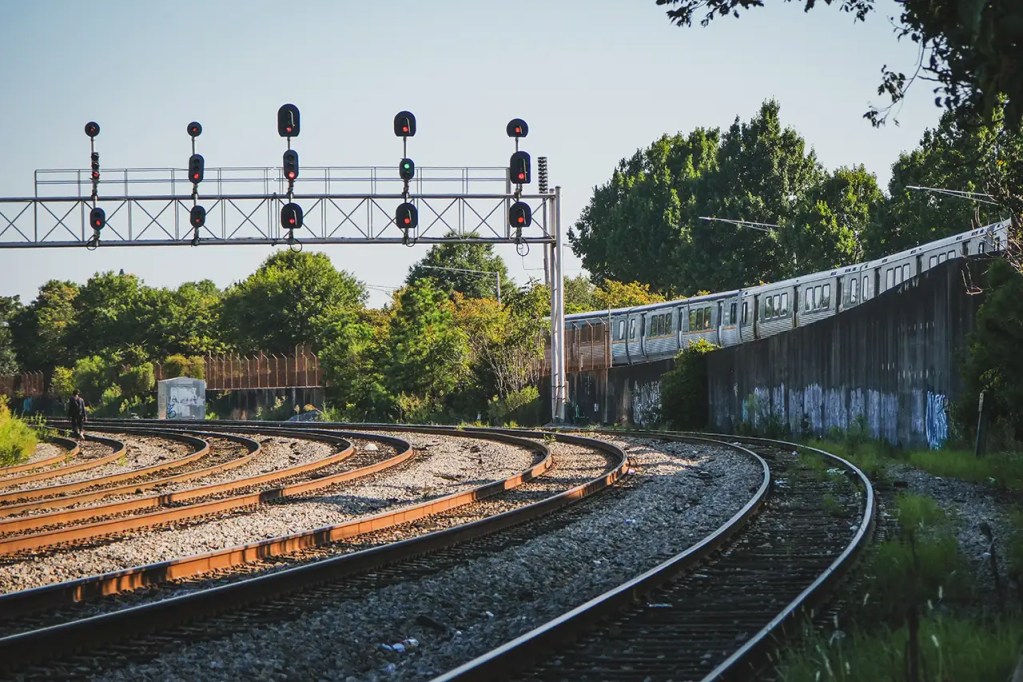
In search of a home with a yard that she could afford, Maturell moved to the area from New York just earlier this year. So she consulted with other Fellows, which is how she ended up walking railroad tracks in College Park. Historically, those tracks were just one sign of how Tri-Cities was a railroad hub before it was home to the world’s busiest airport. But as she learned, residents today know these tracks to be a dividing line.

“There’s a part of the tracks where Woodward Academy is,” Maturell says. “You can see where they have historic homes—they’re beautiful. But then, what’s happening on the other side? And why is this area so much more resourced than the others?”
Now Maturell sees Tri-Cities anew. What she notices first from the photos she took are signs of neighborhood pride. The Mexican flag that hangs over a butcher shop between East Point and College Park. The Tri-Cities High School football field affectionately called the “Dog House.” The smiles across her neighbors’ faces.
“I think they show a lot of joy and pride, the beauty and the resilience, that is in this community,” she says. “We’re fighting for more, but we’re gonna be proud and find our moments of joy with each other—because at the end of the day, that’s what we got. Even though some areas are more destitute than others, and some areas are better funded than others, people are still trying to make sure that their families are good and that their communities are flourishing.”
I didn’t want to just take a picture of the logo of the ArtsXchange from the front. I’ll take the picture that is most obvious, and then I’m like, What is another angle? Where’s another perspective that I can share where people can still be drawn in?
Alice Lovelace is featured in the story that I’m doing; she’s the executive director of the ArtsXchange. When I went to the side of the building, they had several paintings like this on the windows. I’m like, I have to capture this one. It’s a beautiful artistic rendering of her, and it speaks to who she is: a pillar of the East Point creative community.
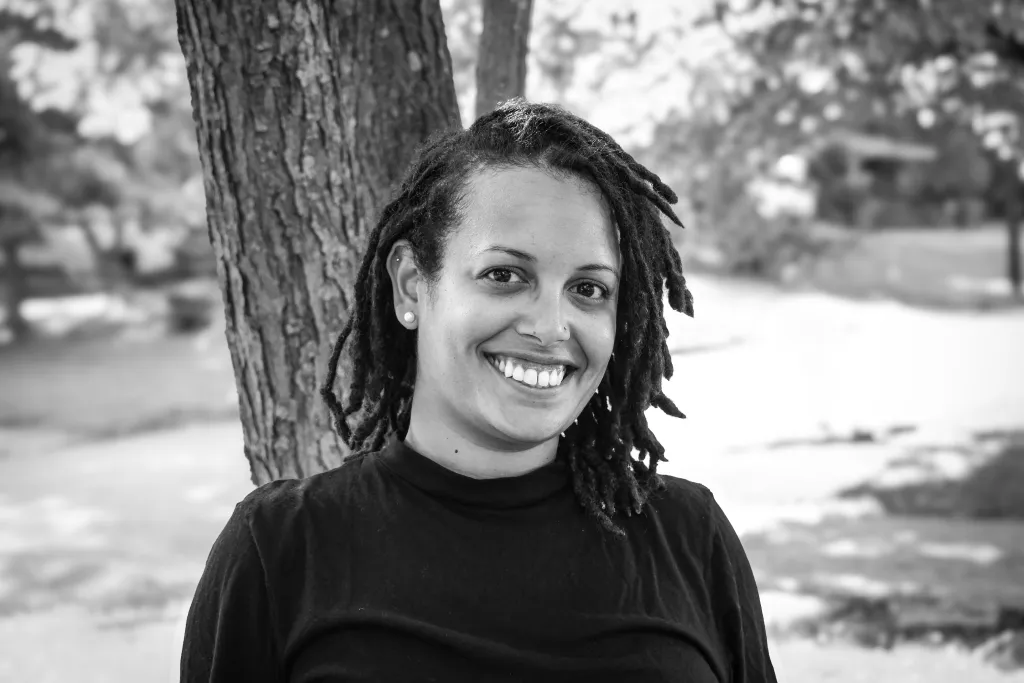
Claudia Maturell
Canopy Atlanta Tri-Cities Fellow
Canopy Atlanta: The assignment prompt was broad. Walk me through how you decided to approach it.
Claudia Maturell: It felt pretty broad too. I’m like, how many ways can I do this? It was helpful to have Kamille [Whittaker, Canopy’s fellowship and training director] reference what they do in the beginning of Love Jones and Uncorked with images and B-roll of the location where they’re at. Some are in black and white, and some look like a documentary. I was really inspired by that.
Then I consulted with a few of the Fellows, because they have been here longer and I wanted their input. Even though we’re doing our own different stories, [the Tri-Cities issue] is our kind of collective issue. LeJoi [Lane] and I made a list. I talked with Eboné [Smiley] as well. This area is a place that I’m thinking of checking out. What do you think? Is there anything missing?
I went to a lot of places and then just narrowed down the selection. And as I went to the places, I started meeting people. I started seeing things from different angles.
The one that I did from the tracks into Tri-Cities High School—I went on the tracks and then I saw that view. I’m like, Oh, Dog House. They know they’re gonna know what this is. But it’s a different angle.
I was trying to see it from a perspective of, you live here, but also you see it all the time. How can we look at it again from another perspective?
CA: What’s an example of a place that a Fellow suggested?
Claudia Maturell: Tri-Cities High School was one of them. The tracks was also one of them. LeJoi made a good point that I tried to capture, but it was the way that you can see the tracks where one side of the divide has Woodward Academy and it’s really developed, and then on the other side you can see that it was not as developed. I couldn’t necessarily find the visuals for it, but it was something that I was thinking a lot about.
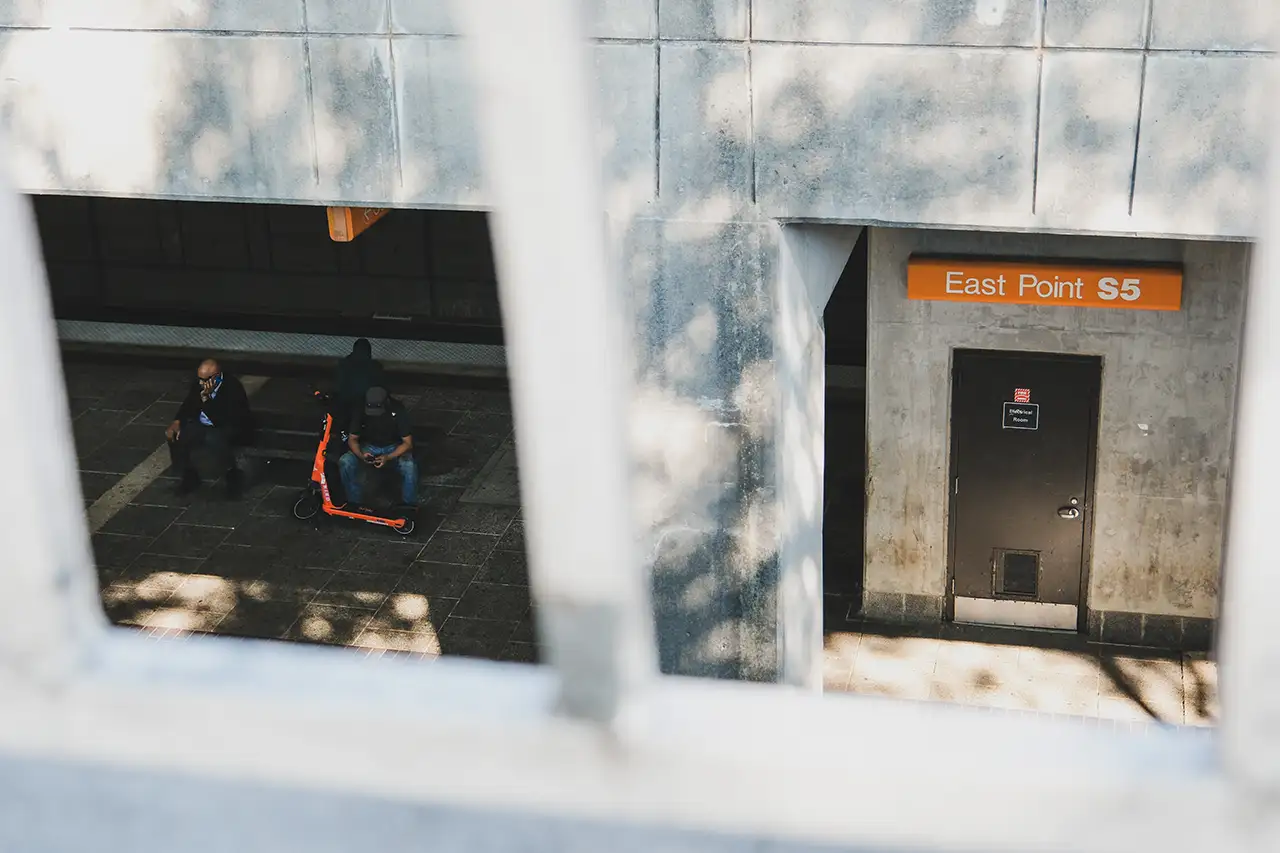
MARTA was too. Public transportation is such an issue in Atlanta—everywhere in the country, really. We wanted to also capture how people get around, different ways that the city communicates with each other, and just how MARTA works. It’s a pillar in that way.
The tracks—they run all around the Tri Cities. So it was helpful to see them, and also see the way they’re abandoned. I saw that person walking to the left. And I was like, That’s interesting. People usually don’t walk along the tracks like this. But he had headphones on, and he just was strolling as the train on the other tracks, on MARTA, was passing by.
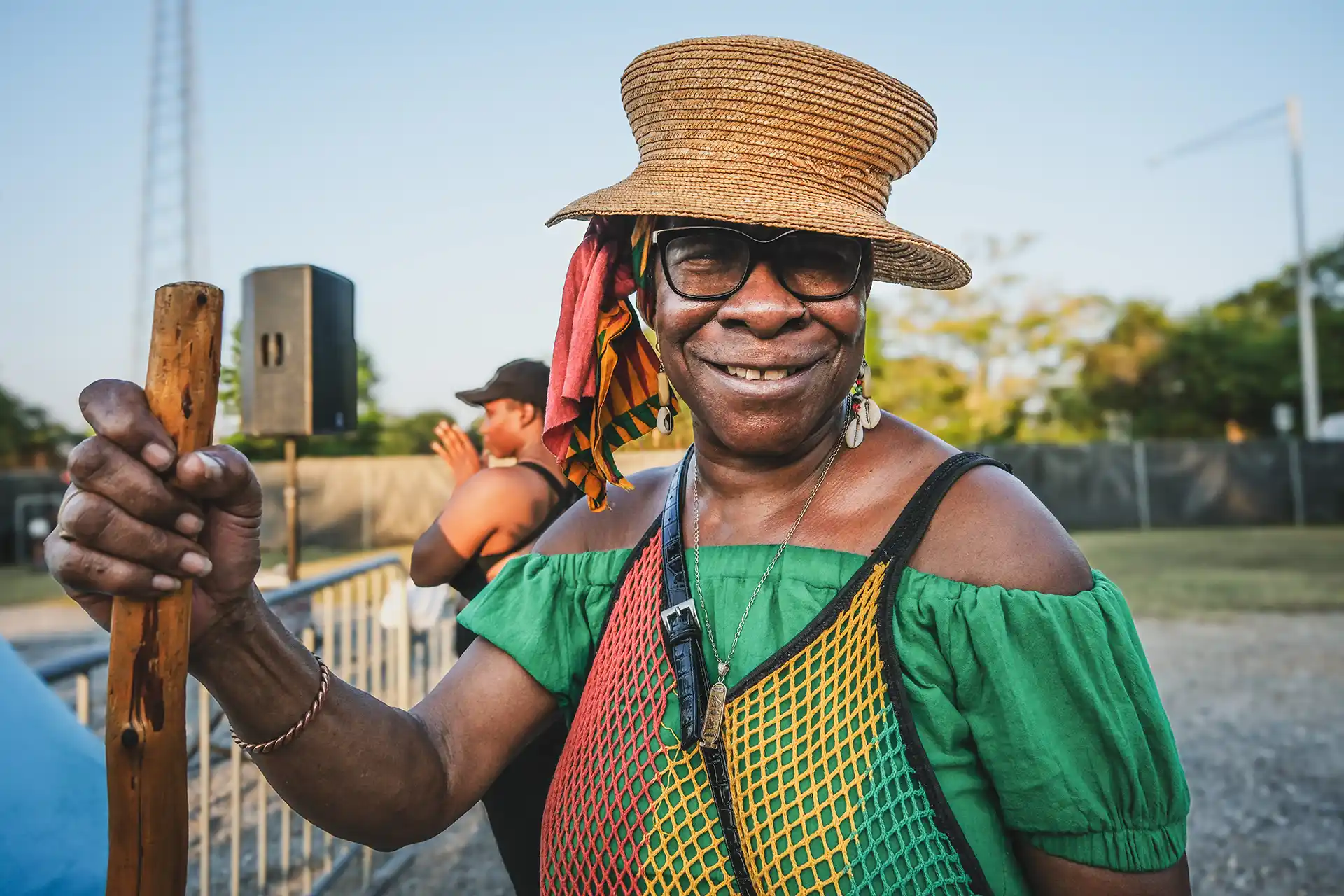
This hat says “Cleveland Avenue.” Cleveland Ave is big here in East Point, and it runs all around it. There were references of the city throughout, even within each individual.

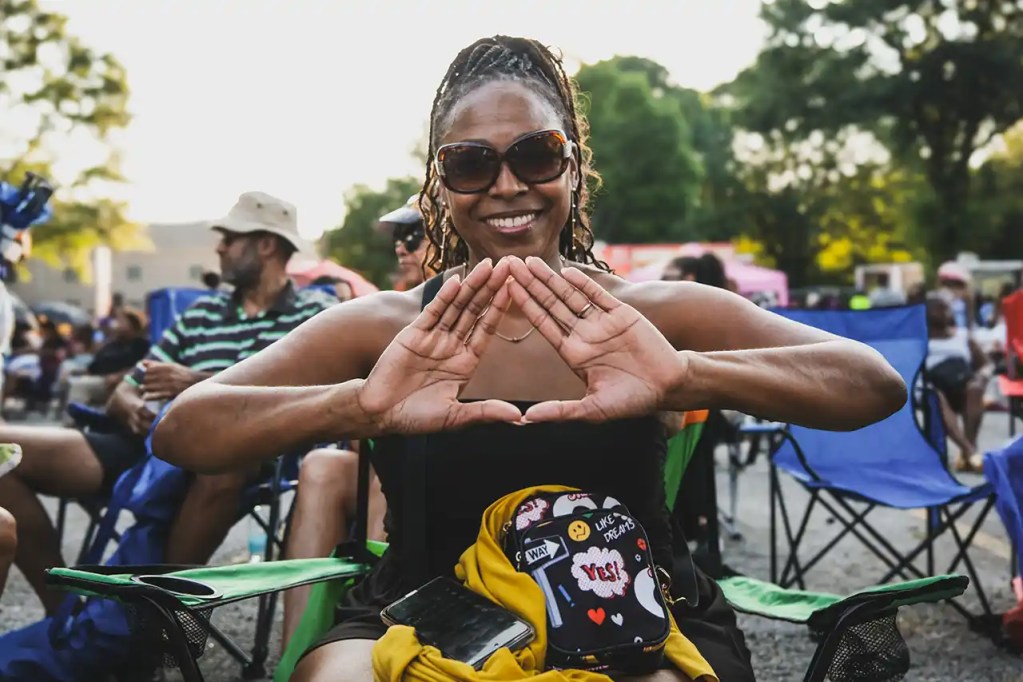
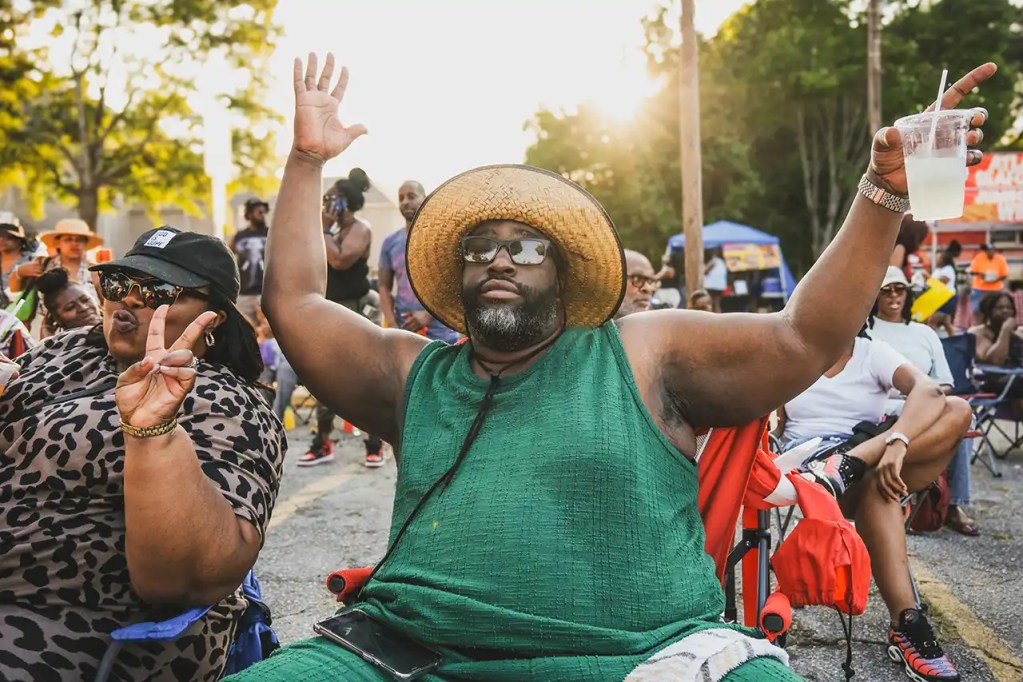


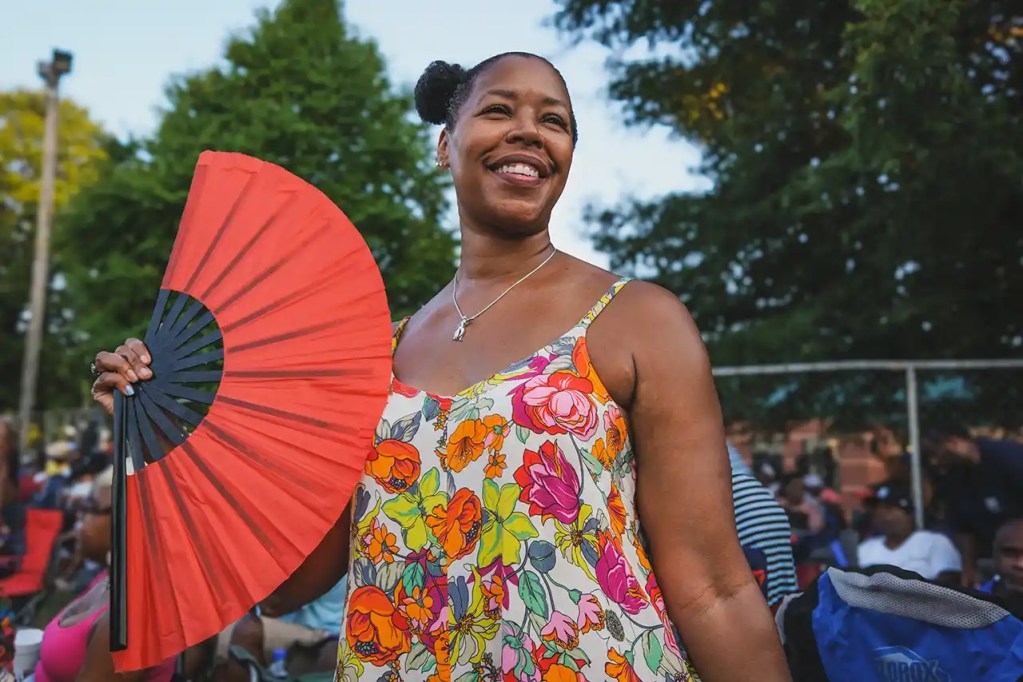
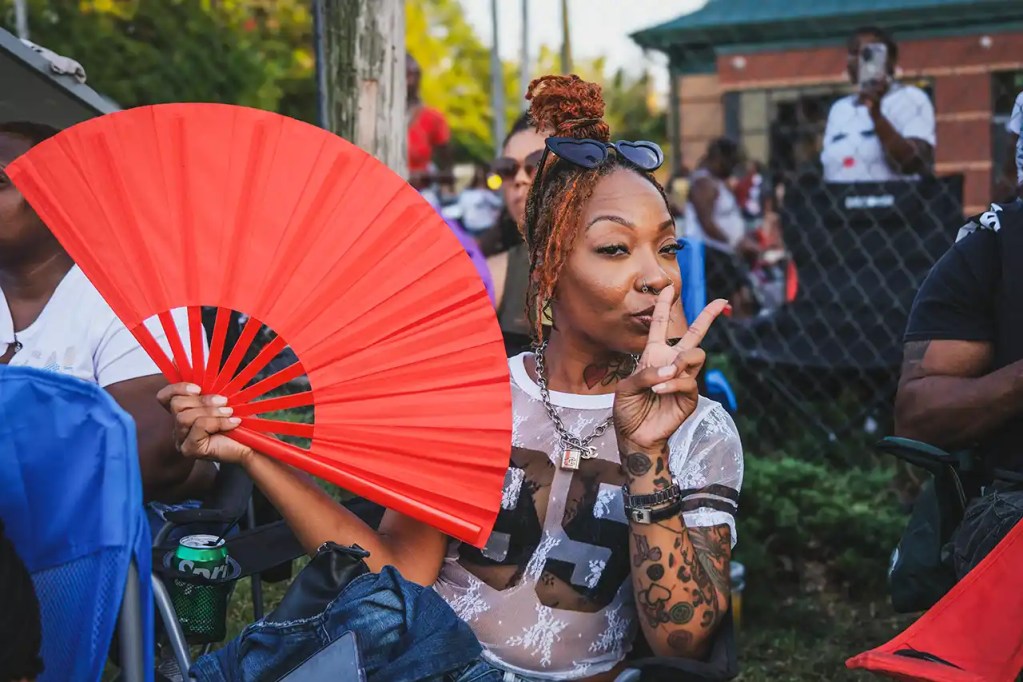

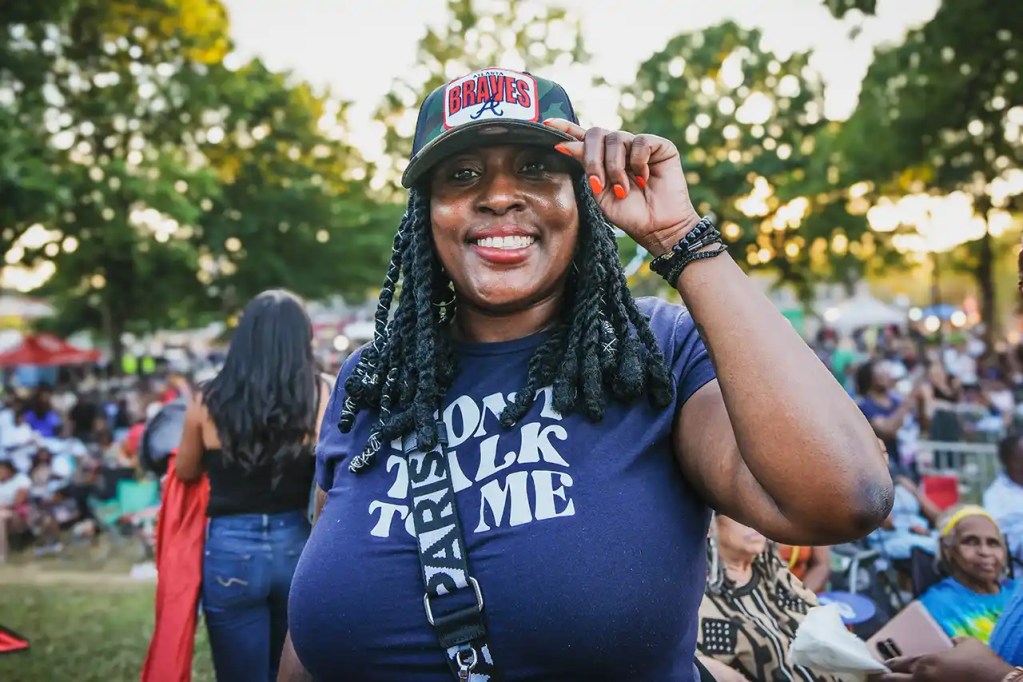
CA: Tell me the story behind the photos that look like they’re all from a specific event. These people are just beaming.
Claudia Maturell: It was a concert that the city had in [East Point]. Everyone was camping out in this space. At first I was hesitant. Everyone is there to enjoy themselves, and I’m coming in with a photo assignment, so I didn’t want to be invasive. I also wanted to capture people in a way that would honor them—who they are and who they were at that moment.
But everyone that I asked was like, Yeah! And then they’ll pose. Honestly I was so happy that they allowed me to do that. They were like, Come take our picture! Come take a picture of me and my friend! [Laughs] The pride was real.
There was a gentleman in front of a barbershop [Rods N Razors] and he was telling me how he’s been there for a while. He doesn’t own it, but he works there and he seems so proud of being in that space. He kind of asked me to take the picture before I could ask him.
CA: What do you think you’ve learned through this assignment about Tri-Cities?
Claudia Maturell: Approaching people sometimes can be intimidating. Approaching people with a camera can be a different kind of intimidation—but to me, it’s actually an opening for me to talk to people.
Actually, my partner found this place. It’s in College Park, and it looks like a mall, really, with a huge market and then small mom-and-pop restaurants. It’s like a hidden gem. I go there, and I talk to them. I want to capture our city and the people who live here, and we don’t hear a lot about the Latin community who lives here. Me being from the community, I wanted to be able to highlight folks who are living here and working here and contributing to our community life.
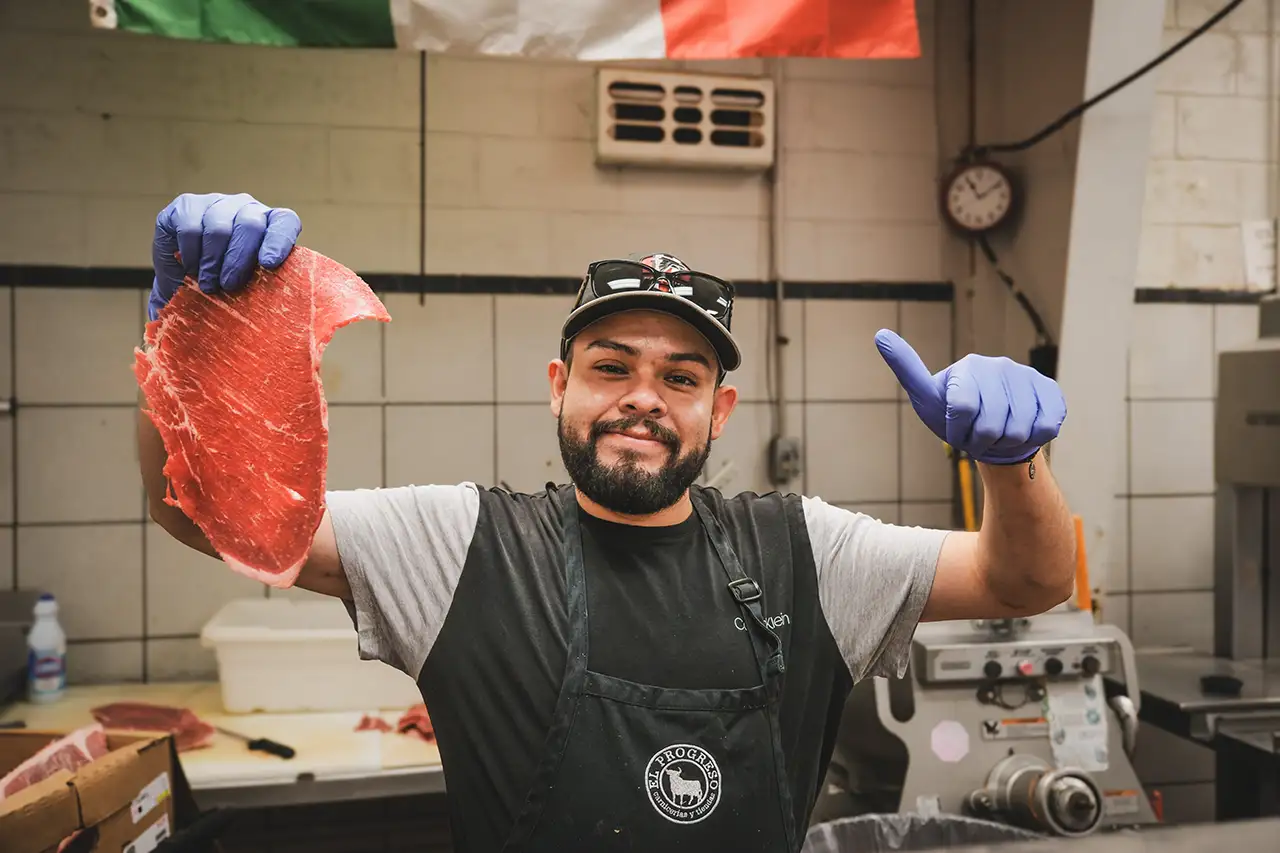
He was super proud. He’s like, Can you make sure you get that Mexican flag? [Laughs] He put clean gloves on, grabbed that steak, and posed for me. You can see the name of the market right there on his [apron], El Progreso—I wanted to make sure I got that too.
I felt like I hadn’t felt connected to the Latin community since I moved here. Going to that spot with that lens, where I’m here to document the community that you have created here, and to be able to make sure we’re represented in our Tri-Cities because we’re part of it—it was great.
There were two guys [in College Park]—I think they have the whole house and they own half the strip. I was driving somewhere and I happened to find them because of the chickens.
They didn’t want to be photographed . . . but they were like, You can take as many pictures as you like.
It looked like this little community, where they’re crafters and they make these beautiful signs and different things that bring light to this space. I was so moved by it.
I have to figure out how to find it again, because I feel like it was a nook in the community that no one knew about, that they wanted to be a space for joy for the community.
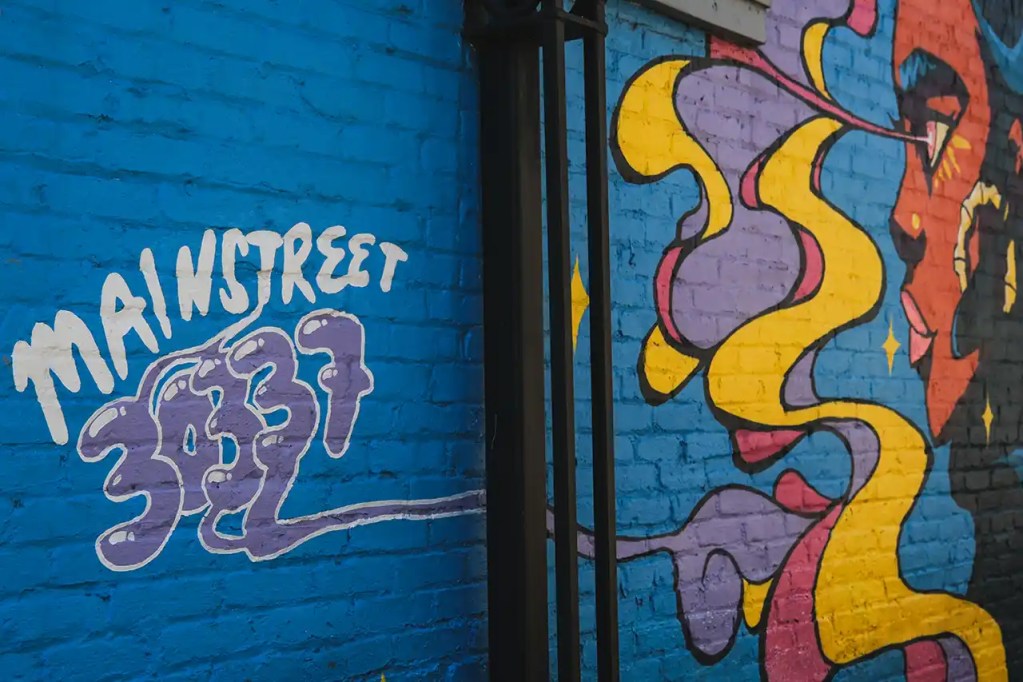

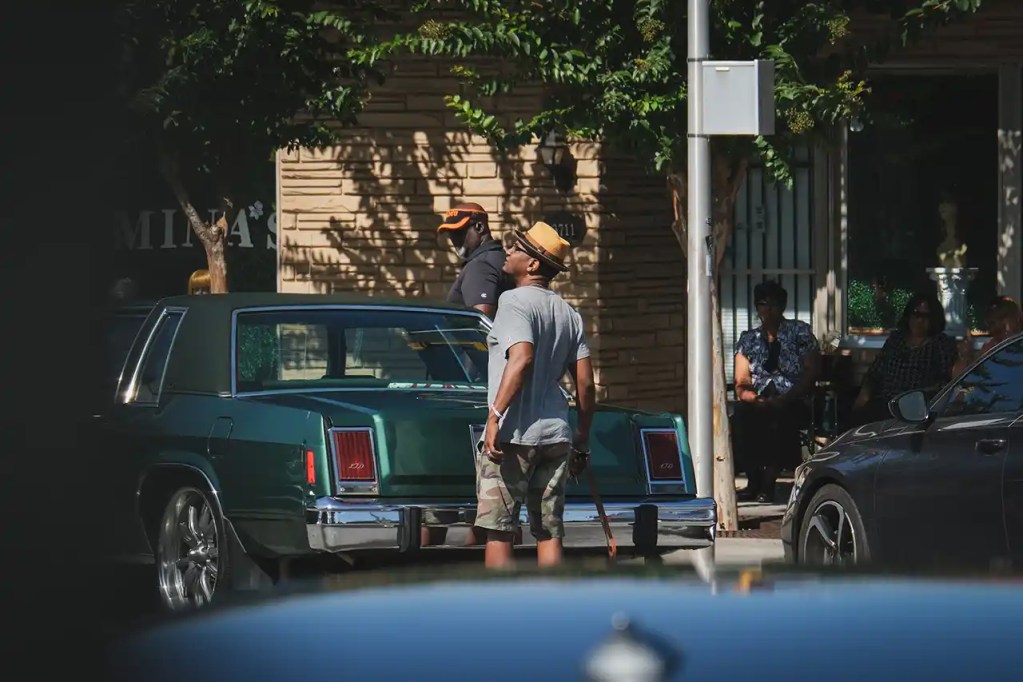


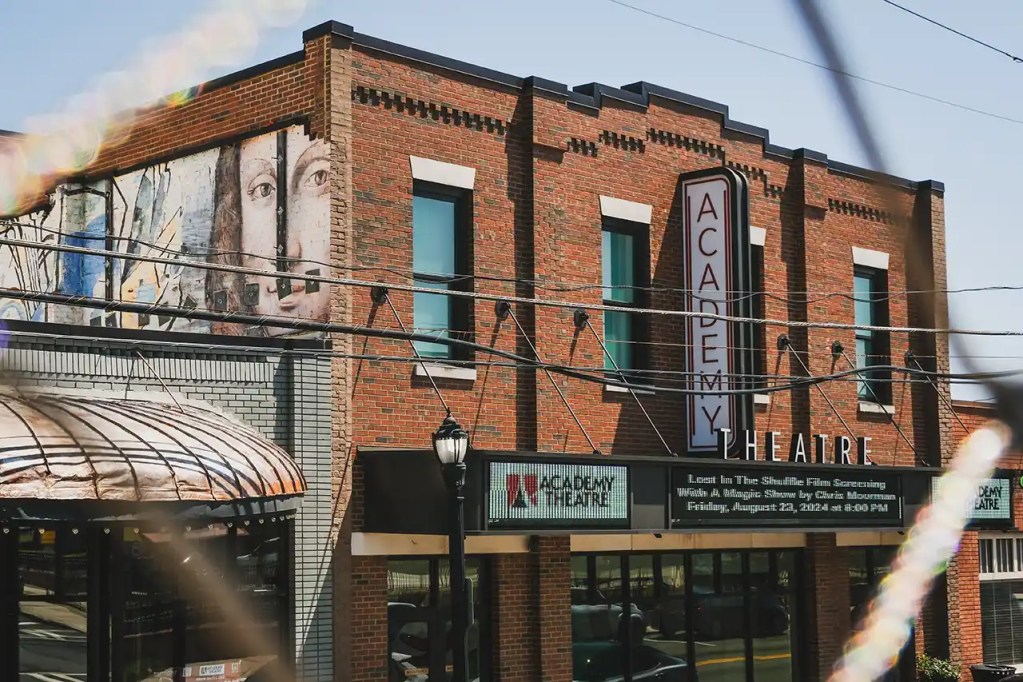
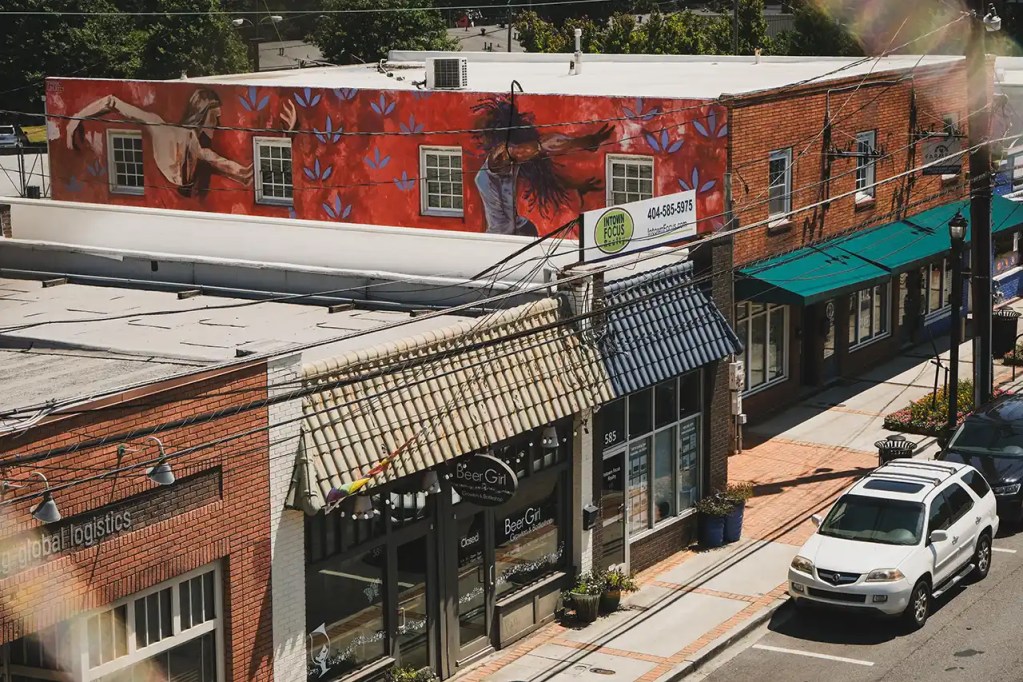


CA: What do you think these photos say about Tri-Cities?
Claudia Maturell: When I look at the pictures of the people, it just brings a big smile to my face. And then when I see other photos where there’s less folks but more place and location, it feels like there’s a lot of creative energy in this area.
Folks are trying to find ways to do something productive with that, do something beautiful with that, do something that brings them joy. That reminds them they’re here, and they have been here, and they don’t want to be erased—even though they might be because of the gentrification of the area.
I hope this story leaves you inspired by the power of community-focused journalism. Here at Canopy Atlanta, we're driven by a unique mission: to uncover and amplify the voices and stories that often go unheard in traditional newsrooms.
Our nonprofit model allows us to prioritize meaningful journalism that truly serves the needs of our community. We're dedicated to providing you with insightful, thought-provoking stories that shed light on the issues and stories that matter most to neighborhoods across Atlanta.
By supporting our newsroom, you're not just supporting journalism – you're investing in Atlanta. Small and large donations enable us to continue our vital work of uncovering stories in underrepresented communities, stories that deserve to be told and heard.
From Bankhead to South DeKalb to Norcross, I believe in the power of our journalism and the impact it can have on our city.
If you can, please consider supporting us with a small gift today. Your support is vital to continuing our mission.
Floyd Hall, co-founder