In 2025, Canopy Atlanta launched our first-ever Innovation Lab, made up of five Canopy Atlanta Fellows creating projects to provide information to their communities.
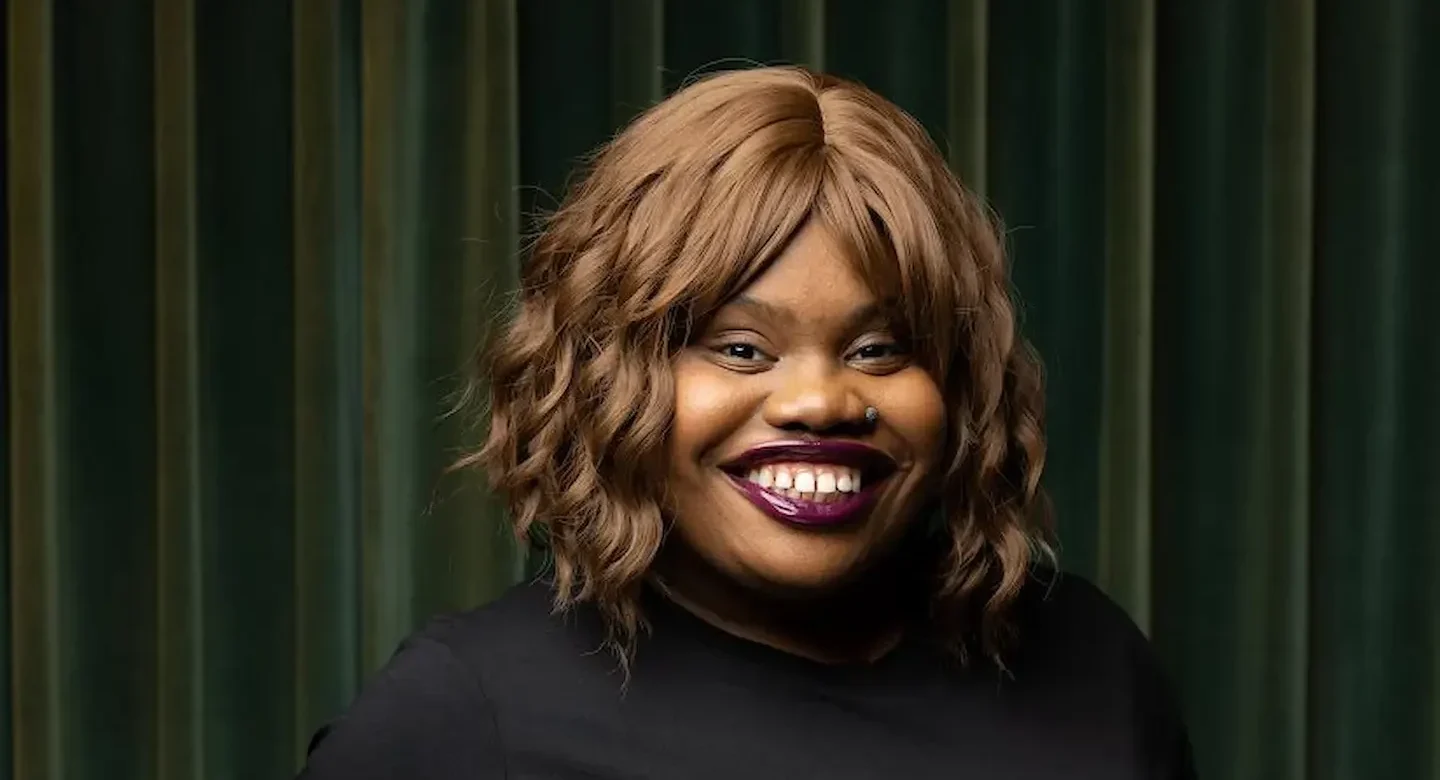
One of those Fellows, Nzingha Thompson-Hall, envisioned and created the podcast, with feedback from an advisory committee. She also collected information, questions, and feedback from community members through surveys and conversations.

We are excited to introduce Canopy Atlanta’s brand new podcast, “Sis, you ATE that.”
This podcast will consist of interactive conversations where community members in metro Atlanta can gather to discuss issues that are important to them.
Our first topic is the state of environmental justice and stewardship, and how your neighbors are taking action right where they live.
Click on the link to listen to the podcast. To learn more about the panelists and read some term definitions, please scroll down the page.
This podcast has been edited for length, clarity, and accuracy.
Editor Notes:
- More information about the landmark Tuskegee gerrymandering case mentioned in the podcast can be found here.
- The Instagram account for Strike Black is strikeblack_atl

Panelist Bios
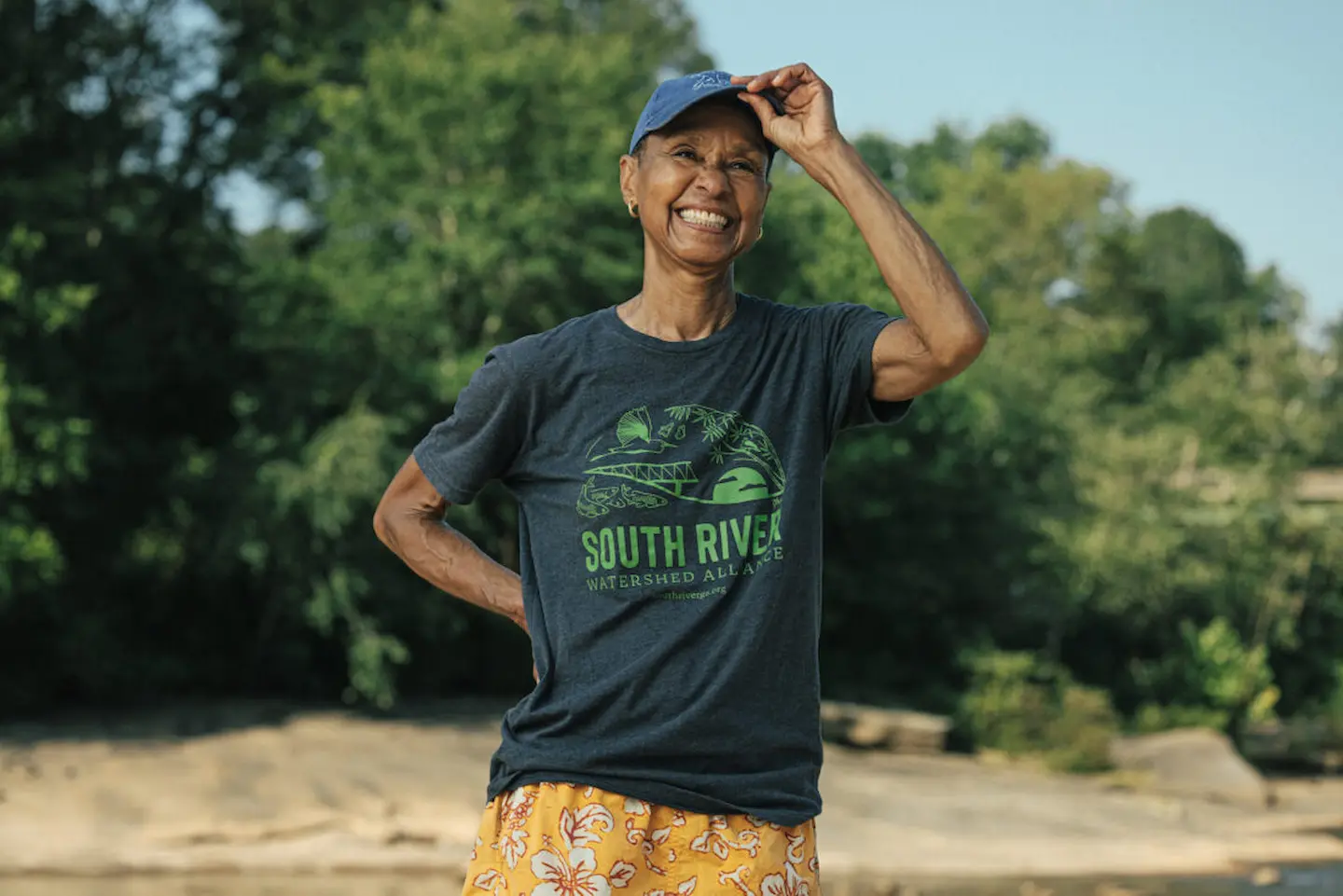
Dr. Jacqueline “Dr. Jackie” Echols is board president of South River Watershed Alliance, a position she has held since 2011. However, she has been an environmental activist in support of environmental restoration and protection of the South River and achieving environmental justice for communities in the upper South River watershed, City of Atlanta, and DeKalb County for more than two decades.
Dr. Echols’ advocacy work over the past fourteen years include: 1) challenging the 2010 DeKalb County federal consent decree that violates the Clean Water Act, Civil Right Act and denies south DeKalb County residents equal protection under the law, 2) Challenging DeKalb County’s swap of 40-acres of Intrenchment Creek Park to a private developer, and 3) Opposing the destruction of the South River Forest to build a 171-acre police training facility in southeast Atlanta.
In 2017, Dr. Echols received GreenLaw’s Environmental Hero Award, 2023 Urban Conservationist of the Year Award, GA Association of Conservation Districts, and 2023 Champion of Conservation Award, Garden and Gun Magazine, for years of work and dedication to protecting the environment. One of her favorite slogans is attributed to the founder of Patagonia, Yvon Chouinard, “nothing will happen if you do nothing, so do something.”
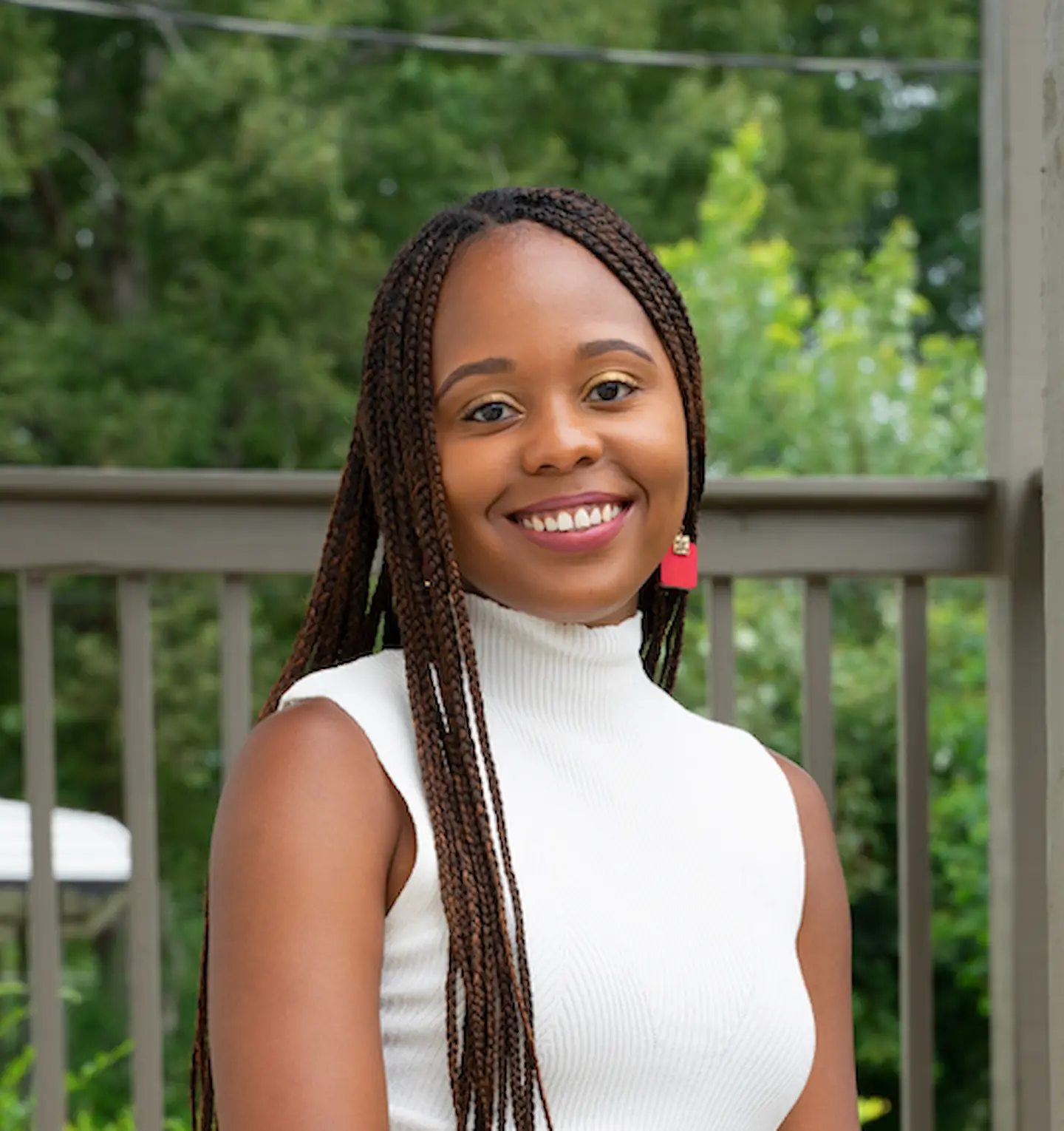
Jasmine Burnett is an Atlanta-based organizer with Strike Black, a local organizing collective. She has been involved in the movement to Stop Cop City and has led numerous campaigns to build power among Black Atlanta residents. Jasmine is also a narrative builder and storyteller who helps develop and amplify movement work focused on collective liberation. Her work often results in social campaigns, new community-targeted programs, impact design strategy sessions, stakeholder engagement workshops, and intentionally-produced cultural events.
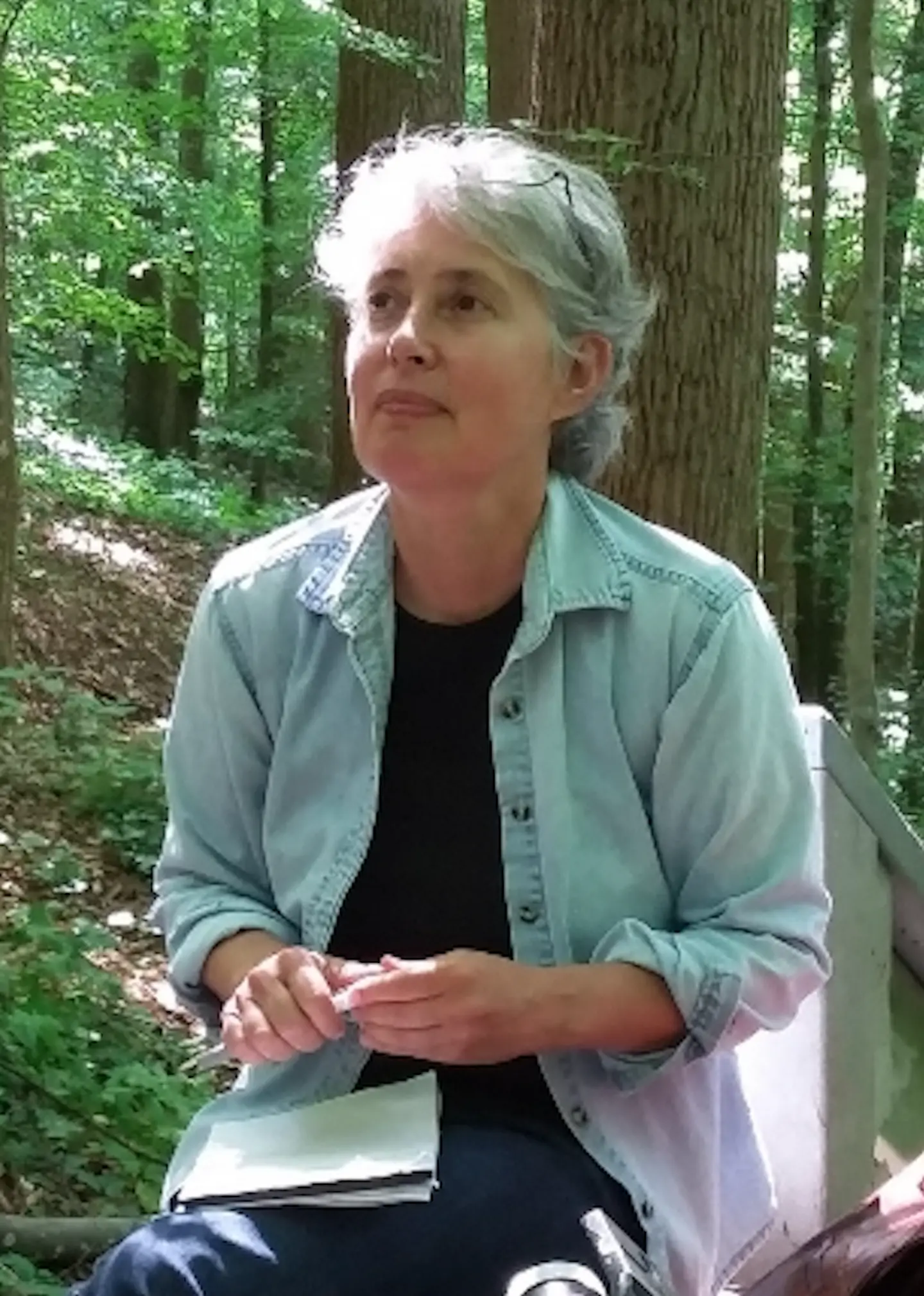
Master Naturalist Kathryn Kolb shares over 40 years of field experience in forests and wild lands of the Southeast. She leads Eco-Addendeum, with a mission to raise awareness about Georgia’s rich natural environment and to reconnect people with the natural world through high-value outdoor experiences and education. Kolb currently designs and leads educational walks in natural areas in metro Atlanta. She takes botanical inventories and designs forest restoration plans for public parks, green spaces, and private properties, and leads EcoAddendum’s Stewardship classes and volunteer programs for municipalities and neighborhood groups.
Kolb has contributed to greater Atlanta’s environmental community for over 30 years, and has collaborated on projects with many regional environmental groups including Atlanta’s Tree Conservation Commission, The Wilderness Society, Georgia Forestwatch, Georgia Conservancy, Cascade Springs Nature Conservancy, Brookhaven Tree Conservancy, Georgia Native Plant Society, Botanical Society of Georgia, State Botanical Garden of Georgia, South River Watershed Alliance, West Atlanta Watershed Alliance, Elachee Nature Center, Dunwoody Nature Center, Blue Heron Nature Center, City of Atlanta Neighborhood Associations, Friends of Parks groups, Park Pride, City of Atlanta, City of Brookhaven, and many other groups throughout the metro Atlanta region.

Genia Billingsley is a proud Native Atlantan and lifelong member of the Grove Park community on Atlanta’s Westside. She is passionate about amplifying voices and advocating for social, environmental, and community justice. In her role at Canopy Atlanta, Genia drives community engagement initiatives while also serving as a community fellow with CSAW and working as the Community Program Manager for Eco-Action. When she isn’t working to inspire change, Genia enjoys reading and spending quality time with her family, which includes her adult daughter Kayla and her granddog, Zeus.

Dr. Na’Taki Osborne Jelks is an assistant professor in the Environmental and Health Sciences Department at Spelman College in Atlanta, GA. Dr. Jelks investigates urban environmental health disparities; the role that place, race, and social factors play in influencing health; cumulative environmental risks and health; the impact of climate change on vulnerable populations; and the connection between urban watersheds, pollution, the built environment, and health. She also develops, implements, and evaluates community-based initiatives that set conditions to enable low-income and communities of color to empower themselves to reduce exposure to environmental health hazards and improve health and quality of life.
Dr. Jelks is particularly interested in approaches that engage environmentally overburdened communities in monitoring local environmental conditions, generating actionable data for community change, and developing effective community-based interventions that revitalize toxic, degraded spaces into healthy places.
Dr. Jelks co-founded the West Atlanta Watershed Alliance (WAWA), a community-based environmental justice organization that works to grow a cleaner, greener, healthier, more sustainable West Atlanta through authentic community engagement, organizing, education, community science, and participatory research. Since 2018, she has served on the National Environmental Justice Advisory Council (NEJAC), a federal advisory committee that works to integrate environmental justice into the Environmental Protection Agency’s programs, policies, and activities as well as to improve the environment or public health in communities disproportionately burdened by environmental harms and risks. Jelks is currently one of two co-chairs of the NEJAC.
Terms and information related to the podcast
Environmental Health (EH) is a branch of public health protection that is concerned with all aspects of the natural and built environment that may affect human health. Other terms that refer to the discipline of environmental health include environmental public health and environmental health and protection. EH is a field of science that studies how the environment influences human health and disease. “Environment” in this context means identifying and addressing how the environment impacts human health. (East TN State Univ.)
Environmental Justice (EJ) is defined as the just treatment and meaningful involvement of all people in environmental decision-making to ensure full protection from disproportionate environmental and health impacts, and equitable access to a healthy, sustainable, and resilient environment.1 Inspired by the Civil Rights movement, EJ became widespread in the 1980s at the intersection of environmentalism and social justice.2 Environmental injustice is experienced through heightened exposure to pollution and corresponding health risks, limited access to adequate environmental services, and loss of land and resource rights.3 EJ and sustainability are interdependent and are both necessary to create an equitable environment for all.4 (University of MI)
Climate describes what the weather is like over a long period of time in a specific area. Different regions can have different climates. To describe the climate of a place, we might say what the temperatures are like during different seasons, how windy it usually is, or how much rain or snow typically falls. When scientists talk about climate, they’re often looking at averages of precipitation, temperature, humidity, sunshine, wind, and other measures of weather that occur over a long period in a particular place. In some instances, they might look at these averages over 30 years. And, we refer to these three-decade averages of weather observations as Climate Normals. (National Oceanic and Atmospheric Administration)
Climate Change is a long-term change in the average weather patterns that have come to define Earth’s local, regional, and global climates. These changes have a broad range of observed effects that are synonymous with the term. (NASA)
Global Warming is the long-term heating of Earth’s surface observed since the pre-industrial period (between 1850 and 1900) due to human activities, primarily fossil fuel burning, which increases heat-trapping greenhouse gas levels in Earth’s atmosphere. This term is not interchangeable with the term “climate change.” (NASA)
Georgia Information: In 2023, about 13.6 percent of Georgia’s population lived below the poverty line, according to Statista. This accounts for persons or families whose collective income in the preceding 12 months was below the national poverty level of the United States. This is relevant as research has shown a direct link between low income and exposure to environmental hazards. According to research published from the University of Chicago in 2022, a team of researchers found that living in a high-poverty neighborhood increases exposure to many different air toxics during infancy, that it reduces cognitive abilities measured later at age 4 by about one-tenth of a standard deviation, and that about one-third of this effect can be attributed to disparities in air quality.
According to a new report from Environment Georgia Research & Policy Center and the Frontier Group, five urban centers and rural areas in Georgia, collectively home to over 7.6 million people, suffered through more than 65 days of elevated air pollution in 2020. Air pollution increases the risk of premature death, asthma attacks, cancer, and other adverse health impacts, and causes 9,000 deaths every year in Georgia.
The Weelaunee forest, or South River forest, is set to be the new home of a police training center. The forest in Southeast Atlanta is home to wetlands that filter rainwater and prevent flooding. The Atlanta Police Department seeks to turn 300 acres of forest into a tactical training compound featuring a mock city.
Editor: Mariann Martin
Fact Checker: Ada Wood
I hope this story leaves you inspired by the power of community-focused journalism. Here at Canopy Atlanta, we're driven by a unique mission: to uncover and amplify the voices and stories that often go unheard in traditional newsrooms.
Our nonprofit model allows us to prioritize meaningful journalism that truly serves the needs of our community. We're dedicated to providing you with insightful, thought-provoking stories that shed light on the issues and stories that matter most to neighborhoods across Atlanta.
By supporting our newsroom, you're not just supporting journalism – you're investing in Atlanta. Small and large donations enable us to continue our vital work of uncovering stories in underrepresented communities, stories that deserve to be told and heard.
From Bankhead to South DeKalb to Norcross, I believe in the power of our journalism and the impact it can have on our city.
If you can, please consider supporting us with a small gift today. Your support is vital to continuing our mission.
Floyd Hall, co-founder