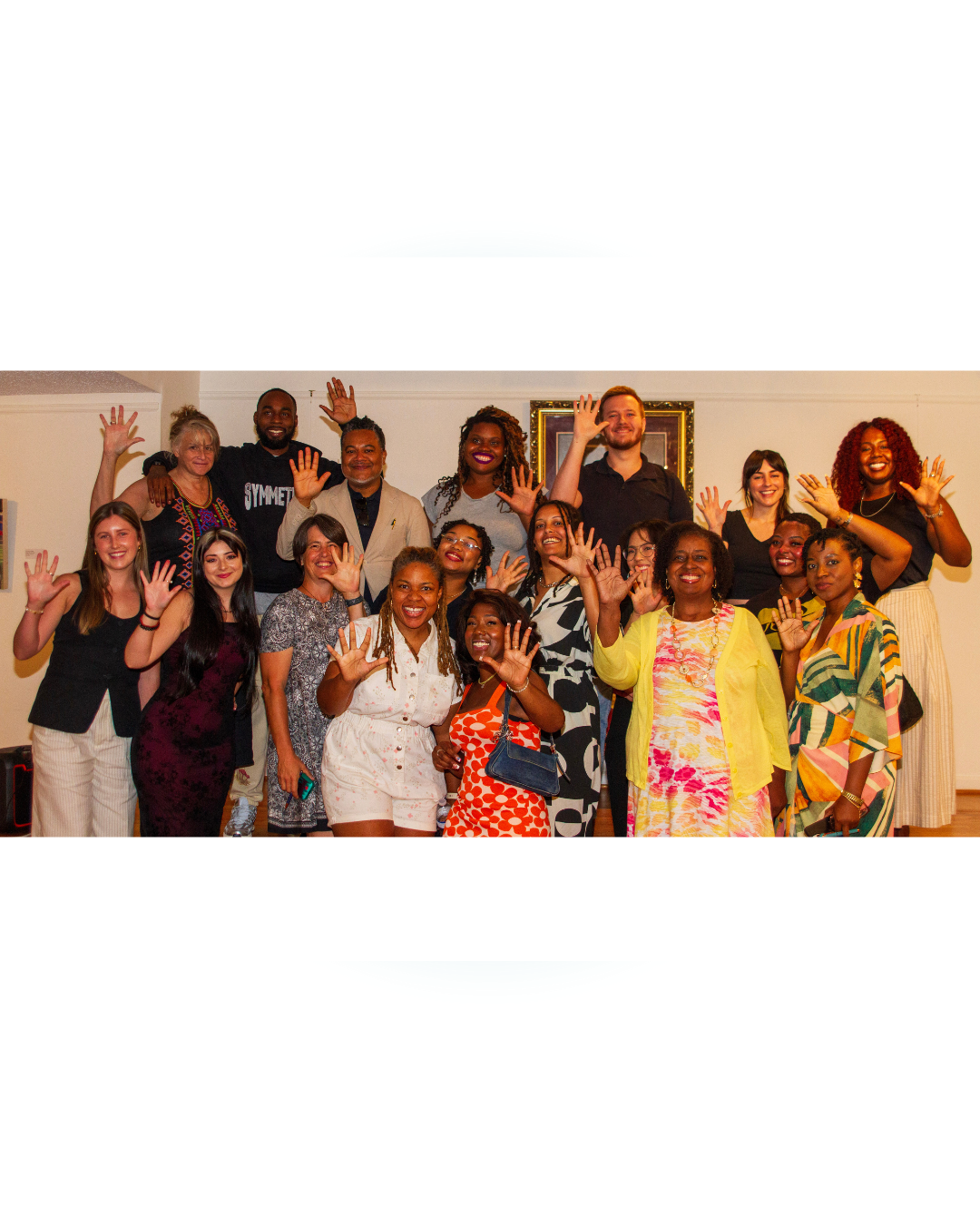
Canopy Atlanta asked more than 90 Collier Heights community members about the journalism they needed. Many residents shared stories of the neighborhood’s early days as a Black neighborhood, built and planned by Black residents.
A Canopy Atlanta Fellow, Albert B. Cooper IV, was one of those residents. In this story, he shares his memories of living and growing up as a child in Collier Heights in the 1950s and 1960s.

The small, white frame house on Albert St. hasn’t changed much since I grew up there in the mid-1950s and 1960s.
The dirt road has been replaced by asphalt. In 1954, most of my neighbors were white, and the area was mostly woods with a stream running near my home.
My brother Michael and I were curious, rambunctious, and fearless. We used to spend hours in those wooded areas, heavy with the smell of pine trees and honeysuckle vines, pretending to be explorers and hunters interacting with plants and animals. I became a little naturalist, fully immersed in the biology of nature, its beauty, and subtle life lessons.

I played with bees and wasps and got stung so much that my swollen fingers seemed normal. And poison ivy still doesn’t affect me.
Today, I occasionally drive by as I visit friends or as part of my work as a location scout for movies and television shows.
I still like the vibe of Collier Heights, a model community designed by Black planners who sought to provide quality housing for Black residents in a segregated Atlanta. We were among the early families; it took a couple of moves before we arrived.
The years before Collier Heights
My parents met at Atlanta University Center. My father, A.B. Cooper III, went to Morehouse College, and my mother, Gloria Ogletree, attended Clark College (now Clark Atlanta University). He went to Palmer Memorial Institute in North Carolina, a Black private school. My paternal grandfather, Dr. A.B. Cooper Jr., could afford to offer his kids that kind of education because he was a successful dentist on Auburn Avenue.
In 1950, my dad was drafted and went off to the Korean War as part of the medical corps.
I was born in 1951, and my mother lived in the Fourth Ward at her grandmother’s house. Ethel Murray—my great-grandmother—bought the home in 1930. She was a much-sought-after cook for a rich Jewish family. My grandmother, Whitman Ogletree, also lived there and worked at the Druid Hills Golf Club as a towel lady and companion for the older women.
It’s the same Fourth Ward home I live in now.
By 1953, my father had left the U.S. Air Force. My brother, Michael, was born, and we moved into the new Highpoint Apartments on Pryor Road. They felt crowded, sterile, and cold—with no yards, trees, or playmates. I didn’t like the apartments. My parents didn’t either.
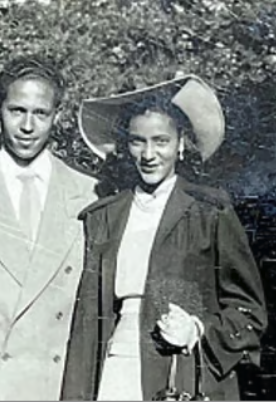
“My mother was concerned about finding a safe place.“
My father got a good job at the aircraft company Lockheed Martin, earning $1.60 per hour. And soon after, our family had a new baby coming. We would soon be joined by Sheila Darlene Cooper.
Our family was now five, and we needed a bigger and better place to live.
A place to call home
My parents longed for a place with a yard and trees, like the ones in which they grew up. But for Black families during the early 1950s, finding a house for sale in Atlanta was difficult. At the time, Atlanta had a successful Black community that included physicians, bankers, teachers, business owners, and churches.
Yet there were limited housing options. We couldn’t just go anywhere we wanted. Segregation laws and the potential for violence and bombings kept the lines drawn between Blacks and whites.

Four generations of the Cooper family
My mother was concerned about finding a safe place. She would be home alone most of the time, with three children.
Her fear grew in 1955. She was reading a copy of Jet magazine, and something she saw greatly upset her. When no one was looking, I picked it up to see what all the fuss was about. The photo scared me. To me, it appeared to be a woman looking at a monster lying in a bed.
Later, I found out the picture was a little Black teen from Chicago in a coffin. His name was Emmett Till. White men had kidnapped, brutally beaten, and shot him while he was visiting relatives in Mississippi. His alleged offense was whistling at a white woman. According to news reports and the FBI, a large metal fan was tied to his neck with barbed wire, and his body was thrown into the Tallahatchie River.
“We were about to completely change our lifestyle.”
The crime sent chills through many Black parents worried about the safety of their children.
My parents, with the guidance of my grandfather, decided we were moving to a safe place.
My father felt that working at Lockheed, with its segregated bathrooms, lunchrooms, and with no possibility of advancement, seemed bleak. So, my grandfather decided to help my father start his own business, a gas station.
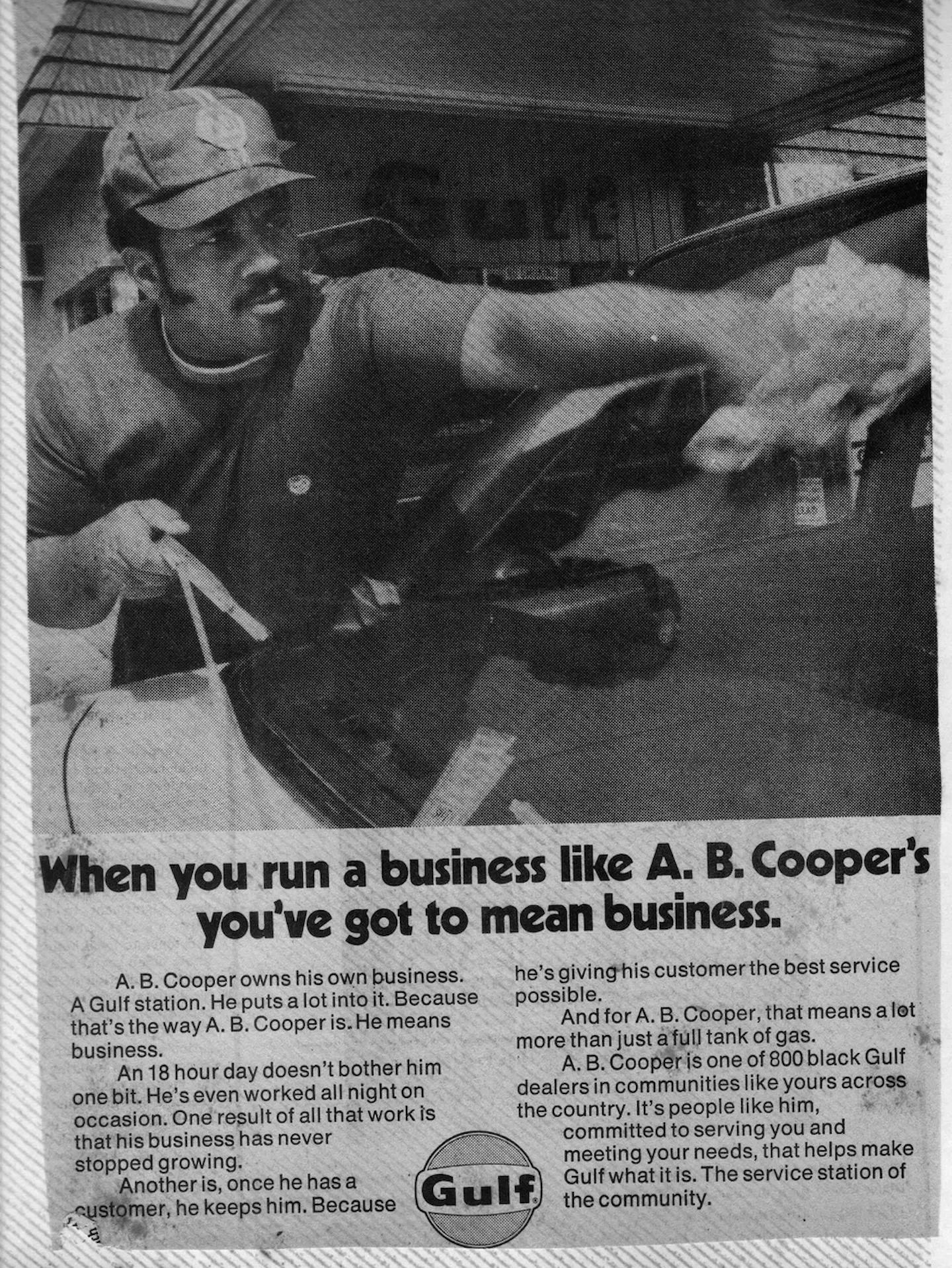
An ad about Cooper’s Gulf Gas Station
We were about to completely change our lifestyle.
Atlanta Black community leaders had developed a secret plan. The plan was called Project X.
It followed the classic storylines of early settlers in America. We would become pioneers and move out West, staking claim to a new frontier. There was undeveloped land west of downtown Atlanta. My grandfather said, there we could build a new community for ourselves. A totally Black community, built and developed by Black folks, both well off and working class.
“It settled me. Nourished me.”
The whole area was the country with a few small houses, undeveloped and isolated. Most streets were dead ends and stopped where the woods started. We didn’t have streetlights or air conditioning. There was a septic tank and a huge floor furnace for heat. But there were front and back yards.
A very basic house, but it was our home.
And it was my father’s life lesson from his monied father: make it work.
Our Camelot
Over time, new homes and subdivisions were added. The Collier Heights family was quickly growing.
As children, our parents shielded us, as best they could, from the outside world.
The civil rights movement, the Birmingham Campaign, Medgar Evers’ assassination, the March on Washington, and the Baptist Street Church Bombing in Birmingham shocked our parents and the rest of the nation.
Still, we felt safe in our community.
At home, we would hear the soothing sounds of Nat King Cole, Ray Charles, or Bill Evans softly echoing on our two-speaker stereo system. We would smell Mom’s smothered steak, rutabagas, and green beans, with cornbread.
It settled me. Nourished me.
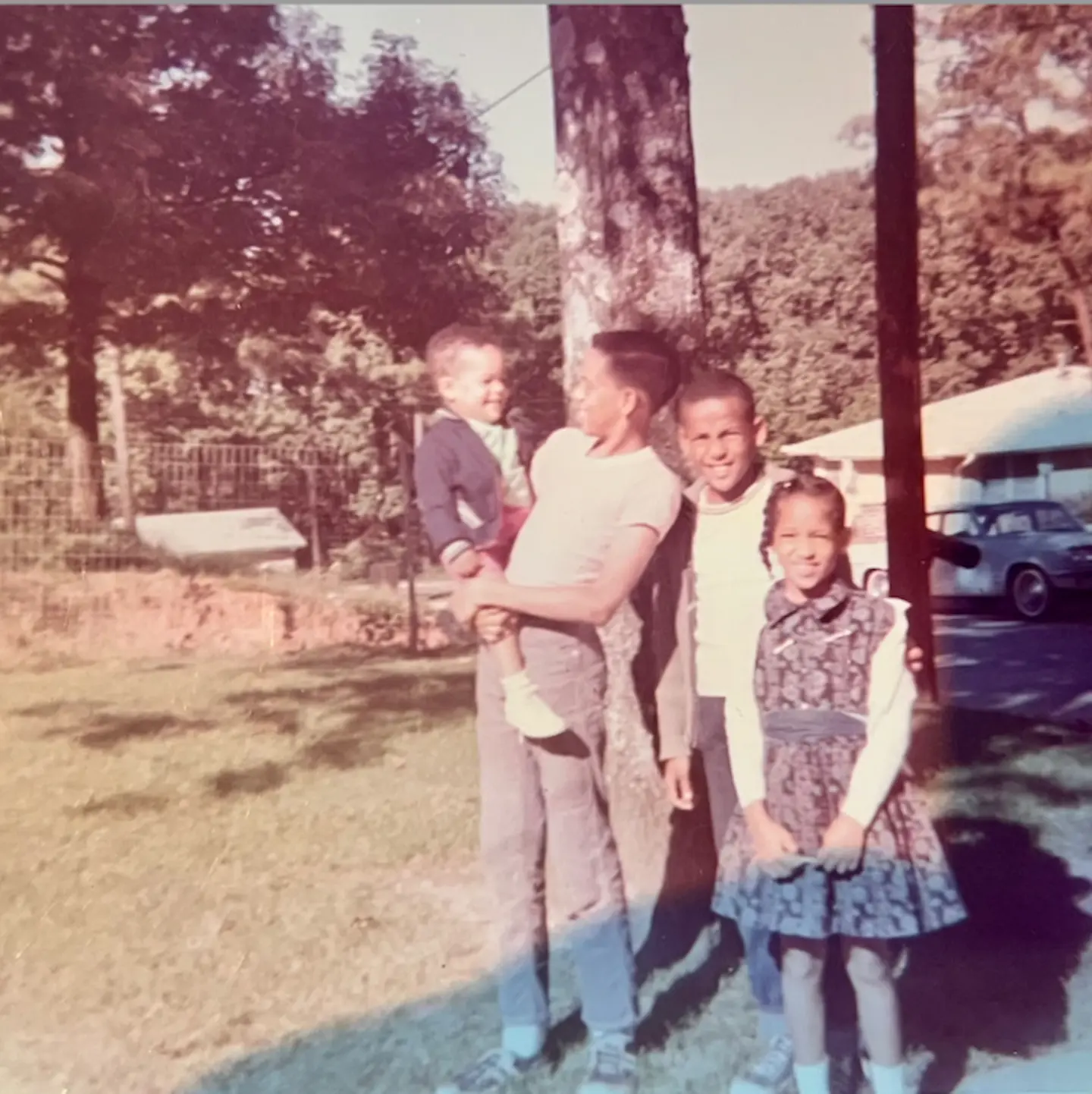
The Cooper children in their Collier Heights neighborhood
Riding my bike, I met a new kid in Kings Grant subdivision, just a few streets over from our home on Albert Street. I knew him as “Junior,” and we became explorer friends. His father was a prominent minister, civil rights leader, and theologian, the Rev. Wyatt Tee Walker. To me, though, he was just my friend’s dad.
Walker was on the board of the Southern Christian Leadership Conference and an organizer of the Birmingham Campaign and the March on Washington, where the “I Have a Dream” speech was delivered.
Walker and many other civil rights leaders were customers at Cooper’s Gulf Gas Station.
Our family left Collier Heights around 1966 and moved to Peyton Forrest.
“Even today, it makes me wonder, what would the world be like if we were allowed to build it and fully participate?”
Collier Heights, though, left an indelible mark on my soul.
Even today, it makes me wonder, what would the world be like if we were allowed to build it and fully participate?
Since those days, sometimes, I just drive through to catch the vibe. It’s still magical and so special. A 1950s shining example of equitable living and Black community building.
It’s the people, not the houses, we must remember. The residents created, shared, and lived a magical vision of America, built on a solid foundation of love of self, education, discipline, church, and lessons from our ancestors.
Our Camelot.
Like iced tea with lemon on a hot day: cool and sweet.
Editors: Ann Hill Bond and Mariann Martin
Fact Checker: Ada Wood
Canopy Atlanta Reader: Genia Billingsley
I hope this story leaves you inspired by the power of community-focused journalism. Here at Canopy Atlanta, we're driven by a unique mission: to uncover and amplify the voices and stories that often go unheard in traditional newsrooms.
Our nonprofit model allows us to prioritize meaningful journalism that truly serves the needs of our community. We're dedicated to providing you with insightful, thought-provoking stories that shed light on the issues and stories that matter most to neighborhoods across Atlanta.
By supporting our newsroom, you're not just supporting journalism – you're investing in Atlanta. Small and large donations enable us to continue our vital work of uncovering stories in underrepresented communities, stories that deserve to be told and heard.
From Bankhead to South DeKalb to Norcross, I believe in the power of our journalism and the impact it can have on our city.
If you can, please consider supporting us with a small gift today. Your support is vital to continuing our mission.
Floyd Hall, co-founder