This is a weekly feature called Community Notebook, filled with snippets of information, conversations, and reporting about the communities where we work. Canopy Atlanta Fellows and other community residents may contribute to this weekly reporting. The Community Notebook is featured in our newsletter Voices — sign up to find this in your inbox every week.

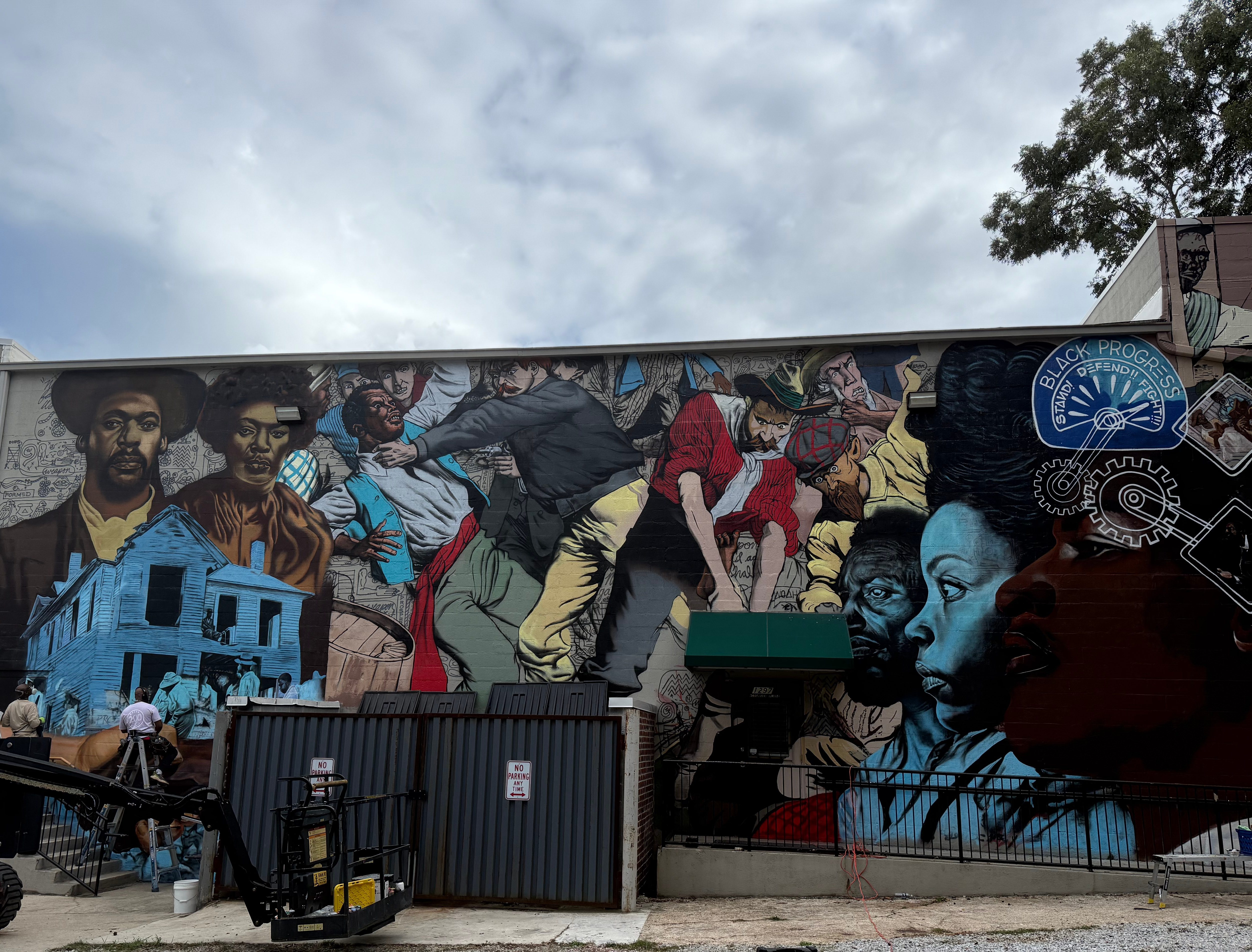
The smell of fresh paint lingered in the air even before we saw the mural. We felt the weight of history pressing through its colors as we stood in Historic South Atlanta on a warm September afternoon. Families, neighbors, and elders gathered, drawn together by a moment both new and deeply rooted: a public work of art honoring the victims and survivors of the 1906 Atlanta Race Massacre.
Artist Fabian Williams spoke about that heaviness, the challenge of depicting a story birthed in violence and grief. But he also invited us to imagine what a better world would look like, one where events like 1906 could never happen again. His words asked us to hold violent memory in one hand and hopeful possibility in the other.

For me, as part of Canopy Atlanta, the day carried echoes of our own work. Back in 2023, we walked the streets of Lakewood Heights and along Gammon Street with guides Victoria Lemos and Ann Hill Bond, who helped us uncover the history of Luther Judson Price and the early years of Clark Atlanta University. And in a powerful full-circle moment, the mural was unveiled on the wall of Community Grounds, the neighborhood coffee shop where we held listening sessions that shaped our Lakewood Heights Community Issue. The mural, sponsored by the National Center for Civil and Human Rights Truth and Transformation Initiative and Focused Community Strategies, roots history in a place of ongoing community voice and gathering.
The ceremony opened with Kama Pierce and Jill Savitt, who reminded us of the importance of history and truth-telling. The 1906 Race Massacre was a time in Atlanta’s history when Black progress sparked white backlash, but it is also a story of resilience.
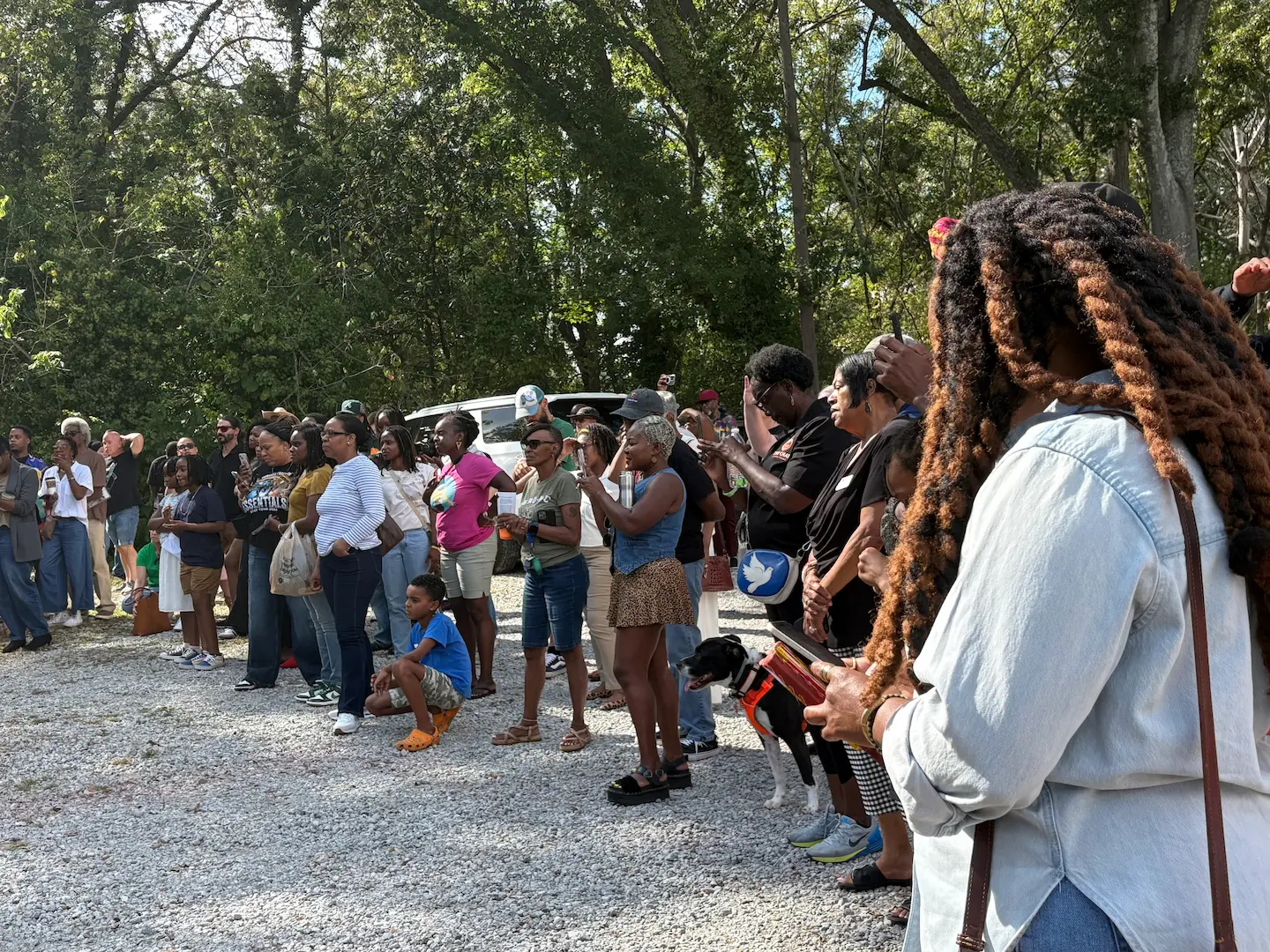
That spirit carried through the program. Celebrated photographer Jim Alexander stood as a living witness who has long documented Atlanta’s civil rights journey. Donna Stephens read aloud the names of the known victims of the 1906 Race Massacre, making sure their lives were not forgotten. Charmaine Minnifield extended an invitation to visit the Praise House at South View Cemetery, a site where memory and spirituality are preserved in living form.
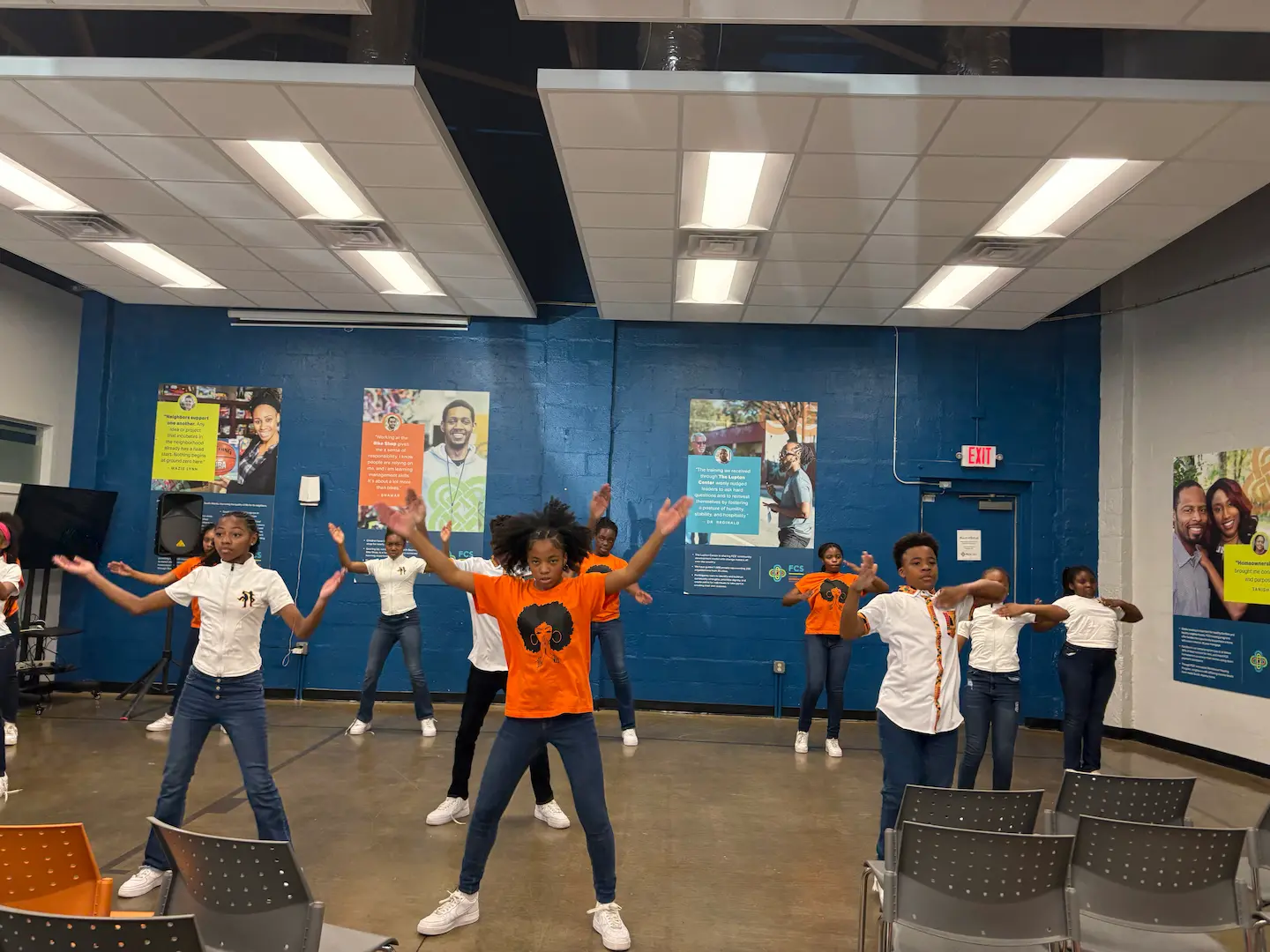
The highlight of the afternoon was a performance by the Essential Step Team from the Ron Clark Academy, coached by social studies teacher Zion Wynn. Watching these young people learn and give a performance rooted in history gave us all hope for a better future—proof that memory, when passed forward, becomes not just remembrance but a spark for resilience and change. Jonathan Williams then invited us to scan a QR code and step into an augmented reality experience of the day. Finally, Ann Hill Bond closed the program by reminding us that South Atlanta and Lakewood Heights (then known as Brownsville) became a place of safety for people of color during this period, a refuge in a city gripped by violence.
Fresh paint cannot heal old wounds. But when it is layered with memory, story, and community, it can open the door to a deeper kind of justice. Gathering on Saturday showed us that the act of remembering is also an act of imagining. That is work we will continue to walk alongside.
I hope this story leaves you inspired by the power of community-focused journalism. Here at Canopy Atlanta, we're driven by a unique mission: to uncover and amplify the voices and stories that often go unheard in traditional newsrooms.
Our nonprofit model allows us to prioritize meaningful journalism that truly serves the needs of our community. We're dedicated to providing you with insightful, thought-provoking stories that shed light on the issues and stories that matter most to neighborhoods across Atlanta.
By supporting our newsroom, you're not just supporting journalism – you're investing in Atlanta. Small and large donations enable us to continue our vital work of uncovering stories in underrepresented communities, stories that deserve to be told and heard.
From Bankhead to South DeKalb to Norcross, I believe in the power of our journalism and the impact it can have on our city.
If you can, please consider supporting us with a small gift today. Your support is vital to continuing our mission.
Floyd Hall, co-founder