This is a weekly feature called Community Notebook, filled with snippets of information, conversations, and reporting about the communities where we work. Canopy Atlanta Fellows and other community residents may contribute to this weekly reporting. The Community Notebook is featured in our newsletter Voices — sign up to find this in your inbox every week.

Over the past four years, I’ve spent countless hours listening in Atlanta communities. I’ve attended neighborhood meetings and community gatherings, listening to residents talk about their hopes, their frustrations, and the daily realities of living in a city that’s constantly changing.
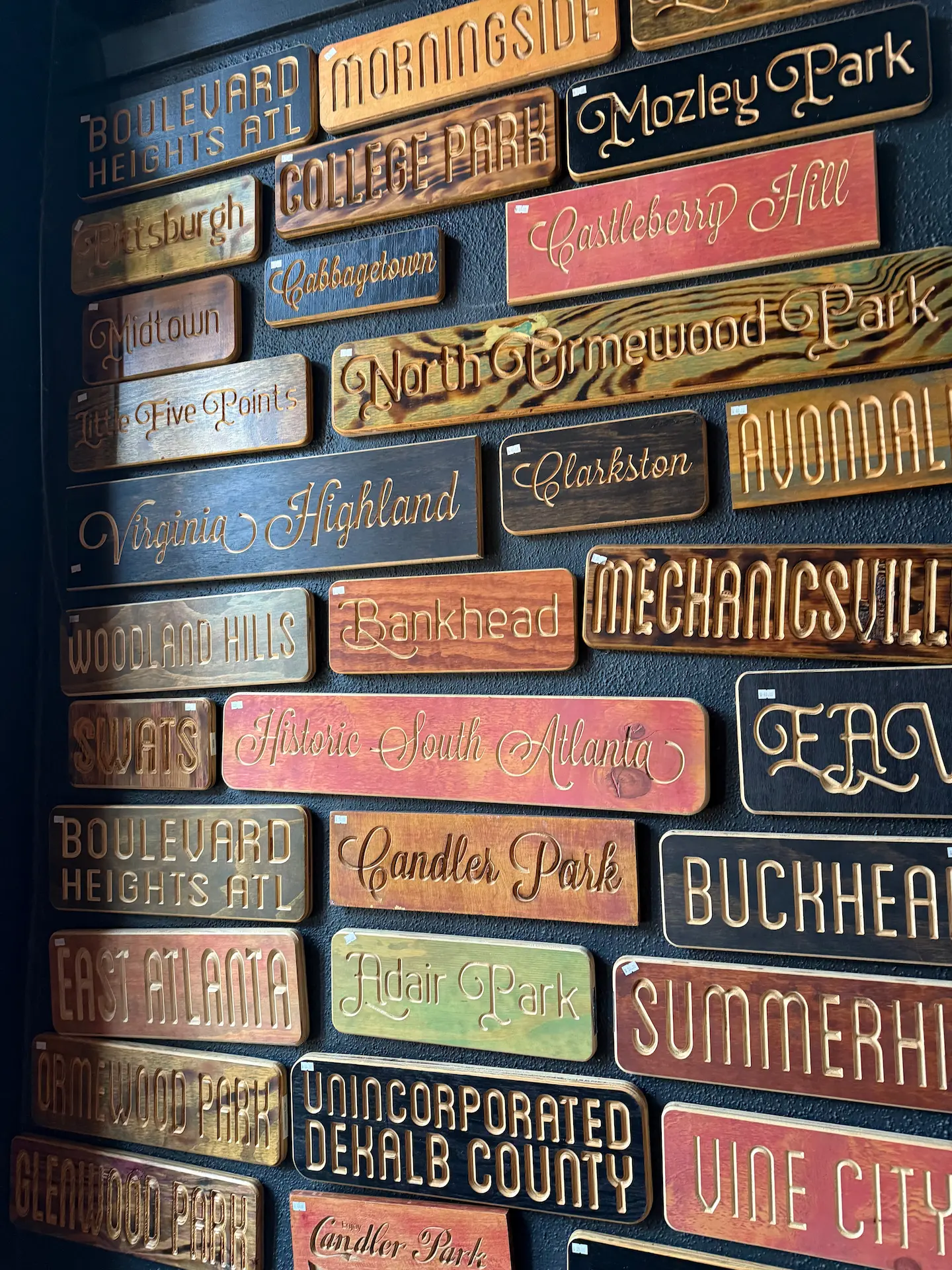
Whether I’m in Grove Park, Lakewood Heights, Clarkston, South Atlanta, or Pittsburgh, I often hear the same needs: safer streets, affordable housing, places where children can play and elders can rest, and where neighbors know each other.
But alongside those shared dreams, each community also has its own rhythm, history, and sense of identity. Some are built on deep family roots; others are shaped by migration, reinvention, or survival. Every neighborhood tells its own story about what it means to belong.
Clarkston, for example, has built an identity around its immigrant and refugee community—one that shows how diversity and resilience can coexist with small-town warmth. The languages spoken in its markets and the cultures represented in its schools reflect a version of Atlanta that is globally connected yet deeply local.
Grove Park, with its deep cultural roots in the arts, is a place that rapper T.I. once called home. Community staples like Bankhead Seafood served warmth and fried fish to neighbors for decades, becoming a beloved gathering spot that reflected the spirit of the Westside.
Across the city, Lakewood Heights invokes memories of the old General Motors plant and a once-thriving local economy, reminders of resilience and the power of communities to adapt and endure through change.
Recently, while reading notes from a Lakewood Heights community meeting, a comment caught my attention:
“It’s just going to take time before we get to where we want to be—like other communities, you know, like Grant Park.“
That statement lingered with me. What does it mean to “get to where we want to be?” Is the goal to look like Grant Park, a neighborhood often held up as an example of stability, beauty, and investment? Or is it to be something that reflects Lakewood Heights’ own sense of pride, culture, and resilience?
Aspiration is complicated in a city like Atlanta. For many, communities such as Grant Park or Inman Park symbolize progress, with their tree-lined streets, walkable blocks, historic homes, and thriving businesses. Yet those same neighborhoods are also reminders of who was pushed out as a part of that progress. The struggle for equity and belonging doesn’t end when the streets get updated and sidewalks are repaired.
Maybe what we truly aspire to isn’t to become like another neighborhood, but to have the same access to resources and respect, without having to trade away our character or community story.
When I think about what “getting there” means for places like Lakewood Heights, Grove Park, or Clarkston, I think about something broader than beautification or market value. I think about residents having agency, about kids knowing their neighborhood’s history, and about people being able to stay long enough to witness the thriving community they helped to build.
The real vision for Atlanta’s neighborhoods might not be about comparison at all. It might be about wholeness—each community growing into its own version of what thriving looks like, without losing the essence of who they are.
So what does progress look like for your community? And how can we build it together, without letting go of the stories that make each place our own?
I hope this story leaves you inspired by the power of community-focused journalism. Here at Canopy Atlanta, we're driven by a unique mission: to uncover and amplify the voices and stories that often go unheard in traditional newsrooms.
Our nonprofit model allows us to prioritize meaningful journalism that truly serves the needs of our community. We're dedicated to providing you with insightful, thought-provoking stories that shed light on the issues and stories that matter most to neighborhoods across Atlanta.
By supporting our newsroom, you're not just supporting journalism – you're investing in Atlanta. Small and large donations enable us to continue our vital work of uncovering stories in underrepresented communities, stories that deserve to be told and heard.
From Bankhead to South DeKalb to Norcross, I believe in the power of our journalism and the impact it can have on our city.
If you can, please consider supporting us with a small gift today. Your support is vital to continuing our mission.
Floyd Hall, co-founder