This is a feature called Community Notebook, filled with snippets of information, conversations, and reporting about the communities where we work. Canopy Atlanta Fellows and other community residents may contribute to this weekly reporting. The Community Notebook is featured in our newsletter Voices — sign up to find this in your inbox.

Before the East Point Planning & Zoning Commission called its February monthly meeting to order, the tone of the evening was already clear.
It was visible in the audience.
Green.
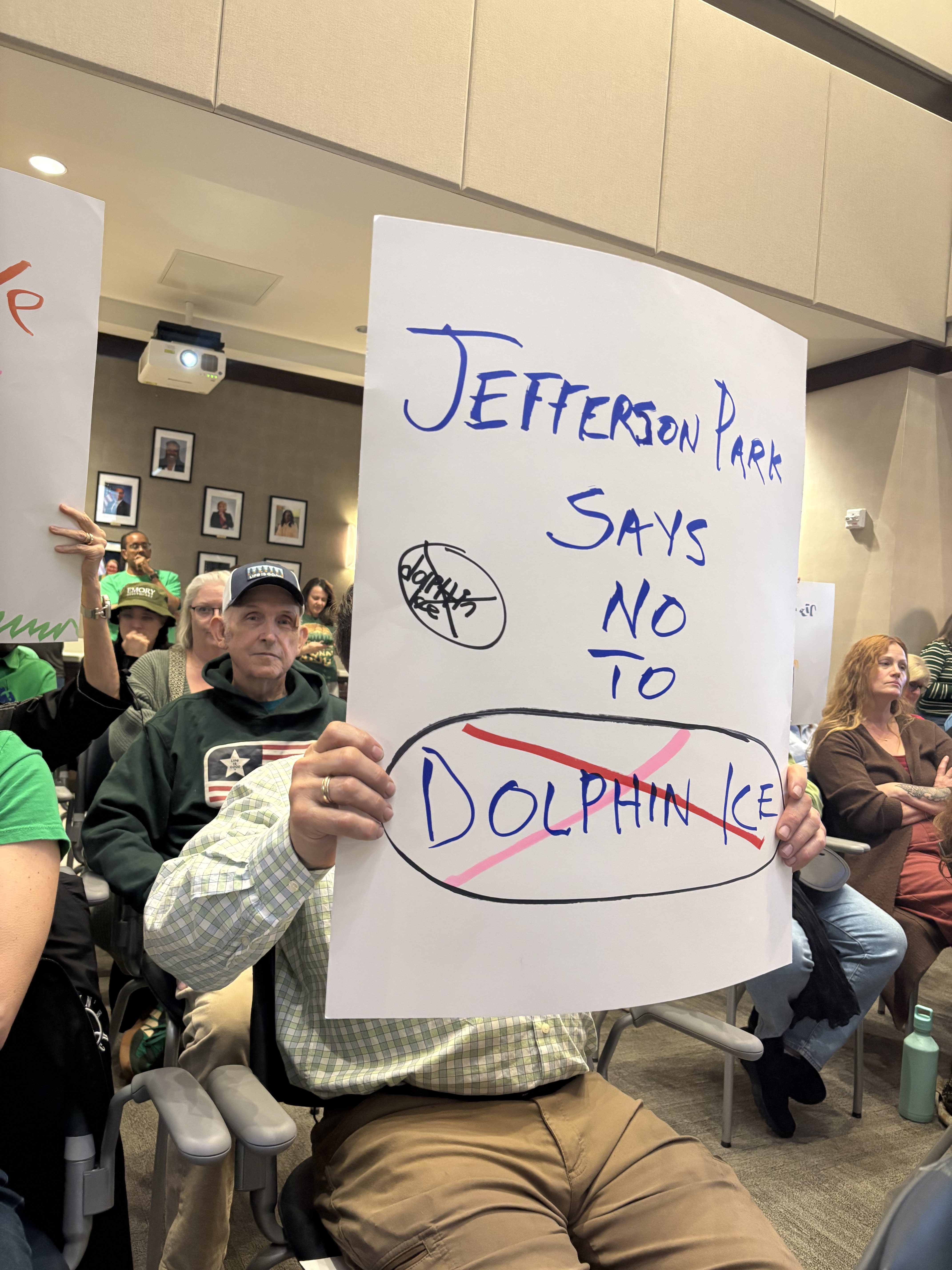
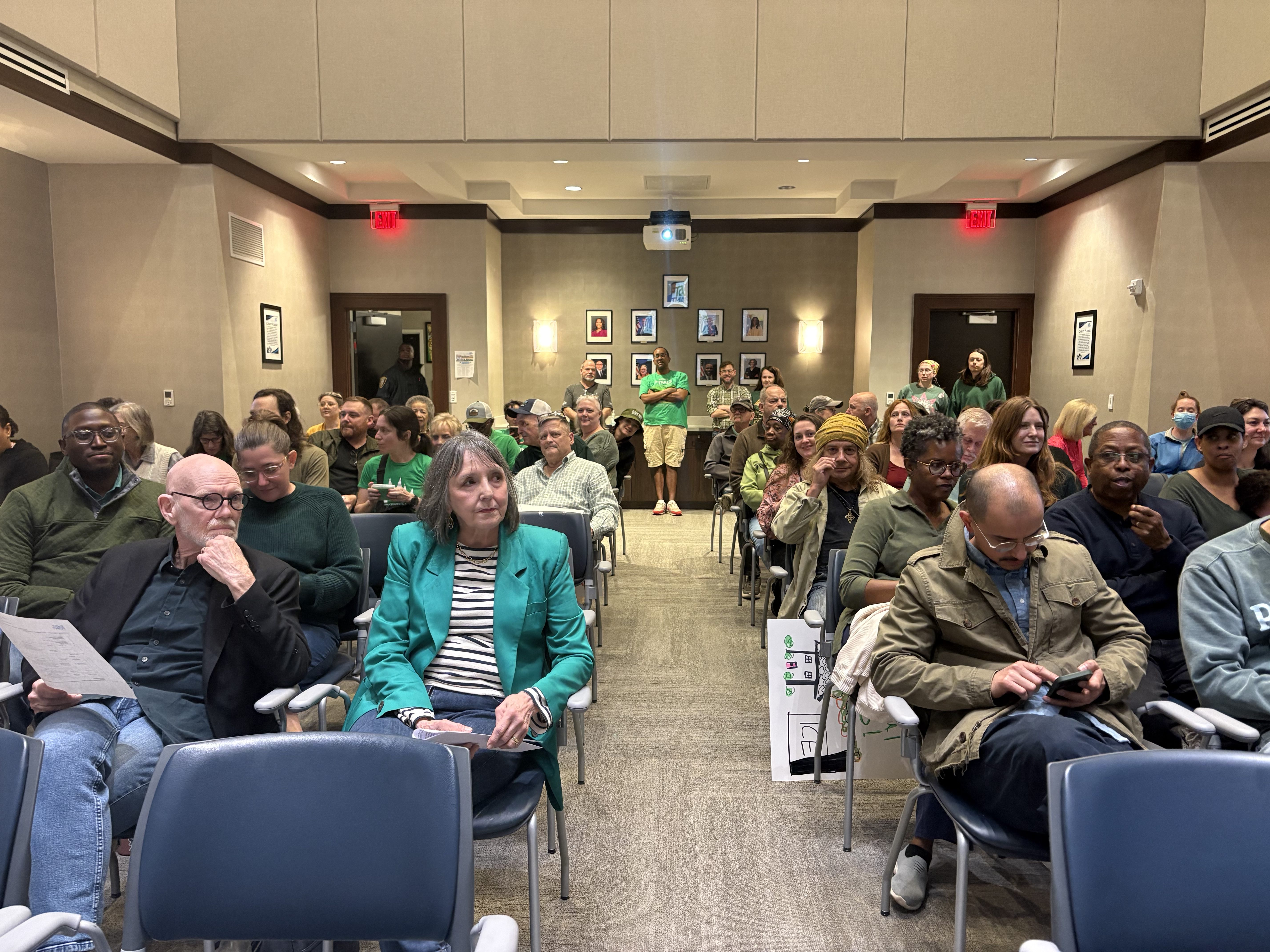
More than 30 residents filled the chambers wearing shades of green—jackets, sweaters, T-shirts—an unmistakable signal of solidarity. Handmade signs rested against chairs, folded beside knees, or held firmly in both hands.

Some signs were written in thick blue marker: “Jefferson Park Says No to Dolphin Ice”
Others were simpler, more direct: “Vote No”
And some spoke from a deeply personal place: “Love Our Homes”
Each sign carried its own voice. Together, they formed something collective, a visual language of shared concern against a manufacturing development in the East Point neighborhood Jefferson Park.
What appeared on paper to be a zoning hearing began to feel like something else entirely, something closer to a master class in community organizing.
As commissioners moved through routine opening items—roll call, adoption of the agenda, approval of prior minutes— the audience remained quiet.
Everyone present understood which agenda item had drawn the crowd:
1240 Oakley Drive—Murad Ajaney, Dolphin Ice and Water LLC—a variance request tied to a proposed ice manufacturing operation.
The requested variances sought exceptions to the city’s development standards, including relief from buffer and spacing requirements designed to separate industrial uses from nearby residential areas.
When the public hearing opened, the evening shifted from visual messaging to spoken testimony.
The owner and an engineer with Dolphin Ice described the project in technical terms — refrigeration systems, safety mechanisms, noise mitigation measures, and operational scale.
Residents listened closely, many taking notes.
Then came community voices.
One by one, speakers approached the podium, beginning with names and addresses before moving into deeper concerns. Residents spoke about proximity—homes located just hundreds of feet from the proposed site. They spoke about history—past experiences with industrial activity and pollution. They spoke about policy—the city’s one-mile buffer requirement and East Point’s Comprehensive Plan.
Some testimony moved beyond policy and planning language.
One resident approached the podium with her young son balanced on her hip. Before she began speaking, the child lifted his hand, offering an unprompted wave toward the commissioners—a small, disarming gesture that briefly softened the formal rhythm of the hearing.
Her voice steady but unmistakably personal, she spoke about safety, about the meaning of home, about the long-term consequences of decisions that extend far beyond site plans and zoning classifications. The moment offered a reminder of what those decisions ultimately shape—not just parcels of land, but the daily lives unfolding around them.
Behind her, the sea of green remained a silent but unmistakable presence.
The hearing stretched long enough that commissioners paused to address speaking time.
“I would like to see if I can figure out how to do this,” the chair said, working through the mechanics of extending comment periods.
Motions were made.
Amendments followed.
Time was extended.
More residents spoke.
Governance unfolded in real time alongside visible civic participation.
By the time staff delivered its recommendation—denial of the request—the emotional trajectory of the room had subtly shifted.
Commissioners discussed precedent.
Proximity.
Community opposition.
Public safety considerations.
The discussion remained measured, but the stakes were clearly felt throughout the chamber.
Then came the motion.
Then the vote.
Relief moved through the room—smiles, exhalations, quiet exchanges between neighbors. Applause surfaced, gently restrained by reminders of decorum.
Outside the chambers, the mood changed entirely. Signs reappeared, now framing celebration rather than opposition. Residents gathered for photos, laughter replacing the earlier stillness.
“I love when the community wins,” one resident said.
While the Planning & Zoning Commission voted to recommend denial, the process does not end here. The application now moves forward, and the East Point City Council will carry the final authority, weighing staff recommendations, commission votes, and community voices once more.
For residents, the path ahead is familiar: another agenda, another hearing, and another evening of minutes, motions, and public comment.
But something fundamental shifted inside the chambers long before the vote was cast.
Because, beyond land use classifications and buffer requirements, this meeting revealed something less technical and far more enduring.
A reminder that civic participation is not abstract.
It is neighbors rearranging schedules.
It is handmade signs and shared colors.
I hope this story leaves you inspired by the power of community-focused journalism. Here at Canopy Atlanta, we're driven by a unique mission: to uncover and amplify the voices and stories that often go unheard in traditional newsrooms.
Our nonprofit model allows us to prioritize meaningful journalism that truly serves the needs of our community. We're dedicated to providing you with insightful, thought-provoking stories that shed light on the issues and stories that matter most to neighborhoods across Atlanta.
By supporting our newsroom, you're not just supporting journalism – you're investing in Atlanta. Small and large donations enable us to continue our vital work of uncovering stories in underrepresented communities, stories that deserve to be told and heard.
From Bankhead to South DeKalb to Norcross, I believe in the power of our journalism and the impact it can have on our city.
If you can, please consider supporting us with a small gift today. Your support is vital to continuing our mission.
Floyd Hall, co-founder