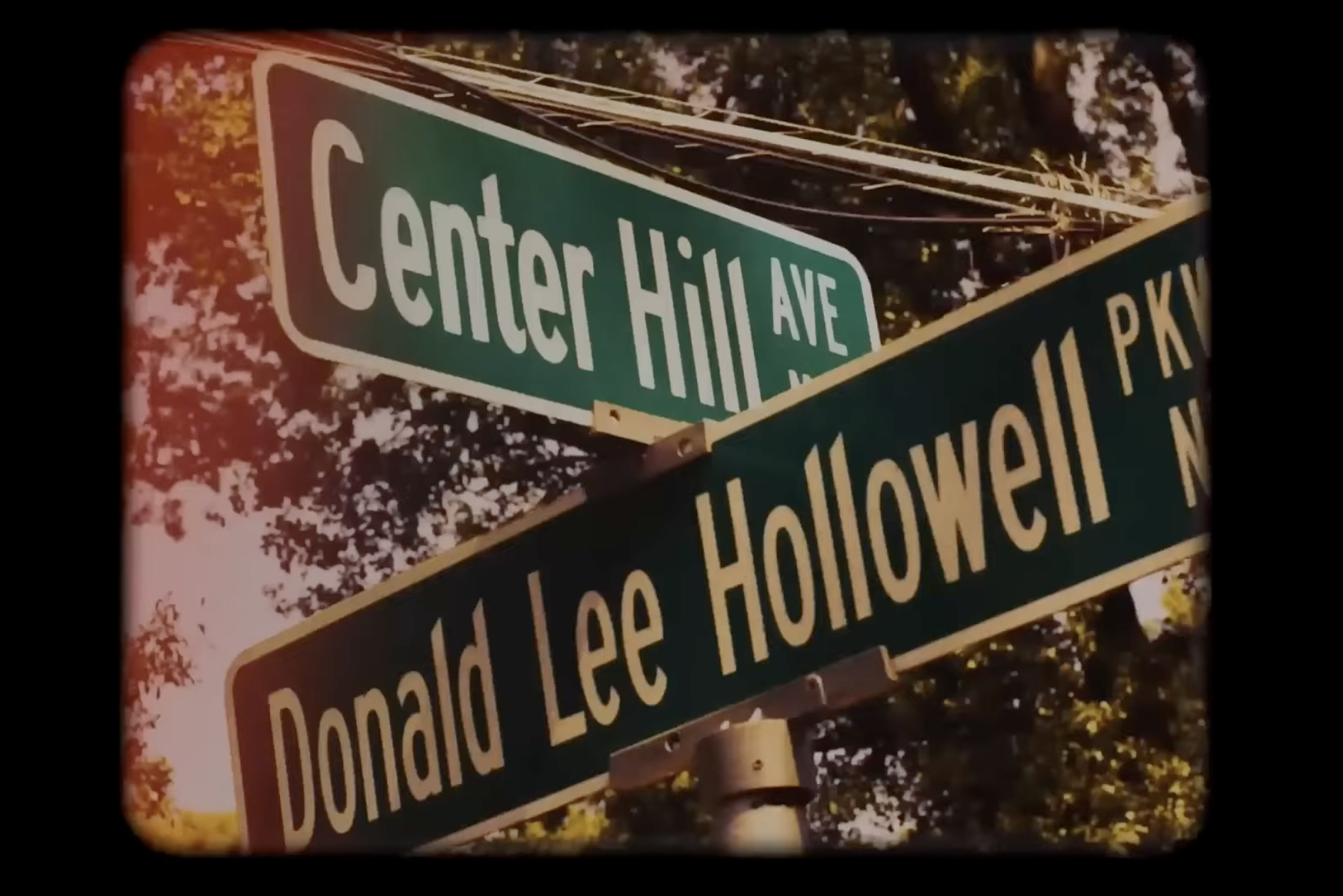
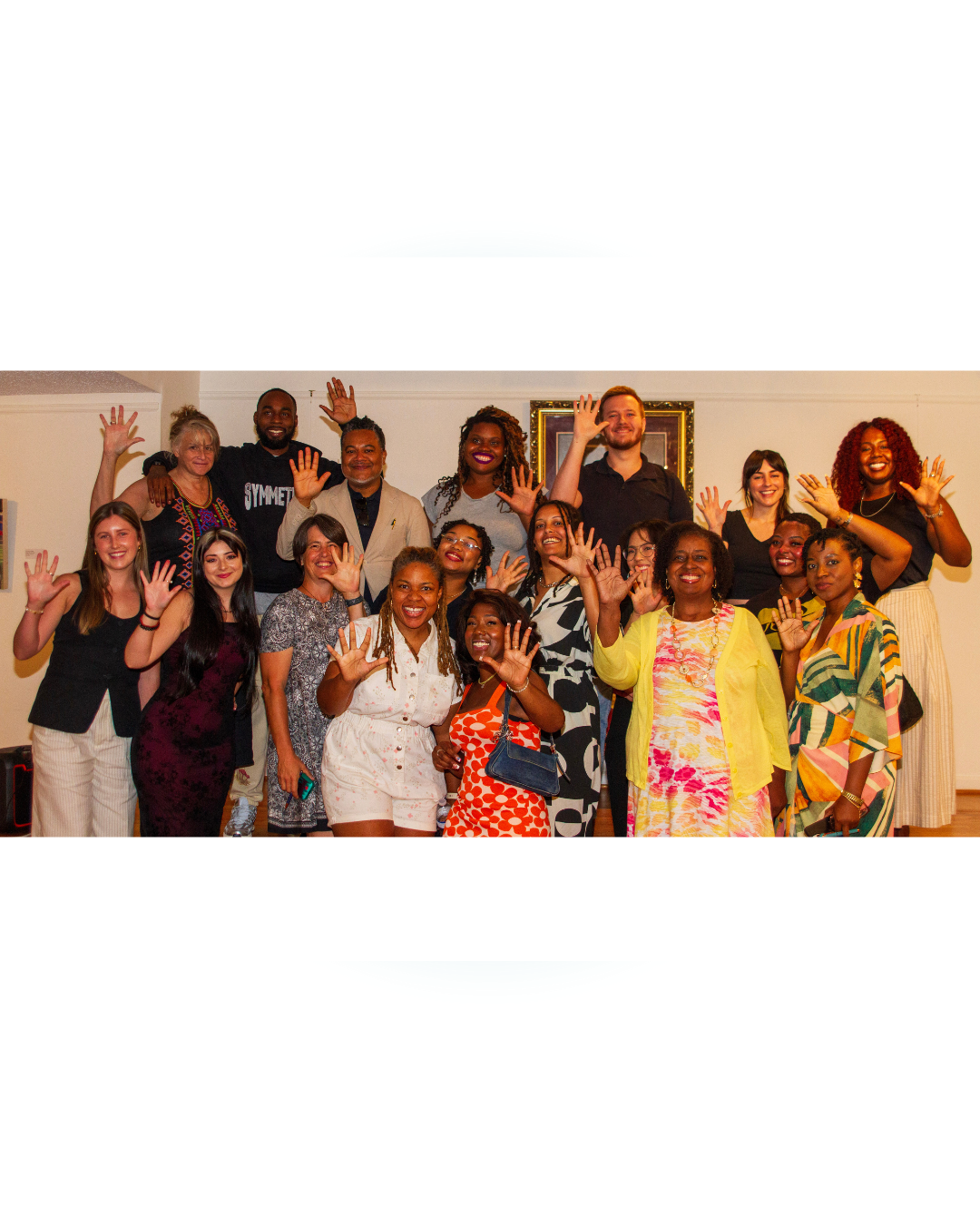
Canopy Atlanta asked over 90 Collier Heights community members about the storytelling they needed in their community. In those conversations, neighbors shared the storied history behind the community and how it was created. "Collier Heights was the 'elite' community,” one resident shared. "This community was the first to be built, financed, and designed by Blacks,” another said. This story attempts to share and celebrate that complex history we heard.
Canopy Atlanta also trains and pays community members, our Fellows, to learn reporting skills to better serve their community. TiBerni Hall and Akua Taylor are Canopy Atlanta Fellows.

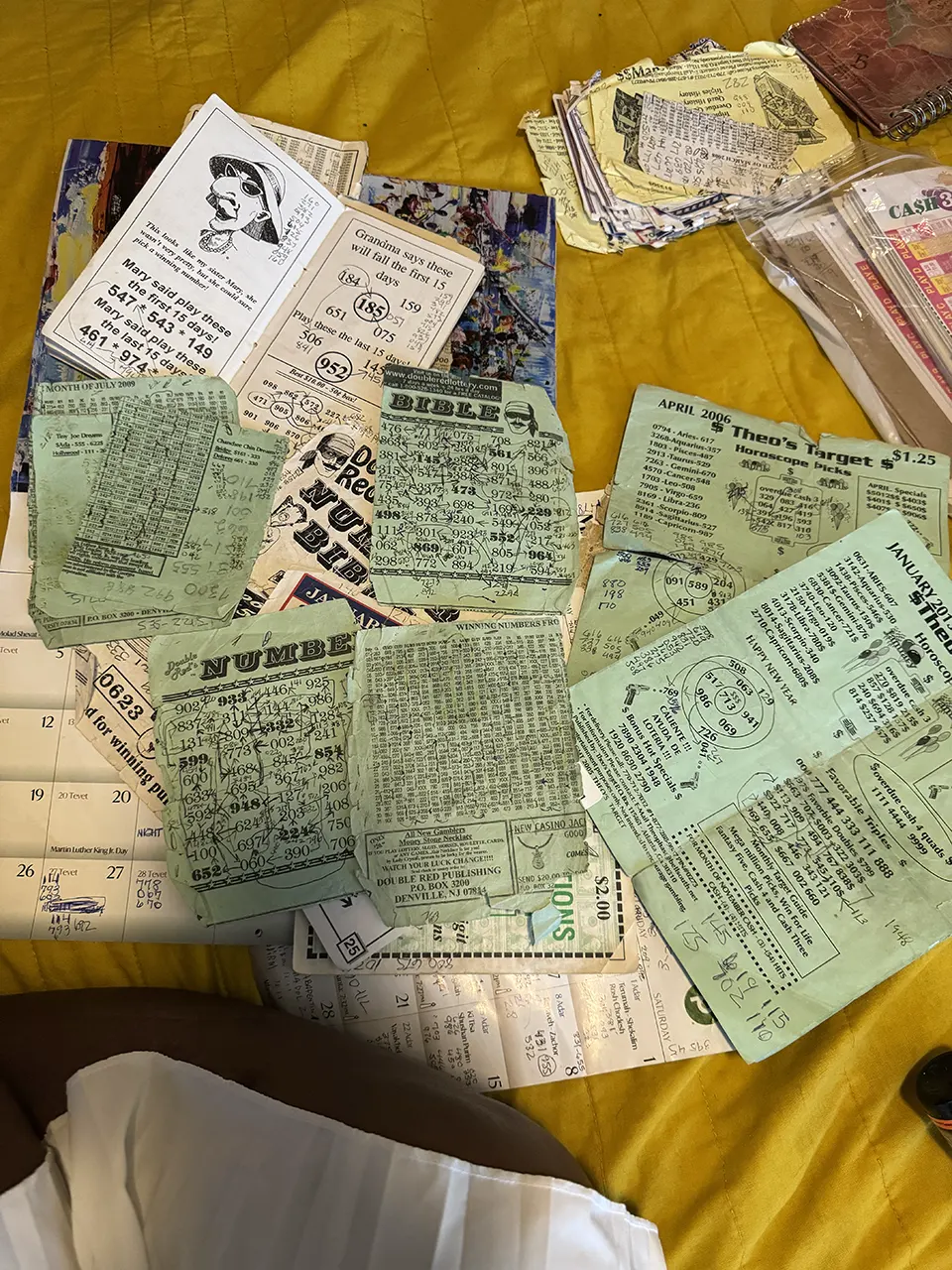
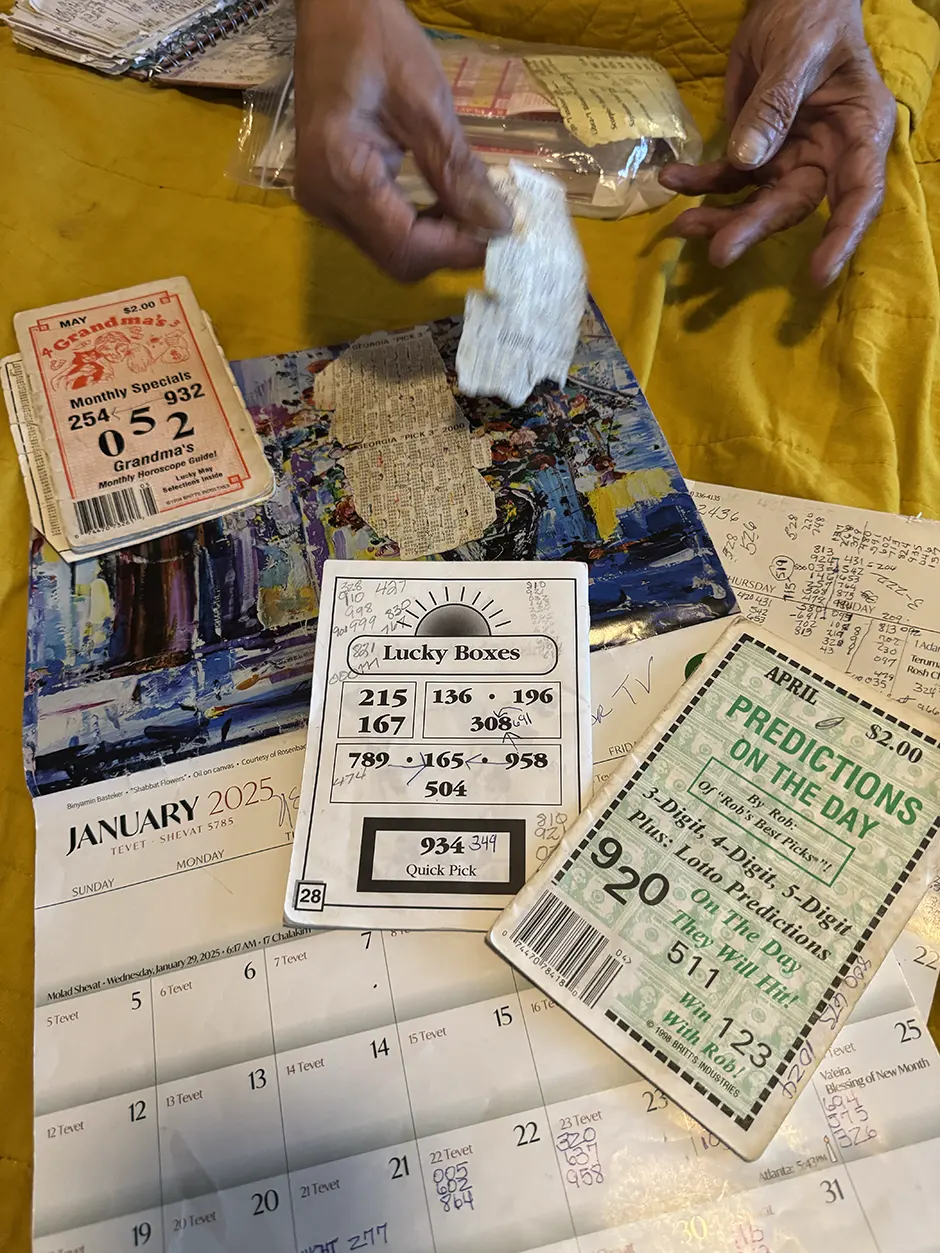
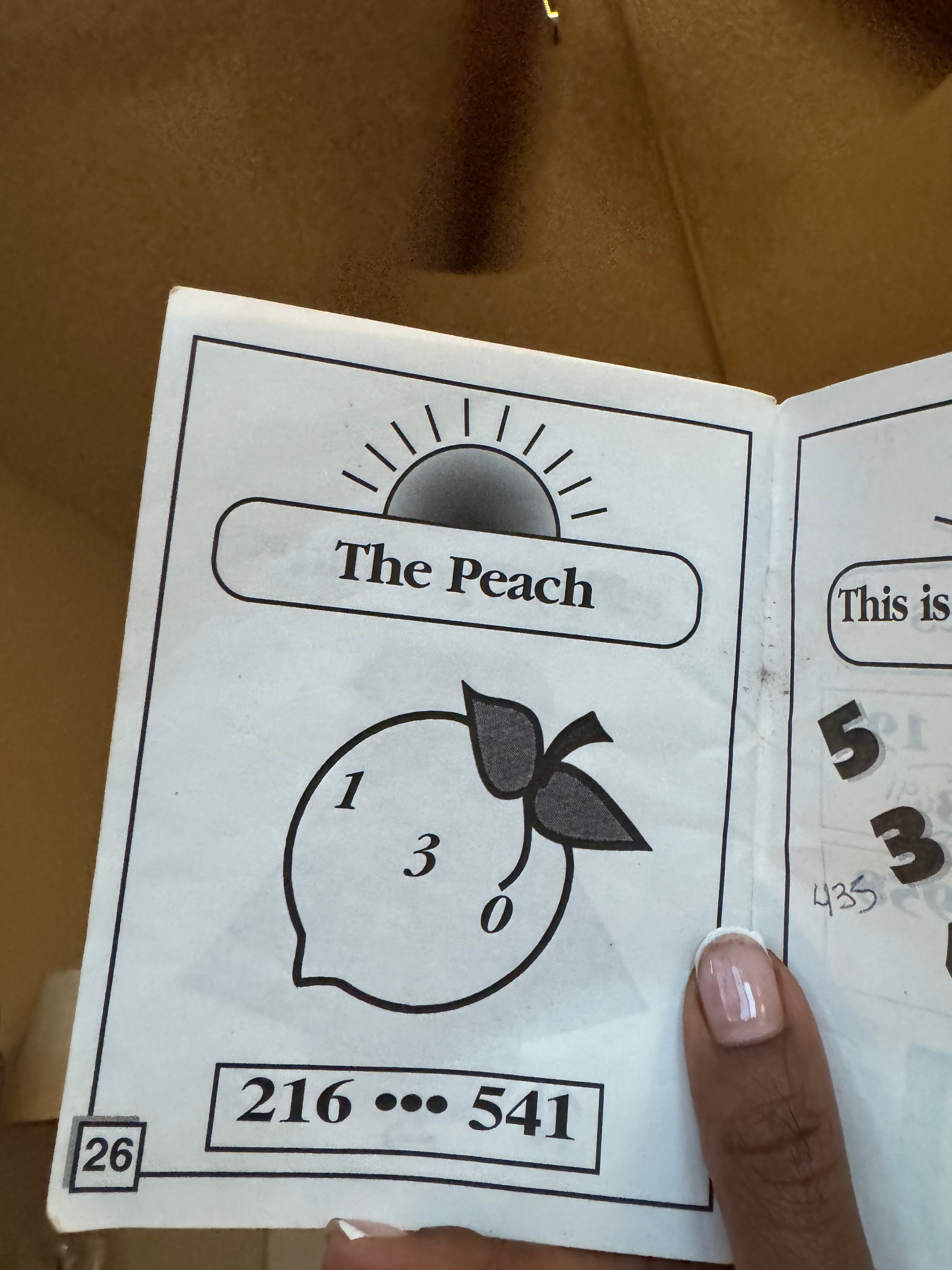
I learned about money—and about the ways it slipped through the cracks of official systems—at my grandmother’s bedside. My Mudea started each morning with a routine: coffee steaming, Bible open, Squawk Box murmuring in the background. Scattered across the table were scraps of dream books and stubby lottery pencils. Numbers scribbled on slips waited for me to carry them as the writer and the runner.
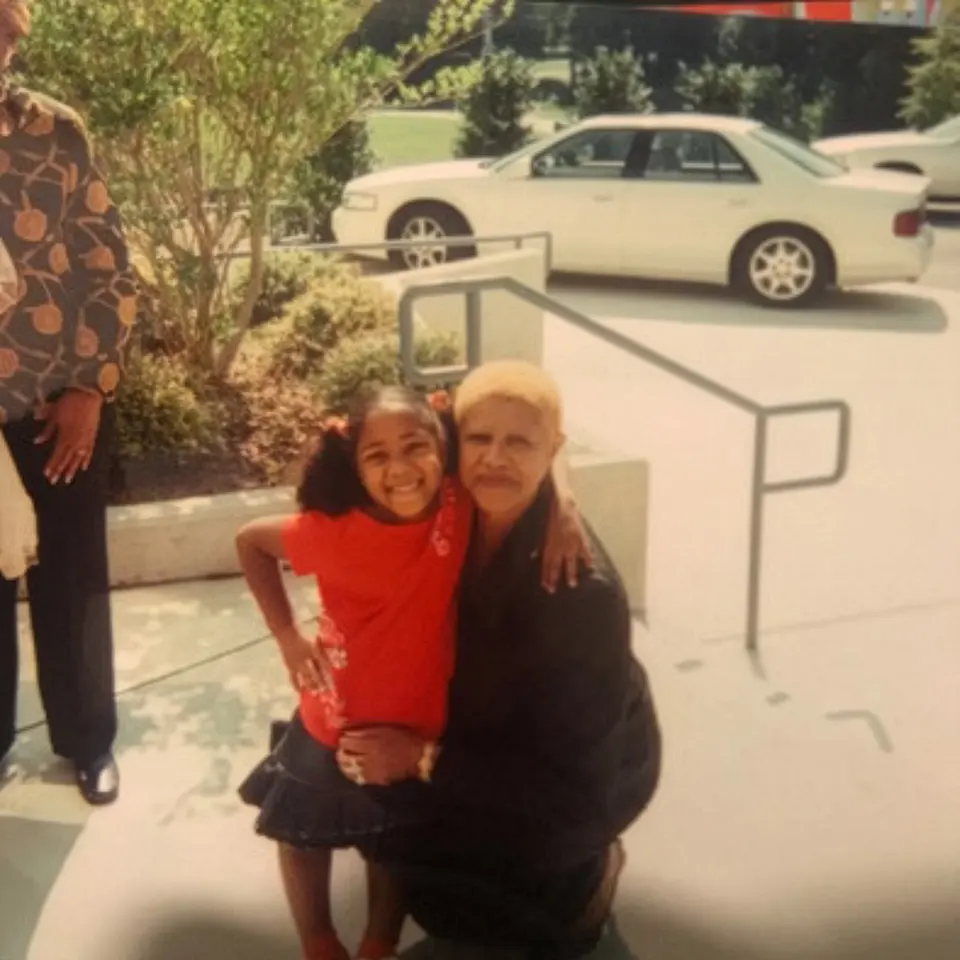
Mudea’s “hands of great character” pressed money into mine to “Play My Number.” I rushed to the gas station, anxiously. As the runner, it was serious. I called her at the lottery stand, etching the numbers as she spoke clearly: “straight box;” “combo,” “midday.” Every detail mattered.
Growing up, I knew that Collier Heights was a special place.
I was reminded by its beauty when listening to Richard Dunn, the grandson of Atlanta Voice News founder J. Lowell Ware.
“It was a nurturing space,” Dunn says. “You know, it was a walkable neighborhood, and we could explore. We could ride bikes. We could go play in the woods, go play in the cemetery … Before things got crazy, and you always need parental supervision to move around. Collier Heights was safe like that, and everybody knew each other.”

Collier Heights didn’t arrive by accident. In 1952, when the city annexed this stretch of land on the west side, a small group of determined people began to plot its future. They called themselves the West Side Mutual Development Committee, and though the name sounded official, what they were really doing was hacking the system.
They knew the rules of the city were stacked against them.
In the early 1900s, the rules and the system included items like The Ashley Ordinance of 1913. Named for Fourth Ward City Councilman Claude L. Ashley, this racial zoning ordinance was designed to legally restrict where Black people could live in Atlanta, effectively creating segregated districts. This ordinance still stands in the city today with amendments.
``You know, we back in the day, we would call it the code. You know those codes.``
Dunn explains, “You know, we back in the day, we would call it the code. You know those codes. It was ethics to even how they manage their business. It was—you learn supply and demand. You learn distribution. You learn math. You know what I mean: fractions, ounces, what weight really look like. You know me. So you learn organizational skills. Learn leadership skills, yeah, you learn checks and balances. You learn order instruction, strictly from hanging around guys who were in the game. And the difference is, I think they were aware of your opportunities and what you had available to you. And so, you know, a lot of times they would push kids out of the game.”
Realtors could turn hostile, zoning boards could slam doors, banks could simply say no. So the early planners of Collier Heights created a workaround. The National Development Company, a Black-led land bank, began buying property quietly, shielding buyers from the refusals that came the moment a Black family’s name was on the contract.
RELATED: Collier Heights is not for sale
By the late 1950s, members of the Empire Real Estate Board—including men like John Calhoun and Quentin V. Williamson—were cutting streets into the hillside, laying foundations, and selling lots. Their work had backing: Citizens Trust Bank, Atlanta Mutual Savings & Loan, and Atlanta Life Insurance Company set aside money for mortgages that white banks wouldn’t touch.
What rose here was more than a subdivision. It was a deliberate act of defiance, a neighborhood carved out of a segregated market. Collier Heights was proof that when Black Atlantans pooled their ingenuity and resources, they could build wealth on their own terms.
How Mudea would “Play My Number”
“Hey you hit … I’ll be by to drop off your money.” I remember Cynthia’s voice. That was The Bug, Atlanta’s three-digit lottery. Pennies and nickels passed hand to hand, a whisper economy threaded through kitchens and barbershops. The police called it a racket, estimated it took in $30,000 a day back in the 1930s, but those figures never mattered much to the people who played. What mattered was the quick payout, the chance to cover a grocery bill, or just the thrill of having a number hit. Everyone played the number and even young Black children had to work hard to earn money.
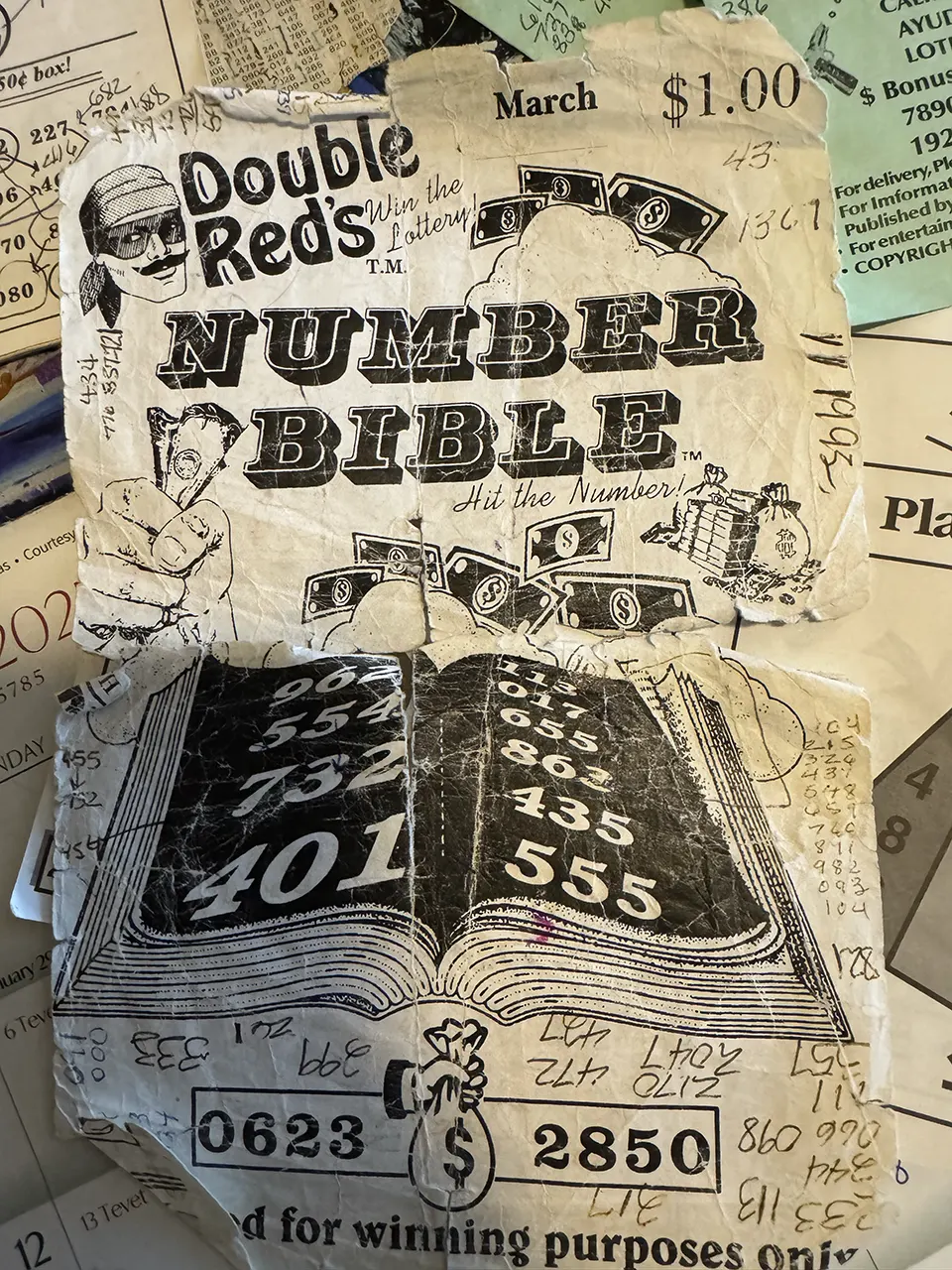
James Martin remembers it through his uncle, the legendary Chicken Man, who spun winnings into houses all over the city. “With the money he made from numbers, he purchased real estate and owned houses throughout the city. If you weren’t educated…it was other routes for you to get money in order to get yourself standing legally by getting businesses started.”
``The legacy of Collier Heights isn’t just in its ranch houses or quiet streets. It lives in Mudea’s slips and dream books, in the Shirley Temples sipped under blue neon lights...``
And then there was The Blue Flame, its neon glow marking the edge of the neighborhood. I was seven when I first walked inside. My Papa settled me on a barstool, ordered me a Shirley Temple, and leaned in close with his friends. I knew where I was, knew this was no place for a child, but I also knew the club pulsed with the same energy as The Bug—money moving, stories traded, survival strategies unfolding in plain sight.
The Bug didn’t fund Collier Heights, not in bricks or mortgages. But it coexisted with those systems. It filled in gaps, kept cash circulating, and mirrored the same determination that built the houses on Collier Drive and Baker Ridge.
Underground networks that built Collier Heights
If The Bug was one kind of safety net, churches and societies were another. Collier Heights families leaned on benevolent societies, on lodges, on the quiet power of pooled risk. When illness struck, when tuition came due, when a business needed seed money, these institutions stepped in.
Dunn put it plainly: “If you don’t have money, then you need to have some relationships, or a combination of those things make the world go around.”
He remembers afternoons at a printing press after school, learning how work created value, how small businesses stitched themselves into a community.
And Leyana Lloyd, an educator and daughter of a Collier Heights businessman, recalled the invisible threads tying everyone together: “Everyone stayed connected with each other. Everyone helped others get good business.”
Mutual aid wasn’t abstract. It was casseroles delivered, insurance lodges pooling dues, neighbors slipping cash into each other’s hands. These were the everyday economics that kept Collier Heights steady.
By the 1970s, the institutions that had nurtured Collier Heights were becoming powerhouses in their own right. Atlanta Life Insurance Company stood at the center, guided by Jesse Hill Jr.
Hill started at Atlanta Life in 1949, one of the first Black actuaries in the country. By 1973, he was its president. Under his watch, the company expanded its mortgage programs, stretching beyond Atlanta into Georgia, Alabama, Florida, and Texas, opening doors that white-controlled banks still kept shut.
But Hill knew mortgages were only part of the story. Atlanta Life under his leadership posted bail for protestors, funded voter registration drives that added tens of thousands of Black Atlantans to the rolls, and in 1980, raised a new headquarters on Auburn Avenue in partnership with Herman J. Russell. The building wasn’t just an office; it was a declaration, a monument to Black capital planted in the heart of the city.
For Collier Heights, Hill’s Atlanta Life was proof that the logic of workaround could scale. What began in the 1950s as a neighborhood strategy—land banks, pooled funds, and whispered loans—turned into so much more.
Collier Heights’ economy was never a single stream. It was layers: the official mortgages that Atlanta Life and Citizens Trust made possible, The Bug slips passed in barbershops, the benevolent societies covering burials, the printing press jobs and corner-store lessons. Each was a way of bending the rules, of surviving in a market built to shut Black families out.
The legacy of Collier Heights isn’t just in its ranch houses or quiet streets. It lives in Mudea’s slips and dream books, in the Shirley Temples sipped under blue neon lights, in the sermons and benevolent dues paid on Sunday, in the mortgages signed through Black-led banks and insurance halls. Its economics have always been plural; blue-collar and white-collar, church pews and corner stores, numbers games and corporate boardrooms. The beauty is in the persistent and provocative insistence that wealth, stability, and dignity could be made, even in the face of exclusion.
Editors: Ann Hill Bond and Mariann Martin
Copy Editor & Fact Checker: J.P. Irie
Canopy Atlanta Reader: Genia Billingsley
I hope this story leaves you inspired by the power of community-focused journalism. Here at Canopy Atlanta, we're driven by a unique mission: to uncover and amplify the voices and stories that often go unheard in traditional newsrooms.
Our nonprofit model allows us to prioritize meaningful journalism that truly serves the needs of our community. We're dedicated to providing you with insightful, thought-provoking stories that shed light on the issues and stories that matter most to neighborhoods across Atlanta.
By supporting our newsroom, you're not just supporting journalism – you're investing in Atlanta. Small and large donations enable us to continue our vital work of uncovering stories in underrepresented communities, stories that deserve to be told and heard.
From Bankhead to South DeKalb to Norcross, I believe in the power of our journalism and the impact it can have on our city.
If you can, please consider supporting us with a small gift today. Your support is vital to continuing our mission.
Floyd Hall, co-founder