This is a feature called Community Notebook, filled with snippets of information, conversations, and reporting about the communities where we work. Canopy Atlanta Fellows and other community residents may contribute to this weekly reporting. The Community Notebook is featured in our newsletter Voices — sign up to find this in your inbox.

In 2026, Black women are being laid off at record rates, and I was one of them. Then I was one of them again.
Losing two jobs back to back will make you question everything: your rhythm, your worth, your place in an economy that has always expected Black women to survive quietly.
I came out of my depression to the sound of my own stomach growling. Bills stacked up faster than I could open them, and the sight of my negative bank balance made me physically sick.
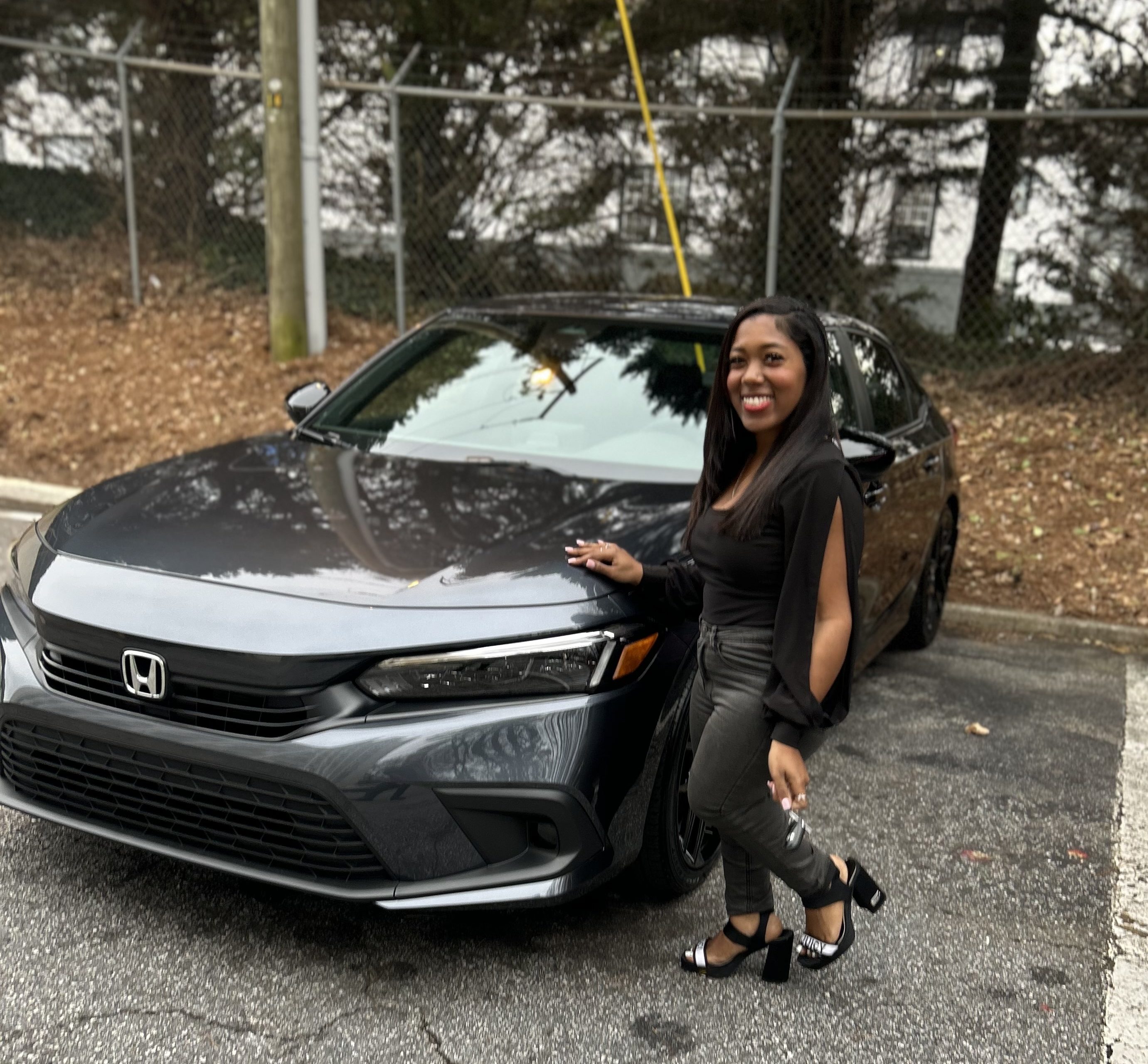
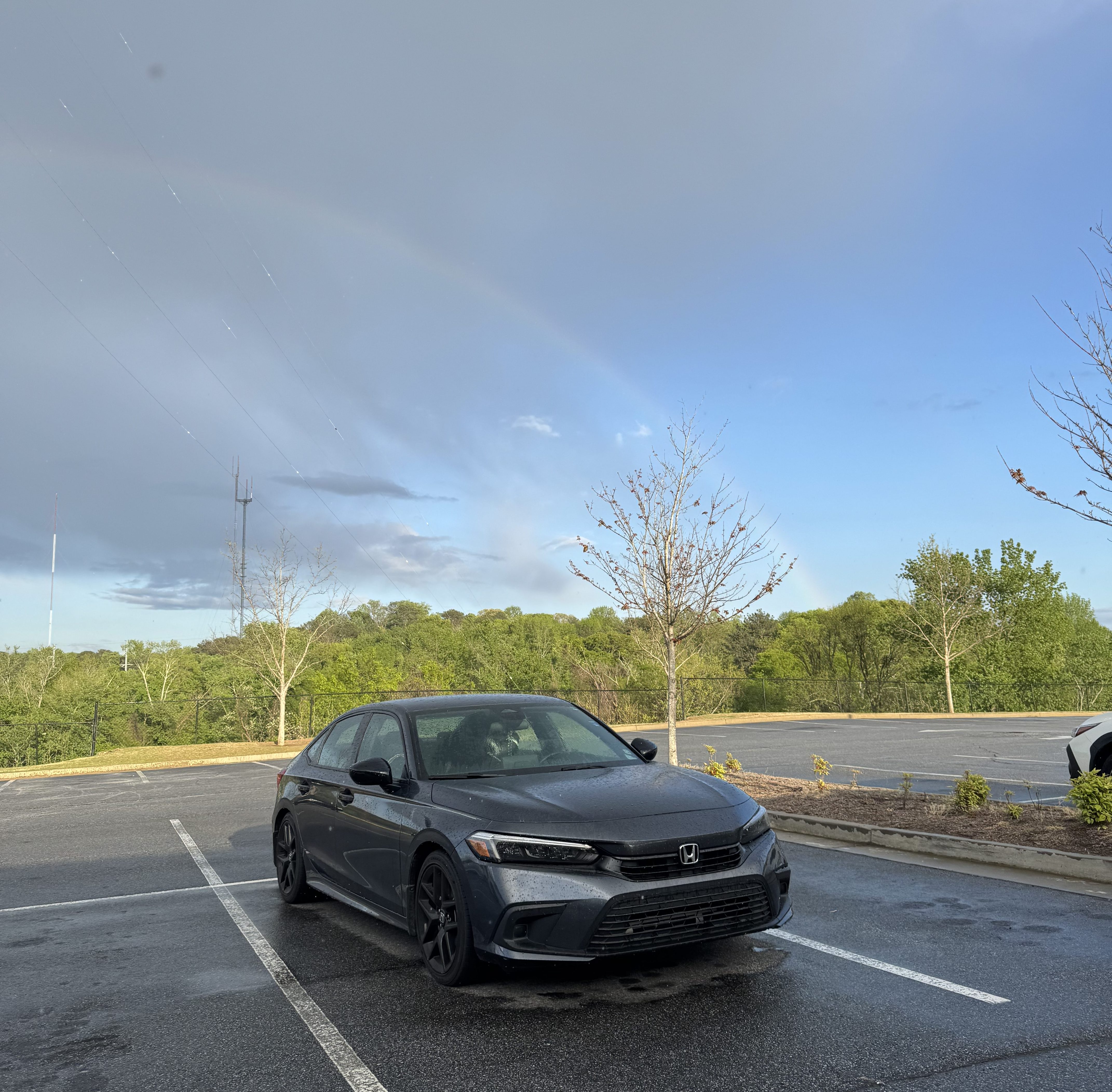
I had always used Lyft for airport rides and out-of-town trips, but this time the app wasn’t offering convenience. It was offering possibility.

All it took was a background check, and suddenly my car could become income. I made a plan: drive on my off days from Lush at the mall and fill the quiet gaps when substitute teaching assignments didn’t come through.
One afternoon on Buford Highway, I pulled into the cheapest car wash I could find and turned the music up loud. I vacuumed, wiped everything down, sprayed mint, and placed a Lush Comforter Bubble Bar inside so the air carried black currant and bergamot.
In the backseat, I put a Feminist Reproductive Center bag stocked with pamphlets, resources, condoms, and ICE “Know Your Rights” cards—small tools for empowerment.
When I pulled back onto the road, I wasn’t just hoping to make money. I was practicing self-reliance.
I thought I was signing up to move people across Atlanta. But somewhere between pickups and drop-offs, I realized I was carrying stories… including my own. Pulling myself up one ride at a time.

Ride #1: Not a Disability, But a “Uniqueness”
I rode down Northside Drive and cut up Bankhead to a Dollar General where my passenger was waiting. I always send the text first: “Hey, this is your driver, Ti.” It was a small gesture, but one that feels like showing respect to the city as much as the person.
The store used to be a CVS, but after too many robberies, it became a Dollar General.
In my rearview, I felt the weight of history in the cracked asphalt, the hum of traffic, and the faint smell of fried food. Bankhead used to glow with life—Club Crucial, Rally’s, music spilling from cars, parking lots turned stages, people parking lot pimping the night away. It was the Westside’s heartbeat.
Now, that energy has been swept away by crime, heavy traffic, and gentrification. The Black gathering spaces that once lit up these streets are gone, leaving a quieter, more cautious rhythm.
But I still feel comfort here. I know these streets—the ghosts of laughter and music—and I can navigate them safely.
Clicking on my hazards, I realized why I drive these streets. This isn’t just about getting someone from point A to point B.
It’s about carrying stories, holding a little space for life to unfold in the backseat while Atlanta keeps surviving, celebrating, and moving.
In that lot, standing in the shadow of what was and what is, I felt like I could do the same:
Bear witness.
Preserve memory.
Pull myself up, ride by ride.
The black-and-white cane tapped against the pavement as I looked up and saw a slender man in a Kangol cap and dark shades making his way toward my car.
On the app, I had signed up to assist passengers with special needs, and this was one of the riders I would need to meet with both care and respect.
“Do you need help carrying the water to the car, sir?” I called out as he moved steadily in my direction. I wanted him to feel supported without feeling pitied.
“No,” he replied.
Still, his slim frame and long hands strained as he lifted the case of water.
“Okay,” I said, softening my voice, “I just want to respect your uniqueness and be helpful.”
He paused.
“You’re going to have to tell me more about this ‘uniqueness’ in a moment,” he said.
He tucked the cane under his arm, felt for the door handle, slid the case of water onto the backseat, and climbed in.
Bankhead faded in my rearview as I said, “I have uniqueness too, or disability, as the world calls it, but I choose another word. That’s why I offered to help. I know I’d appreciate someone offering to carry groceries for me sometimes.”
I couldn’t see his eyes behind the dark shades, but his head dipped in an apologetic bow.
“Oh, you must think I’m a jerk for how I responded,” he said.
“I don’t,” I replied. “I just don’t appreciate people being denied the chance to do daily tasks in their own unique way.”
He went on to tell me that he had gradually gone blind about five years ago and was still adjusting to his treatment, to navigating the world, and to the rhythms he once took for granted.
As we neared his destination, he told me something that made my hands tighten around the steering wheel.
People often say to him, with a sideways tone, “You’re faking, aren’t you?”
Because he can navigate certain spaces. Because he refuses to shrink himself. Because blindness doesn’t always look the way they expect it to.
I was doing a version of that work myself, behind the wheel, and I know how thin the line is between offering help and stripping someone of dignity.
As he walked away, cane tapping steady against the pavement, I realized: Uniqueness doesn’t ask to be fixed, but to be respected.
Ride #2: Mr. Charles — Ole Atlantan
It’s a rarity these days to meet a real Ole Atlantan. My Mudea calls them “ol’ originals.”
Their grandparents were born here. They lived and worked in Atlanta, and they can tell you the good, the bad, and a whole lot of history about these streets. Mr. Charles was one of those people.
The minute he slid into the backseat, I felt his quiet confidence, a rhythm of someone who had seen this city grow up and knew every corner like the lines on his hands.
I was picking him up from a doctor’s appointment in Buckhead and dropping him off in Pittsburgh, a sentimental spot where my grandma and grandfather had lived when they first got married.
By the time we hit the highway, he asked me where I was from.
“Here, sir,” I replied. “Born in Collier Heights, graduated from North Atlanta High.”
When Mr. Charles asked, “Are you married? Children?” I smiled and shared the saying:
“Hardworking men are hard to come by, and courtship is a lost art these days.”
He chuckled as we turned down the inner-city streets, saying he had asked a young man the same question once, and the young man had said the same thing about women.
Then he asked me to pull over at a package store.
As I obeyed, I heard my Mudea whisper in my ear: “It might be my last.”
The reminder hit me: that this service, getting him his liquor, was an act of servitude, and I had to carry it with respect, not judgment.
Ride #3: Party in Peru
I try not to take rides at night, but late-night money can look real good when you’ve got obligations waiting on you.
I started watching the numbers climb and thinking about how this car was helping me meet them.
That’s how I ended up picking up a passenger near Tongue & Groove, the music still spilling into the street.
He slid into the backseat and said, “Thank you for coming out this late.”
I laughed softly.
“The bills said I didn’t have a choice.”
I dropped him at his partner’s place for a last-minute sound check. Before he got out, he leaned forward between the seats.
“You should come out next week. Cocktail and Glam at Madre Selva. It’s a new Peruvian lounge. Good music, good energy.”
I glanced at him in the rearview mirror. “Next week?”
“Yeah,” he said. “You deserve a night where you’re not the driver.”
I told him I don’t get out much in Atlanta’s nightlife anymore. It’s become such a mixy city, a hub for everybody chasing something.
“Most nights, I just pass through it,” I said.
He smiled. “Well next week, don’t just pass through. Come be part of it.”
Weeks passed and I kept driving. Airport runs at dawn, grocery store drop-offs at dusk, late-night heart-to-hearts in between.
I may have started driving to make ends meet, but somewhere along these roads, I began reclaiming my rhythm, my worth, and my place. One ride at a time.
I hope this story leaves you inspired by the power of community-focused journalism. Here at Canopy Atlanta, we're driven by a unique mission: to uncover and amplify the voices and stories that often go unheard in traditional newsrooms.
Our nonprofit model allows us to prioritize meaningful journalism that truly serves the needs of our community. We're dedicated to providing you with insightful, thought-provoking stories that shed light on the issues and stories that matter most to neighborhoods across Atlanta.
By supporting our newsroom, you're not just supporting journalism – you're investing in Atlanta. Small and large donations enable us to continue our vital work of uncovering stories in underrepresented communities, stories that deserve to be told and heard.
From Bankhead to South DeKalb to Norcross, I believe in the power of our journalism and the impact it can have on our city.
If you can, please consider supporting us with a small gift today. Your support is vital to continuing our mission.
Floyd Hall, co-founder