Canopy Atlanta asked over 100 Norcross community members about the journalism they needed. This story emerged from that feedback.
Canopy Atlanta also trains and pays community members, our Fellows, to learn reporting skills to better serve their community. Jack Rose, a reporter on this story, is a Canopy Atlanta Fellow.

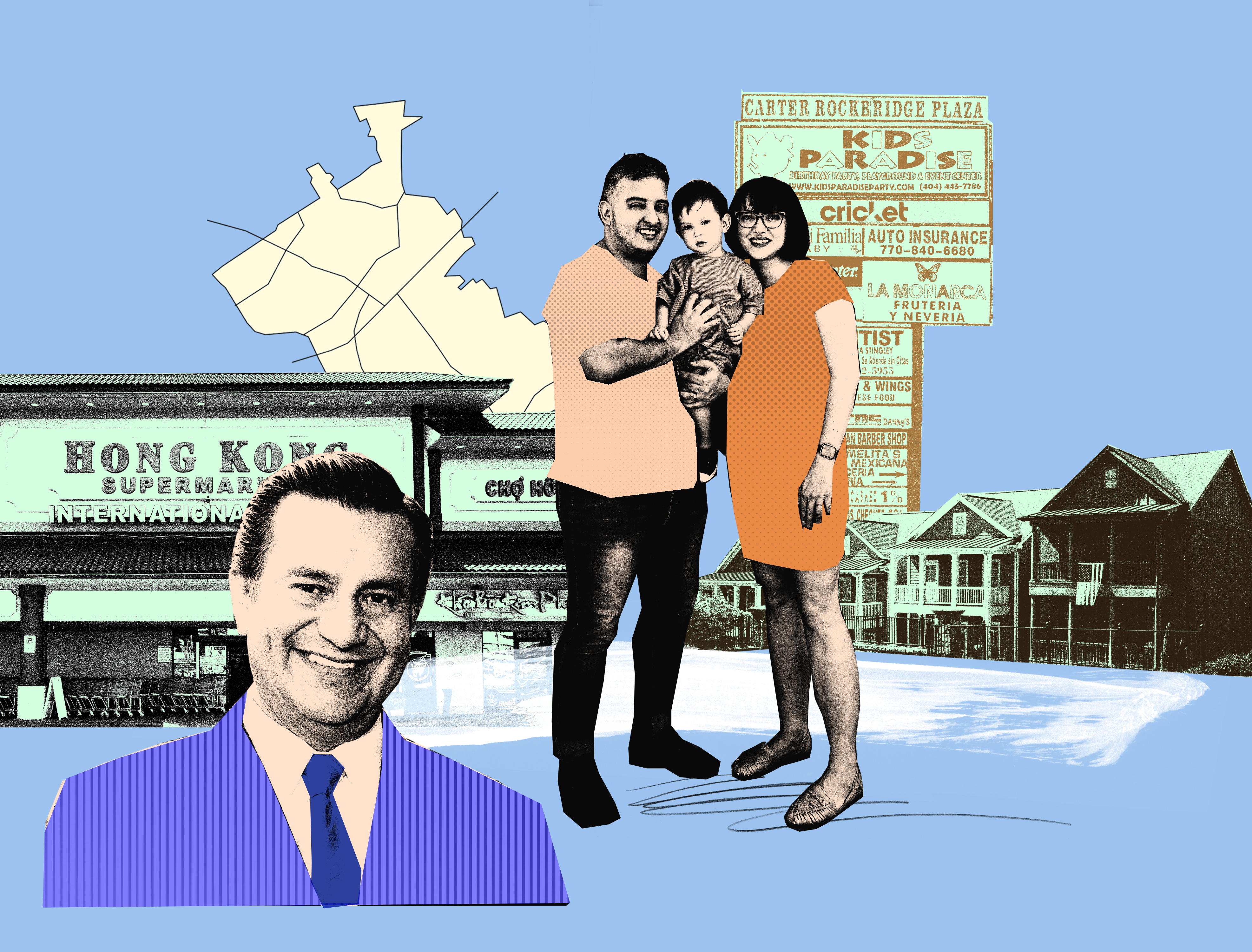
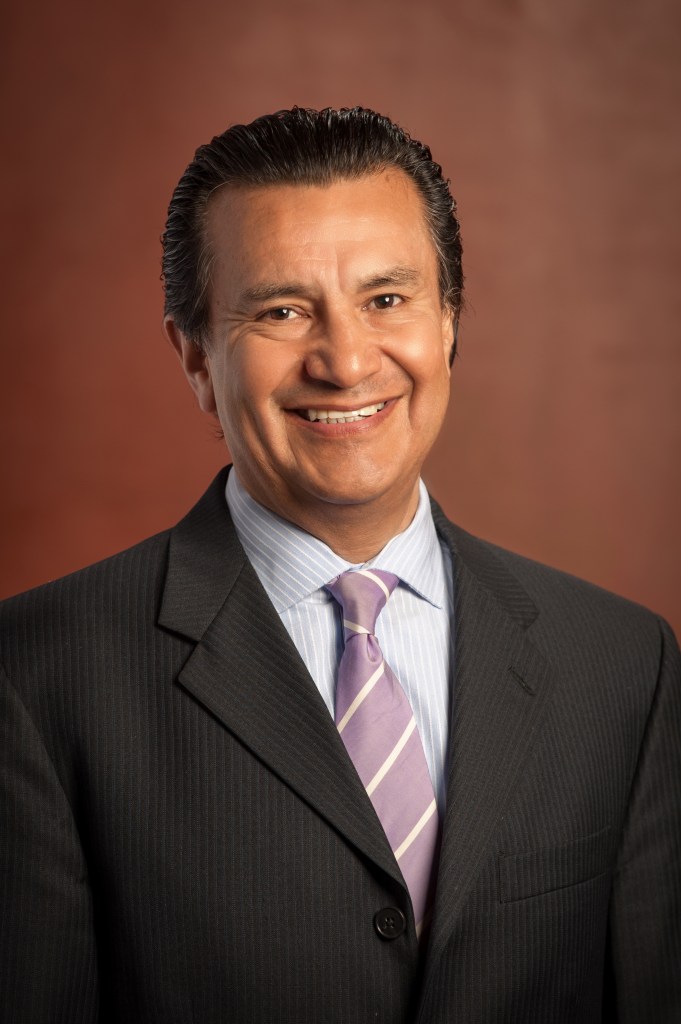
Norcross was the first place Efrain Izquierdo landed when he arrived in the United States in 1991—his cousin lived there, so he had a place to stay. Born and raised in Ecuador, Izquierdo found himself one of the few Spanish speakers around at the time.
“When I moved to the USA, to my cousin Patricia’s area, it was probably us, there was another family from Uruguay—and that’s it!” he recalls. “That’s why I learned to speak English—because I didn’t have anybody to speak Spanish with.”

After a few years at his cousin’s, he lived in several other Atlanta neighborhoods before returning to Norcross in 2000. That year, he bought a condo in a quiet cul-de-sac neighborhood off Beaver Ruin Road, where he’s lived ever since.
From the nineties to the turn of the century to the present, Izquierdo’s time in Norcross has tracked with a city in flux—and on the make. Norcross today is one link in a chain of immigrant communities stretching outward from Atlanta and centered around Buford Highway. Now, as it bisects Norcross, BuHi is dotted with Colombian, Salvadoran, Mexican, and Nicaraguan restaurants and other businesses that reflect the eclectic mix of people there. That sense of diversity—in addition to access to the expressway, proximity to Atlanta, and charming historic district—has made the suburb attractive to newcomers.
Buford Highway, though, divides it in more ways than one.
“Living in Norcross, I always hear that on the right side of Buford Highway, that area is bad,” Izquierdo says. “The left side of Buford Highway, this is a good area to live.”
Many immigrants, including Izquierdo, live on the right side, between downtown and Interstate 85.
Norcross’s divisions are well-known and longstanding. As far back as 2012, the city was holding community meetings on “bridging the gap”: As one Norcross rep put it then, “Buford Highway is a very real dividing line, making it physically and psychologically challenging to create a sense of community, which is our goal.”
In 2015, the City of Norcross participated in a study led by Dr. AJ Kim, an urban planning scholar then on the faculty at Georgia Tech, called “Imagine Our Norcross.” The study identified three distinct “tracts” in the city.
The upper tract, north of Buford Highway, had a median income of $100,000, and 56 percent of residents had a college degree; a middle tract, between BuHi and the interstate, had a median income of $36,000, with about 41 percent of residents lacking a high school diploma; in the lower tract, which included parts of unincorporated Norcross south of Interstate 85, almost a third of residents hadn’t graduated from high school, and the median income was $39,000. The upper tract was also the only of the three study areas where white residents were the majority.
Of course, Izquierdo doesn’t regard his neighborhood as “bad.” He’s proud of the way it’s sustained itself through challenges like the 2007–2008 financial crisis, when the area was wracked by foreclosures. But the image persists.
“As welcoming as Norcross is, there’s also these issues of, when folks think about creating a stronger, better Norcross, who gets left behind?” says Kim, who’s now an associate professor in the School of Public Affairs at San Diego State University. “And I would say, people who were south of Buford Highway felt like they were often being overlooked.”
It’s something both residents and city planners are grappling with as the city grows: How can Norcross knit together its many disparate cultures and peoples in a way that creates a cohesive whole?
The history of Buford Highway is a history of successive waves of demographic movement in Atlanta. During the civil rights era, counties like Gwinnett—which contains Norcross—became destinations for white people who fled the inner city rather than accept the integration of its schools and other public facilities. But as Atlanta and its suburbs have become an increasingly attractive destination for arriving immigrants, both the demographics and the political dynamics have changed.
BuHi has been a locus of that change. In the 1970s, immigrants from India, Korea, Vietnam, and Mexico began settling along the corridor in close Atlanta suburbs.
“The original destination for immigrants and refugees in Atlanta was Doraville, and parts of unincorporated Atlanta,” Kim says. “It’s very close to the city but had more affordable housing that had been left vacant by white flight.”
As more people arrived, and as Atlanta’s reputation as an immigrant mecca grew, settlement continued beyond the Interstate 285 Perimeter, into places like Norcross, Duluth, and Buford.
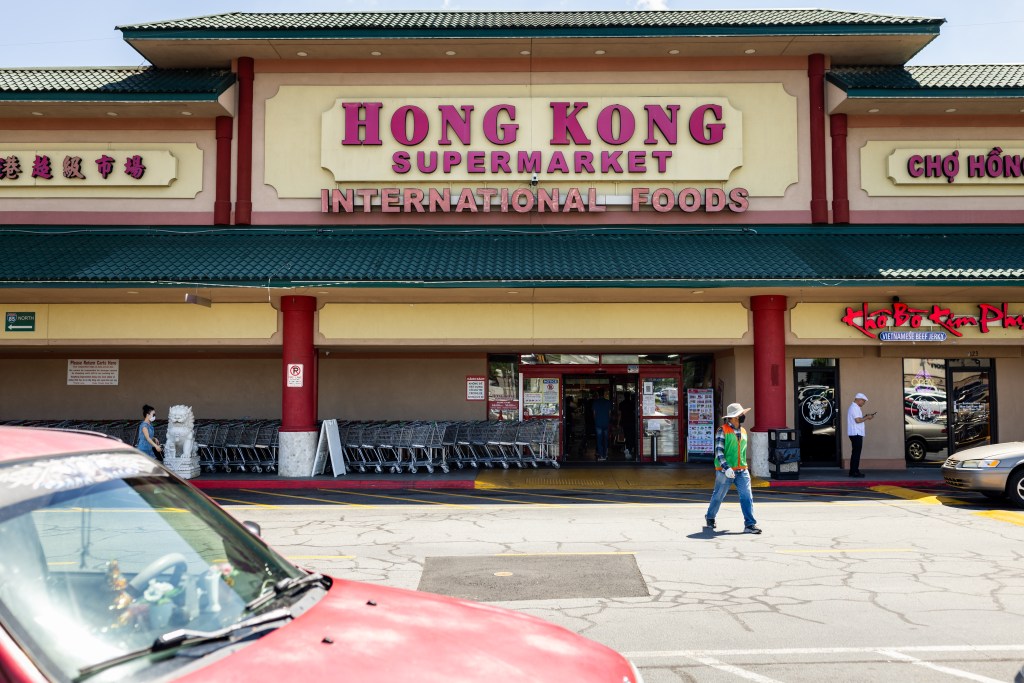
Today, Gwinnett is the most diverse county in the Southeast. A quarter of its residents in 2017 were born in another country, up from 5 percent in 1990. By the time Izquierdo bought his condo in 2000, Norcross’s population was beginning to resemble what it is now: about 40 percent Hispanic, with smaller shares of white and Black residents. (The biggest change Norcross has seen is that between federal censuses in 2000 and 2010, the Asian population in Norcross more than doubled, from 6 percent to 14 percent, which is roughly where it remains today.)
In many ways, this lively concatenation of communities is an old American story. In other respects, it’s unique: Early waves of immigrants and refugees in the States tended to settle in a relatively small number of “gateway” cities known for their robust populations of newcomers, like New York, Chicago, and San Francisco. But in the last half century, metro Atlanta has become one of a number of “emerging” gateway cities: a 2014 paper in the International Migration Review put the metro third in the country as an emerging destination, behind Dallas–Fort Worth and the D.C. area.
The vibrant diversity of the northeastern suburbs has become a point of regional pride—the symbol of a growing, welcoming metro area. As a municipality, Norcross has been proactive in trying to weave new arrivals into the civic fabric: It participates in Welcoming America, a national network of 300 local governments and nonprofits devoted to immigrant inclusion. But the fact remains that “emerging” destinations may not be as equipped to handle the needs of new residents as older gateway cities, and may find themselves catching up, for instance, in making sure to provide city materials in languages other than English.
“We definitely have that diversity. But that doesn’t necessarily equate to community, in terms of knowing each other, bonding in that social-capital way.”
Even the basic infrastructure may present challenges. Having both a four-lane highway and a major interstate running through your community, as Norcross does, doesn’t facilitate easy connection.
“Obviously the highway doesn’t help,” says Marvin Lim, who represents unincorporated Norcross, the area south of Interstate 85, in the state house. Born in the Philippines, Lim moved with his family to Atlanta when he was seven years old before settling in House District 98—the area he currently represents—in 2001.
Unincorporated Norcross wasn’t necessarily designed for a residential influx, Lim says. Traditionally it’s been a “pass-through community” between DeKalb and Gwinnett, between ITP and OTP.
“That’s why so much of our property was zoned for heavy industry, because it wasn’t necessarily contemplating—in my mind, at least—that this would be a mixed-use area and there would be a lot of residents here,” Lim says.
Housing patterns like that may help explain the tenacity of the divisions within Norcross. In the 2015 study, AJ Kim found that 84 percent of the houses in the city’s wealthier, whiter “upper tract” were owner-occupied. Meanwhile, only 8 percent of mortgage applications in a recent year had come from Hispanic applicants, despite the fact that Hispanics are the city’s largest demographic group. Immigrants face “many barriers to homeownership,” Dr. Kim wrote, such as less access to funds to put up a down payment. It’s likelier, then, that whiter and wealthier people will end up in more desirable homes and neighborhoods, and folks with fewer resources stay renting.
Like Izquierdo’s neighborhood, Lim’s district was heavily affected by the Great Recession, when single-family homes bought up in foreclosures were converted to rentals, which were then made available to “newcomers and immigrants,” Lim says. “So even in the last 20 years, it’s definitely become an even more diverse area.”
But diversity breeds its own challenges—say, on a block where neighbors might not speak the same language as one another.
“What I’ve taken to saying is, there is a difference between diversity and community,” Lim says. “We definitely have that diversity. But that doesn’t necessarily equate to community, in terms of knowing each other, bonding in that social-capital way.”
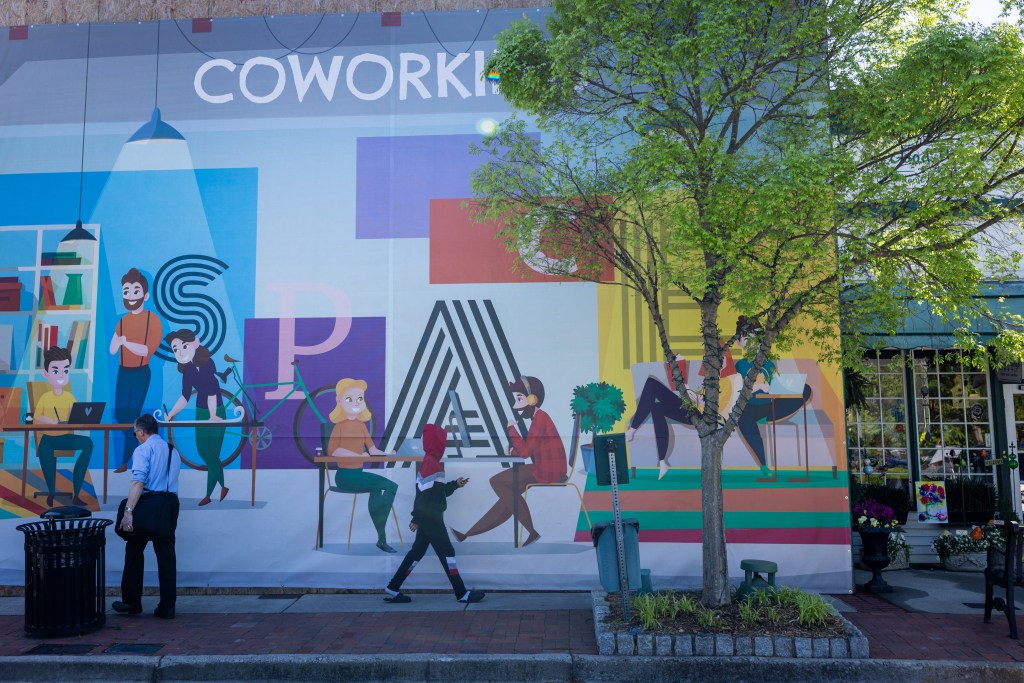
Compounding this challenge is the economic condition of the area, which has the highest poverty rates in Gwinnett County. For developers, unincorporated Norcross “isn’t as sexy” as the more prosperous incorporated parts, says Tim Le, a cofounder of the Vietnamese American Chamber of Commerce and current candidate for a seat on the Gwinnett County Board of Commissioners.
Le, who’s in real estate himself, has developed properties in both incorporated and unincorporated Norcross. He says that one thing dissuading more development south of the expressway, compared to historic downtown’s walkability and “small town feel,” is its lack of a unifying identity, which could help attract both people and business.
Lim, who also leads the Lucky Shoals Community Association, has been involved in a number of initiatives to both bring his constituency together and to boost its fortunes: Last year, he applied for a U.S. Department of Energy grant that will help promote energy efficiency in some of the community’s aging buildings while finding ways to reduce pollution from 10 million square feet of industrial- and business-zoned structures that surround it.
The area could use investment, Lim says, as well as modes of physical connection like trails, sidewalks, and greenspace: “Nothing’s going to take away the heavy commerce or the heavy industries. But you have to work within those constructs to create more physical connection.”
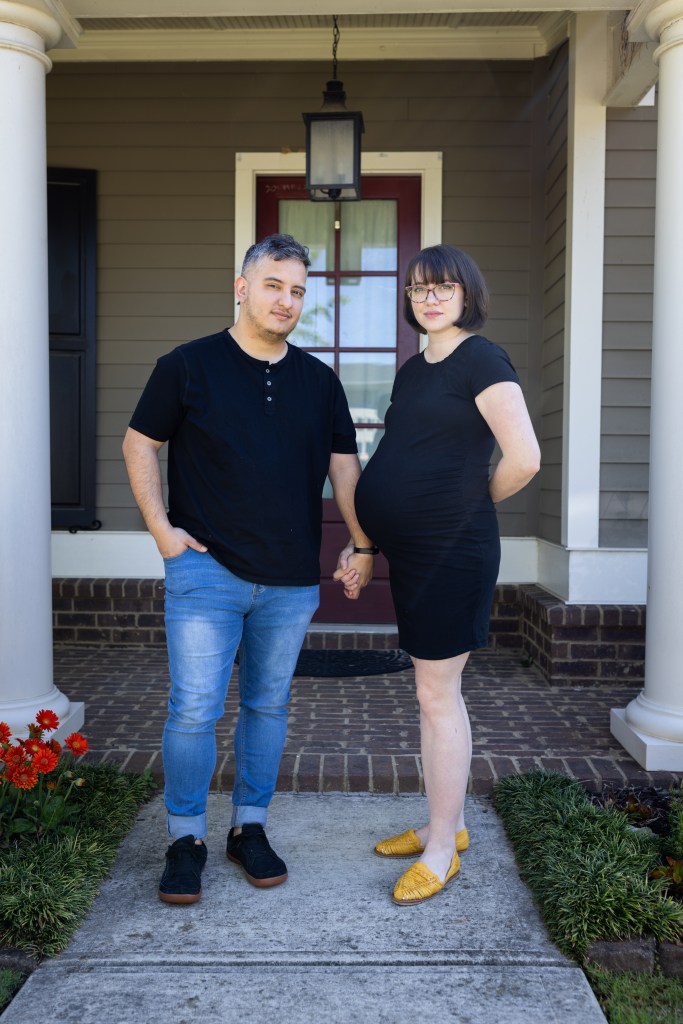
There’s more action in downtown Norcross, the upper and wealthier tract that Dr. Kim identified in their study: A 10- to 20-year redevelopment initiative is underway that includes proposals for mixed-income housing, retail, and offices; more public green space; and—to literally bridge the BuHi divide—a pedestrian walkway over the busy road.
(Some development is already ongoing or recently completed, including an apartment complex at the corner of Holcomb Bridge Road and a new branch of the Gwinnett County Public Library.)
When the Norcross City Council approved the project in 2021, it was touted as a way to promote a greater sense of cohesion in the community while directing resources, especially, to the south side of Buford Highway. As councilmember Bruce Gaynor said at the time, “That’s where the development is needed and where it’s going to give everybody the most economic benefit.”
Economic development may help close some gaps. But getting rid of perceptions that keep neighbors at arm’s length from one another is another matter—a less costly undertaking, maybe, but in some ways a trickier one.
Joanie Santander and her husband, Jorge, moved in with her parents in the northern part of the city after Jorge lost his job during the pandemic. Married for seven years, the couple has one young child and another on the way.
“Our goal and desire is to live in our own place,” says Joanie, mentioning some new housing construction going on down the street—which she hopes will end up being affordable for young families like hers. “We would love to stay here.”

Speaking with Canopy Atlanta over Zoom while their 18-month-old plays at their feet, the Santanders enthuse over being able to take their child to Sunday mass in either English or Spanish, and over everyone their child can meet during story hour at the public library.
“From the rich kids with their nannies to people who don’t speak any English at all,” Joanie says. “It’s just so wonderful to have my child exposed to this picture of what, in my opinion, more people should be exposed to—different people, different qualities of life. Living in this area is such a blessing.”
For newer residents like the Santanders, living in a place like Norcross means acknowledging some of the divides they see in their community—and helping to bridge them.
“I feel like there’s this fear in the unincorporated Norcross community—we go to church with some people who live on that side of the road,” Joanie says. “There’s this fear that they won’t be accepted on the incorporated side, because everyone speaks English on this side. But they don’t realize how many people speak Spanish, or know Hispanic culture, and are here and willing to help and to be friendly and to be a neighbor.”
Editor: Christina Lee
Fact Checker: Muriel Vega
Canopy Atlanta Reader: Sonam Vashi
Photos: Dustin Chambers