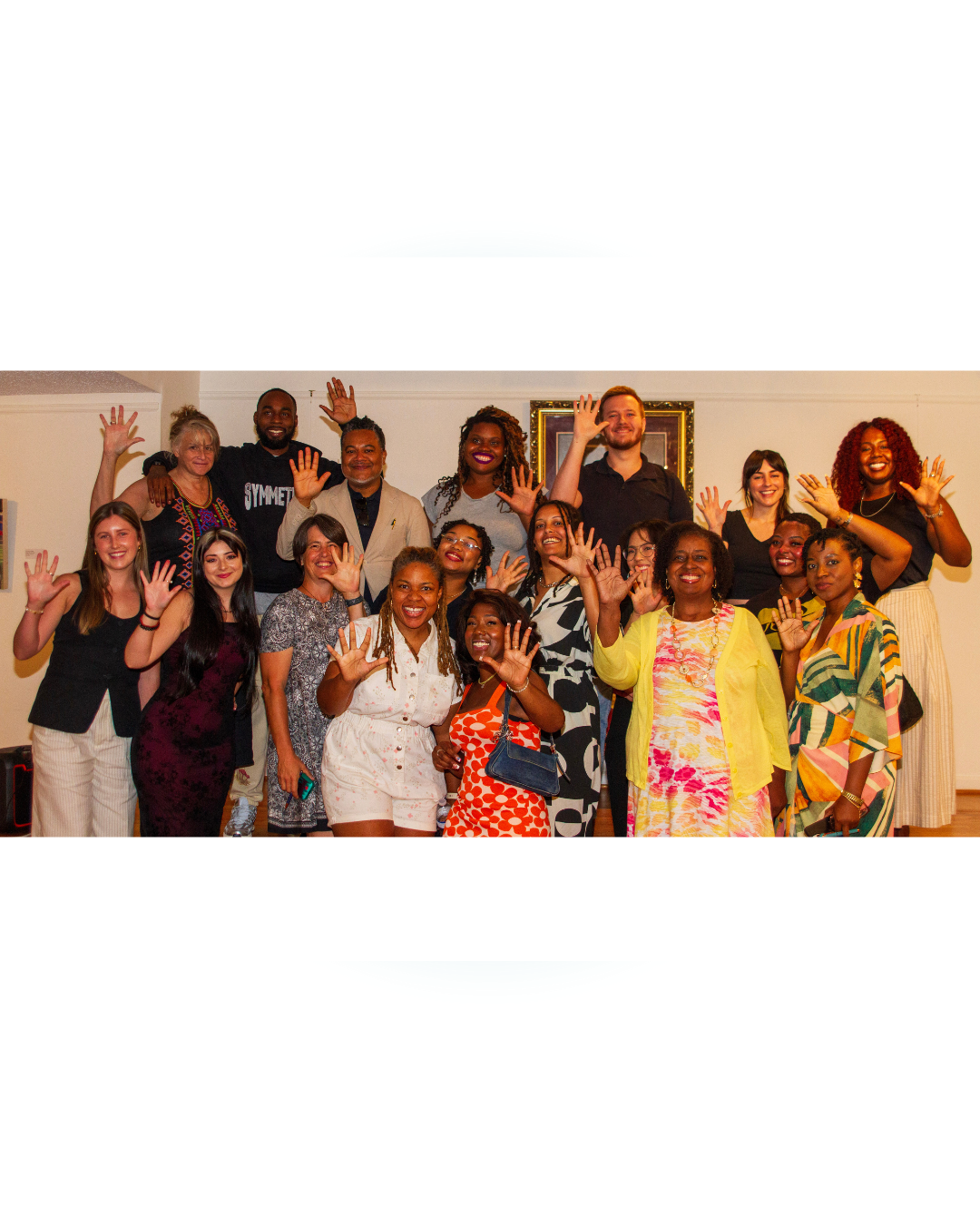
Canopy Atlanta asked over 100 Norcross community members about the journalism they needed. This story emerged from that feedback.
Canopy Atlanta also trains and pays community members, our Fellows, to learn reporting skills to better serve their community. Reporter Jack Rose is a Canopy Atlanta Fellow.

At her kitchen table, Monica Barrera, a cook at senior living community Celebration Village in Acworth, flips through YouTube videos on her phone. She’s showing me the process of turning corn into masa, or corn dough, which forms the base of Hispanic dishes like tortillas, tamales, and pupusas.
Barrera’s daughter peers over her shoulder, watching the videos with us and interjecting the occasional clarification or anecdote.
“You see that brown (color)?” Barrera asks, tapping the screen. “That’s what you need for real masa.”
When boiled and steeped in water and calcium hydroxide (what’s otherwise known as food safe lime, or cal), removed from the hull, and dried, corn becomes one of the most well-loved ingredients in the Western Hemisphere: nixtamal. The chemical process of turning corn into nixtamal (nixtamalization) gives this ingredient its unique flavor and yellow-brown color that Barrera loves.
Nixtamal can be eaten whole in dishes like pozole, or milled into masa harina (otherwise known as nixtamalized corn flour) so it can be combined with water to make masa. Of all the forms nixtamal may be consumed in, masa is by far the most common.
Almost everyone has a starchy carb of choice that comprises a significant part of their diet, whether it’s rice, sourdough, cornbread, naan, noodles, or cereal. In Norcross—where Barrera lived for over a decade until the 2010s—the diversity of masa is as wide as it is deep, with chefs from across Central and South America creating the food of their homes for residents.
“I go through maybe one bag of Maseca a month,” Barrera tells me, referencing the world’s leading brand of masa harina, according to Maseca’s parent company, Gruma. “I like to eat maybe two tortillas with a meal, but some people eat four or five or six.”
But masa comes with health concerns when consumed without informed moderation. Masa is still a carb, and those with carb-heavy diets run an increased risk of heart disease and weight gain. Some of these concerns come from a lack of nutritional information, some arise from the unique experience of Latinos in America, and others stem from a lack of proper federal regulation.
These concerns add to an increased health risk for Georgians like Barrera. The Latino Community Fund’s (LCF) 2023 Health Status of Latinos in Georgia Report shows that Georgia’s Latino residents experience a higher rate of diabetes and obesity than non-Hispanic white adults, both of which contribute to a higher rate of heart disease. And these numbers are rising: In 2023, the LCF observed a five-year increase of 1.9 percent in heart disease-related death and 1.8 percent in diabetes-related death.
As of July 2023, Norcross’s population was 36 percent Hispanic. Norcross’s adult diabetes rate is 8.4 percent, Gwinnett County’s adult obesity rate is 25.6 percent, and the county’s low-income preschool obesity rate is 16.4 percent—1.8 percent higher than the state average.
Meals are “not as filling for Latinos, if you don’t have the masa, the tortilla, the bread,” says Dr. Roxana Chicas, assistant professor at Emory University’s Nell Hodgson Woodruff School of Nursing and an author of the LCF’s 2023 report. “So it’s really culturally important and part of our identity. But it is contributing to a lot of the health issues in this community.”
When asked about masa’s relation to dietary health, Barrera nods and begins Googling information on the dietary benefits of masa at her table. “Masa can give you the same energy as when you eat a banana or two coffee cups of spinach,” Barrera says, reading from her phone.
Dr. Chicas is well aware of masa’s reputation as valuable fuel to the body.
“A lot of people who immigrated from Latin America come from poverty and, throughout life, it is cheap to eat things made from masa,” she says. “Some of them even come from families where they have subsistence farming where they grow their own corn and they go and grind it right to the mill and make their own masa.”
But masa’s dietary benefits and impact on the body are more complicated than what can be found in a quick Google search.
“Something that some people don’t know is masa turns into sugar,” says Dr. Chicas. “Oftentimes when people think about diabetes they think, Well I don’t really eat candy, I don’t really eat sugary things. But masa turns into glucose, and I think that’s a message we need to get out to the community and how that contributes to diabetes even though it’s not ‘sweet.’”
Maseca has only 1 gram of sugar per serving. However, it also has 23 grams of carbohydrates for the body to later convert into glucose. Hispanic residents often consume a majority of their carbohydrates through rice and masa.
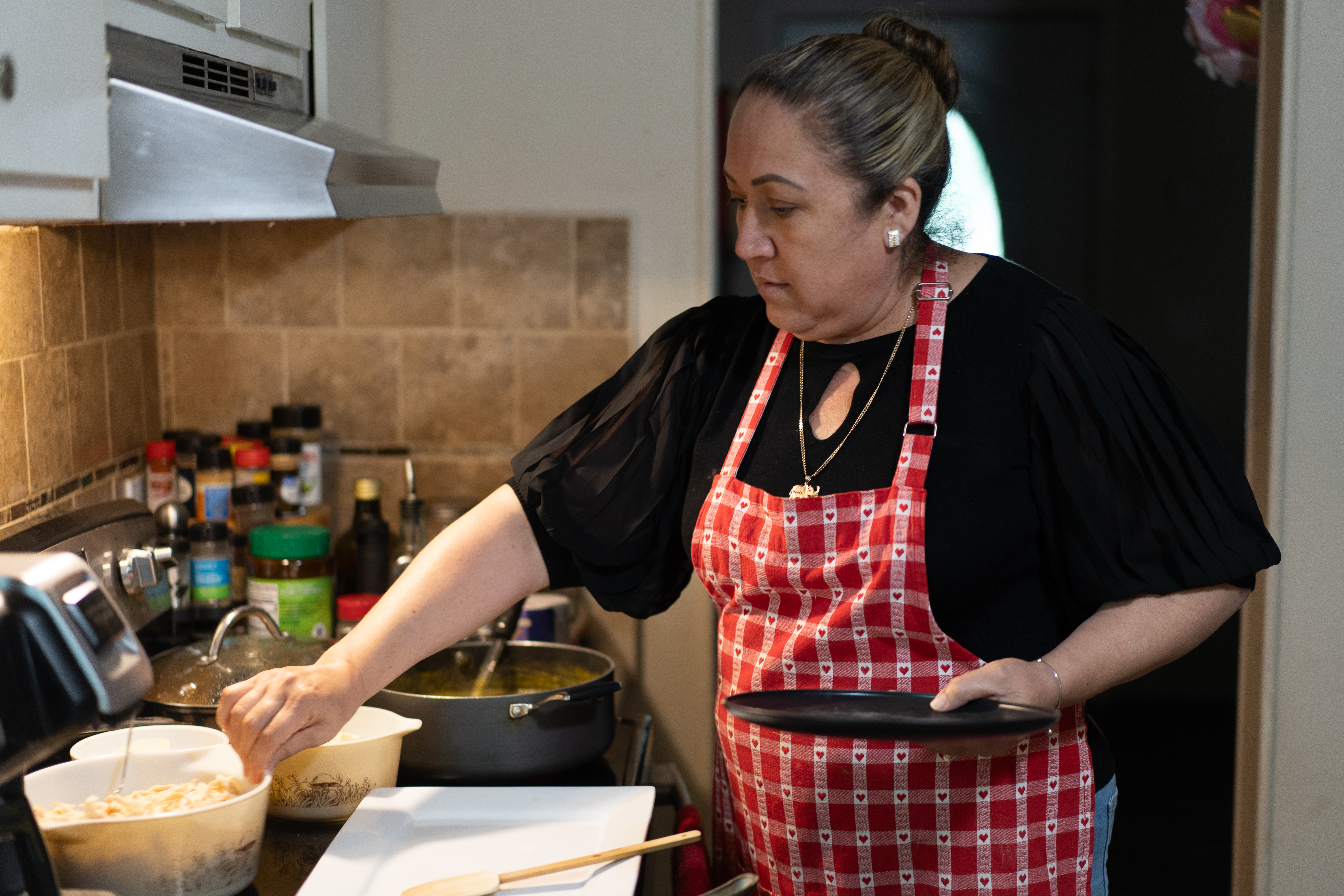
But a dearth of nutritional information isn’t the sole reason some Norcross residents overconsume masa. The full potential of masa is put on a mouth-watering display in Norcross and speaks to the importance this ingredient has for its Latino residents. As seen at restaurants like La Salvadorenita Pupuseria y Taqueria, Salvadoran chefs flip cheese-filled pupusas with enough dexterity to make a circus acrobat jealous. Mexican street vendors rise early and work late in a tamale assembly line, efficient as anything dreamed up by Ford. Worried parents fret over pots of pozole for sick children.
Masa is readily available compared to other traditionally healthy ingredients like marañón (cashew apple), creating an environment where it’s easier to lean on masa-based foods.
The LCF’s report contains testimonials from Georgia residents such as: “The migrant community, at least in my case, where I lived, ate healthier in Mexico[,] and Latin food in the United States is horrible. . . . In Mexico, we ate rajas con queso salpicon, caldo de pollo, caldo de res. It was a super varied meal and it was very different that included many vegetables that are not used as much in the United States.”
“It’s really culturally important and part of our identity. But it is contributing to a lot of the health issues in this community.”
Dr. Chicas often hears this sentiment echoed throughout Atlanta. “There’s this kind of nostalgia that they wished they would have these foods here. . . .We do consume a lot of mangoes, but they don’t feel as fresh as in your own country when you could be walking down [the street] and there’s a mango tree and you can grab a mango.”
Compound a lack of access to healthier ingredients from Central and South American cuisine with the overabundant access to the processed foods of America, and a unique situation impacting the health of Norcross’s Hispanic residents arises.
“If you ever go to a gas station in the mornings or the afternoons, you see lots of these Latino workers going into these gas stations and getting hot dogs, taquitos, all these very processed foods because they’re on the go,” says Dr. Chicas. “And for these very physically demanding jobs, some workers want these energy drinks just to continue working! So that’s a huge contributor as well.”
While many Americans overconsume processed foods and carbs, Hispanic residents are particularly vulnerable to vitamin deficiencies when they choose masa as their carb of choice.
“Enriched wheat flour” is a common ingredient in American carb-based foods. To be considered “enriched,” the FDA requires wheat flour to contain strictly defined levels of iron, niacin, riboflavin, and thiamin, all key building blocks for a healthy body. Since 1998, the FDA has even required the inclusion of folic acid, an artificial form of B9 proven to lower the rates of neural tube birth defects. This measure is estimated to have reduced such defects by 28 percent in the following years.
However, the FDA has only allowed the voluntary fortification of masa harina with folic acid since 2016—“voluntary” being the key word here. A 2023 study conducted by the Center for Science in the Public Interest examined 59 corn masa flour products and 476 corn tortilla products. Companies had only fortified eight of the corn masa flour products with folic acid. Meanwhile, none of the corn tortilla products were fortified.
Olé Mexican Foods, a Norcross-based provider of wheat and corn flour tortillas, chips, and tostadas, sticks to the FDA ruling to the letter. According to the nutritional information available on their website, Olé uses enriched wheat flour in their products but does not standardize the use of similarly fortified corn flour.
Back in her kitchen, Barrera reads off a list of vitamins and minerals found in her bag of Maseca, while her daughter provides translation. On that list is iron; vitamins B 1, 2, and 3; and even folic acid—one small change that Maseca implemented in 2016 to make masa more nutritionally beneficial. With Maseca being so globally popular, it proves some companies are stepping up to provide greater nutrition to their customers.

Carbohydrates aren’t to be avoided at all costs lest you put your health in jeopardy. Even athletes in training have a minimum amount of carbs they need to consume, because they are essentially the fuel your muscles need to turn protein into more muscle.
In the long term, increasing the accessibility of healthier ingredients from home and advocating for the equal consideration and regulation of culturally significant dietary staples are key to improving the rates of diabetes, obesity, and heart disease in Norcross.
In the short term, dietary information about the positive and negative effects of carbs on the human body needs to be communicated broadly and with cultural sensitivity. Health providers treating Hispanic residents in Norcross must approach the topic of masa-related carb intake with the nuanced understanding that it’s going nowhere, is not the sole root of all dietary issues, and requires adjustment, not abstention. This applies equally to incorporating a greater variety of healthy ingredients in a diet.
“That’s one way healthcare providers can help the Latino community increase fresh fruits and vegetables: If you’re not going to eat it as a salad, make it into a smoothie,” Dr. Chicas says. “I feel it clicks with the Latino community because they’re like, yeah, we used to do this at home.”
“Usually what I tell Latino community members is, You don’t have to stop eating these foods, but let’s try to cut down on it a bit,” she adds. “Because if you tell the community, Do not have any more masa, you’re gonna lose them.”
Equipping private citizens with relevant medical information and empowering them to make their own informed choices truly is the only way to move forward on this subject.
As I learned when I asked Barrera how she thought Hispanic people would respond to being told not to eat masa.
Barrera quirks an eyebrow at me, squaring her shoulders, ensuring I’m paying attention. “Hispanic people. Like. Masa.” she says, each word enunciated like a hammer driving home a nail. “You cannot tell them to not eat masa. They won’t do it.”
Editors: Christina Lee and Kamille D. Whittaker
Fact Checker: Muriel Vega
Canopy Atlanta Reader: Mariann Martin
I hope this story leaves you inspired by the power of community-focused journalism. Here at Canopy Atlanta, we're driven by a unique mission: to uncover and amplify the voices and stories that often go unheard in traditional newsrooms.
Our nonprofit model allows us to prioritize meaningful journalism that truly serves the needs of our community. We're dedicated to providing you with insightful, thought-provoking stories that shed light on the issues and stories that matter most to neighborhoods across Atlanta.
By supporting our newsroom, you're not just supporting journalism – you're investing in Atlanta. Small and large donations enable us to continue our vital work of uncovering stories in underrepresented communities, stories that deserve to be told and heard.
From Bankhead to South DeKalb to Norcross, I believe in the power of our journalism and the impact it can have on our city.
If you can, please consider supporting us with a small gift today. Your support is vital to continuing our mission.
Floyd Hall, co-founder