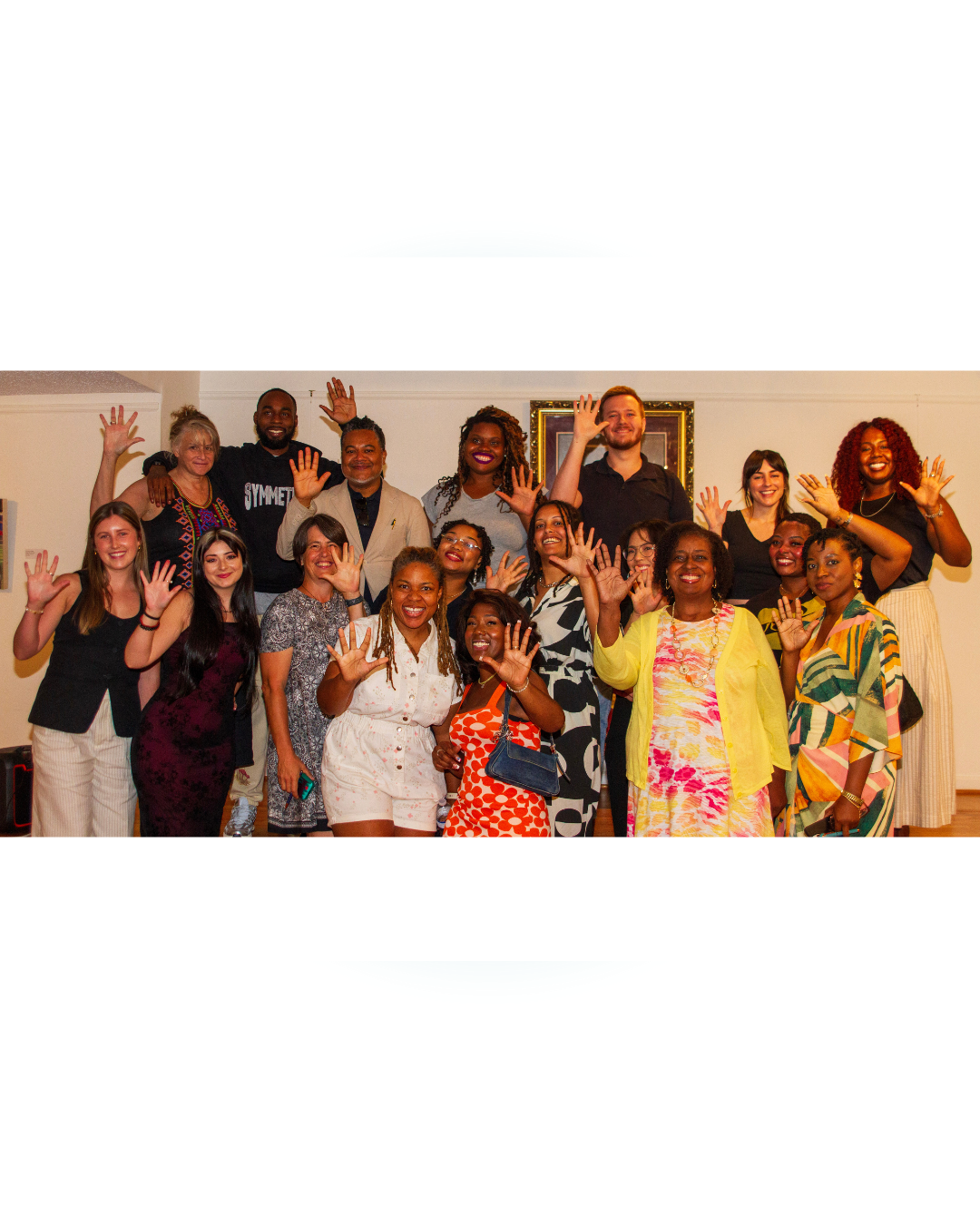
For each Community Issue, Canopy Atlanta works with a Community Editorial Board to help us refine the story angles in the issue. The board members provide invaluable feedback before, during, and after the publication of the issue.
We plan to reconvene our Community Editorial Boards this summer to gain additional feedback on our work.

We wrapped the Norcross issue where we started: Reporting on food. In our final story, Fellow Jack Rose sat at the kitchen table with Monica Barrera as she talked glowingly about masa flour, a dietary staple that is the building block of almost every meal in Latino households. While masa has sparked difficult conversations about nutrition and moderation—in residents like Barrera, it always sparked defiant joy.
So how do we reflect that in the framing of the story?
First, some context.
We had just received a kind but sobering email from a member of Norcross’s Community Editorial Board. In it, she stated that the articles are “very thoroughly researched and written,” and had “great perspectives and inclusion of immigrant stories.”
But, she continued, “most of the headlines tilt negative.”
She listed out the headlines and emphasized the words with a negative charge:
Why ESOL students in Norcross struggle to graduate
How Norcross became a divided city
The roadblock facing seniors in Gwinnett County
Lost in translation: How language and culture barriers impact Norcross residents
The ideas for the stories came straight from the residents of Norcross and were narrowed down by the Community Editorial Board made up of a selection of those very residents. The stories that emerged have all the hallmarks of what makes a city or neighborhood vibrant—a little bit of drama, a little bit of levity, a whole lot of hope. But the wrong framing in the form of a headline can easily dim or miscast the light.
So, we all went back to the drawing board on the headlines.
The result?
OLD: “How Norcross became a divided city: Residents and city planners explain how they plan to bridge the gaps: “There is a difference between diversity and community”
OLD: “The roadblock facing seniors in Gwinnett County”
OLD: “Why ESOL students in Norcross struggle to graduate”
OLD: “Lost in translation: How language and culture barriers impact Norcross residents”
And here’s where we landed with the beloved masa:
For the love of masa: A difficult conversation about a dietary staple
Community journalism thrives on authenticity, reflecting the true spirit of our neighborhoods. Nuance is key—yes, challenges exist, but so do triumphs, as our stories reflect. Framing with nuance, not negativity, paints a truer picture and helps build a community that’s informed, engaged, and proud of its narratives.
Our community journalism also thrives and depends on the step-by-step feedback we get from the community members we are creating this journalism alongside. They tell us when we are on point—and when we’ve missed the mark. And we listen. We are grateful for the feedback and that the journalism that happens here can perpetually be refined and in rich conversation.
Editor: Mariann Martin
I hope this story leaves you inspired by the power of community-focused journalism. Here at Canopy Atlanta, we're driven by a unique mission: to uncover and amplify the voices and stories that often go unheard in traditional newsrooms.
Our nonprofit model allows us to prioritize meaningful journalism that truly serves the needs of our community. We're dedicated to providing you with insightful, thought-provoking stories that shed light on the issues and stories that matter most to neighborhoods across Atlanta.
By supporting our newsroom, you're not just supporting journalism – you're investing in Atlanta. Small and large donations enable us to continue our vital work of uncovering stories in underrepresented communities, stories that deserve to be told and heard.
From Bankhead to South DeKalb to Norcross, I believe in the power of our journalism and the impact it can have on our city.
If you can, please consider supporting us with a small gift today. Your support is vital to continuing our mission.
Floyd Hall, co-founder