
It’s July 2026, and Bed Head Plant Nursery and Herb Farm is unlike any of the other farms and gardens I’ve seen in metro Atlanta. Located in the backyard of her mother’s old home in East Point, Patty Lacrete’s operation—a rare Black woman-owned medicinal herb farm in southwest Atlanta—produces over 10,000 plants a year on a quarter acre. A remarkable feat, for someone who’s been farming for less than six years.

Despite it feeling like a cauldron outside, she takes the time to water both of her greenhouses, brimming with lavender, ashwagandha, and chamomile. Inside her house, as her pitbull Amma waddles over for attention, Lacrete thinks back to when she worked full-time in tech in 2020, struggling with the intangibility of her job, the stress that never paid off, and not hugging someone for months. She found solace in her garden, going from a single raised bed to nine.
“One of the most liberating feelings I’d ever had was just taking a seed and planting it and watching it grow,” she says. “It’s like something that’s fundamentally built into us as human beings, just touching soil.”
RELATED: Taste makers
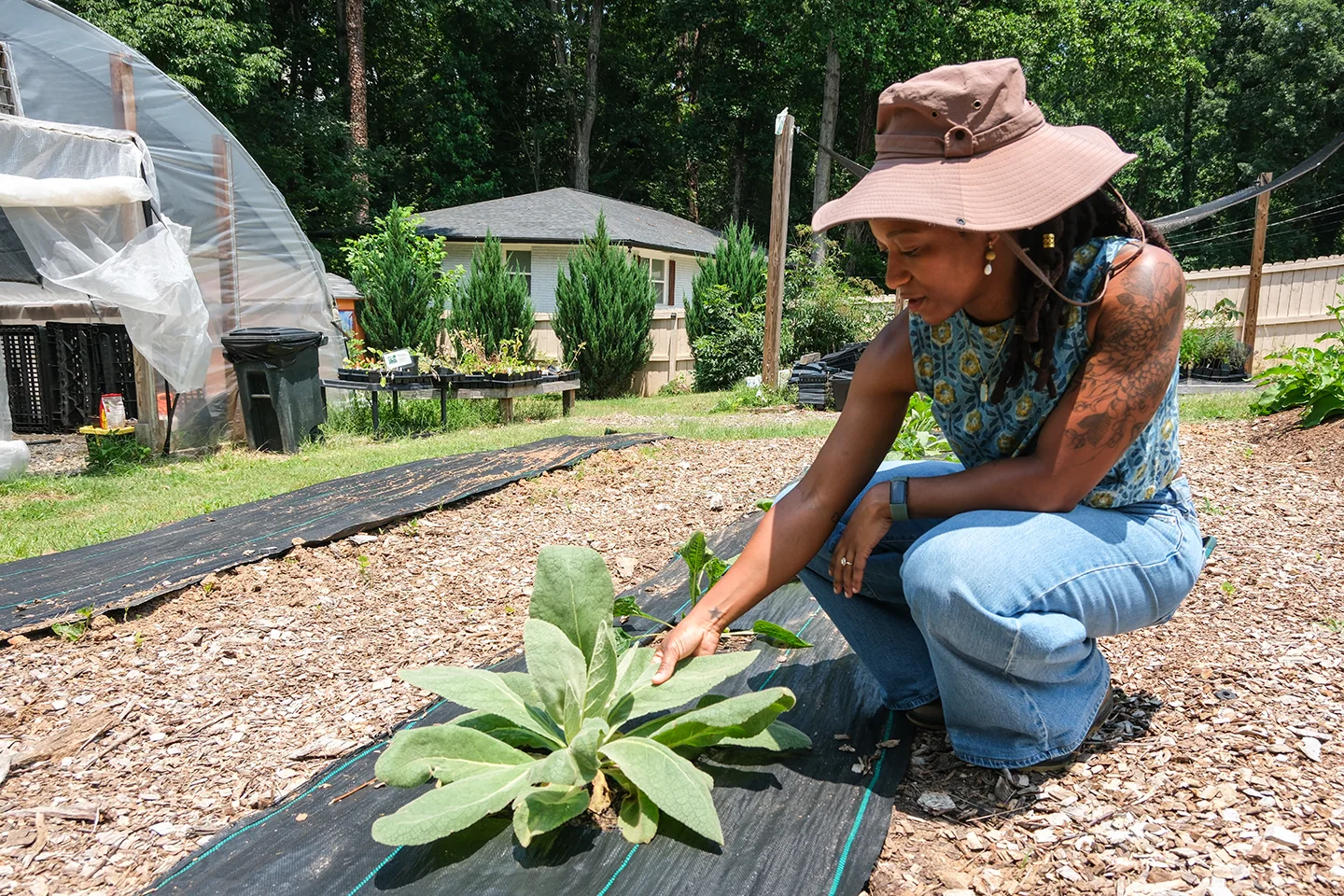
Patty Lacrete, founder of Bed Head Plant Nursery and Herb Farm in East Point, Georgia
So when her mother offered up her home and told her simply to “do something with it,” Lacrete decided to develop Bed Head. A one-off, online permaculture course snowballed into being accepted into University of Georgia’s Agriculture and Environmental Sciences program at the end of 2020, a hard pivot Lacrete credits to blind ambition and, she laughs, “delusion.”
In January 2022, Lacrete met her future business partner, Emily Brabeck, a nursery manager at The Wylde Center in Decatur. On a guided herb walk to learn more about native plants, she learned what she wanted to grow.
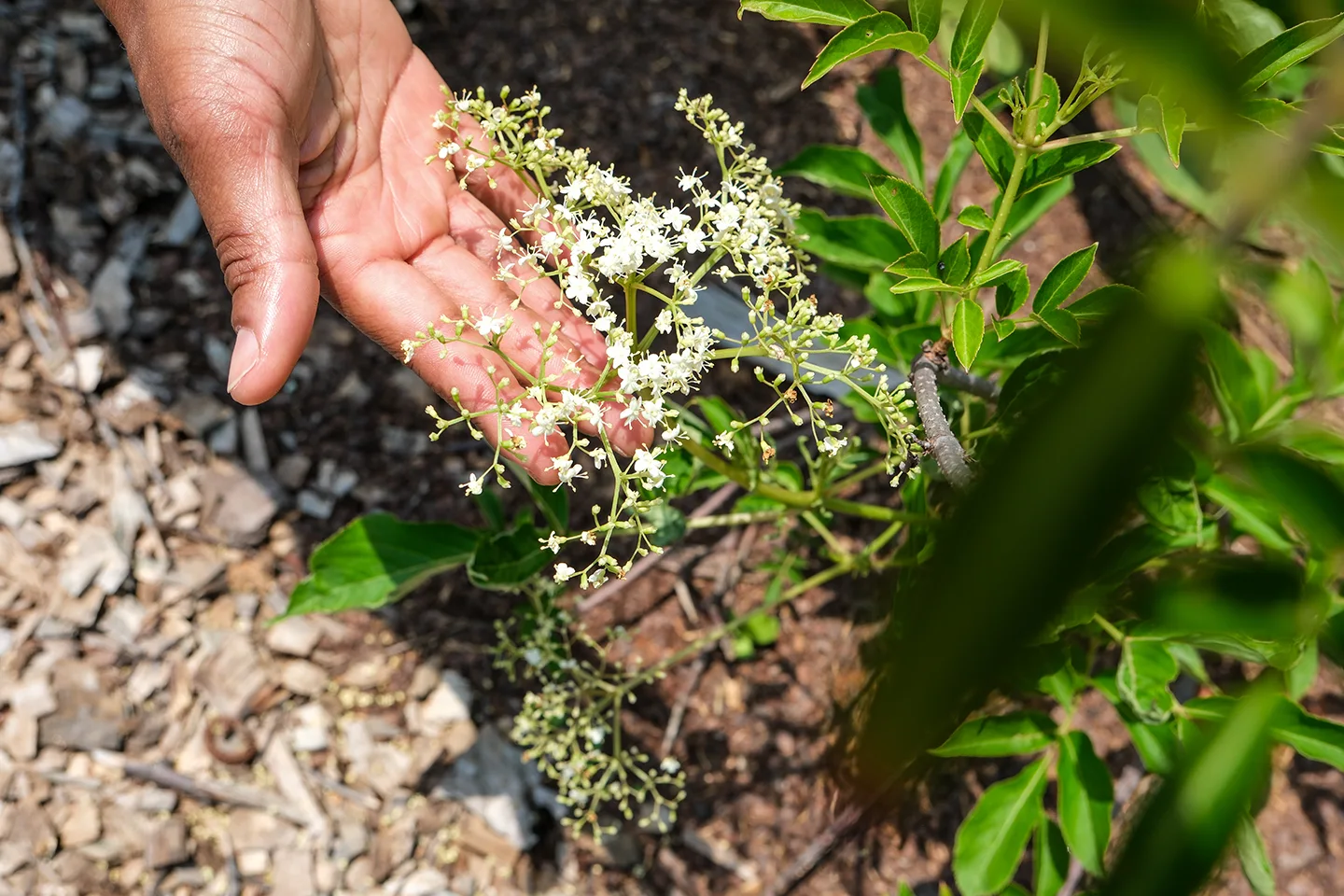
“I realized that there was a gap in the industry of specifically herb starts, and specifically very hard-to-find herbs that most herbalists, farmers, growers, educators can only access dry, and they have no idea what they look like in real life,” she says. Even experienced herbalists have only seen ashwagandha in dried or powdered form.
Which only left her with one last question: “How do I take this thing that I am obsessed with, and make it work in my favor and capitalism?” She swiftly found that the answer was her community.
Lacrete sourced art from her friends, like stained glass calendulas from Austin Frantz and a one-hour photoshoot with Jamie Hopper, to purchase materials for a greenhouse. Through Food Well Alliance’s Labor Support program, she secured a $3,000 grant to pay Charles Greenlea of Eco-Paradigm to build the structure.
Bobby Farmer, Grants and Relationship Manager at Food Well Alliance, sourced pallets for her. An apprenticeship with Brabeck at the Wylde Center gave her a four-season education in growing plants and managing a nursery. She especially credits the invisible labor of her partner, whose early morning cups of coffee and energizing meals kept her going through the tiring work of building a farm.
“I feel like I could not have been luckier to live in a city where Black people, Black women, Black queer women are celebrated, where we're seen in positions of authority and in all different kinds of walks of life.”
As a first-generation grower, Lacrete once felt without role models; she remembers being one of two Black women in her classes at UGA. Now she has a network of women farmers just like her. From Cheyenne Sundance in Ontario, Canada, to Jamila Norman of Patchwork City Farms in West End, Lacrete never misses a chance to thank these farmers for their workshops, advice, and example for what a Black woman in farming can do.
“I feel like I could not have been luckier to live in a city where Black people, Black women, Black queer women are celebrated, where we’re seen in positions of authority and in all different kinds of walks of life,” Lacrete says. “And without that confidence and support from my community, I don’t know how successful I would have been.”
Bed Head’s inventory overflows with new herbs, fruit trees, and in-ground grow plots. Even little additions, like laminated signs and neat rows of plants ready for market, show Lacrete is always expanding, improving, and thinking ahead.
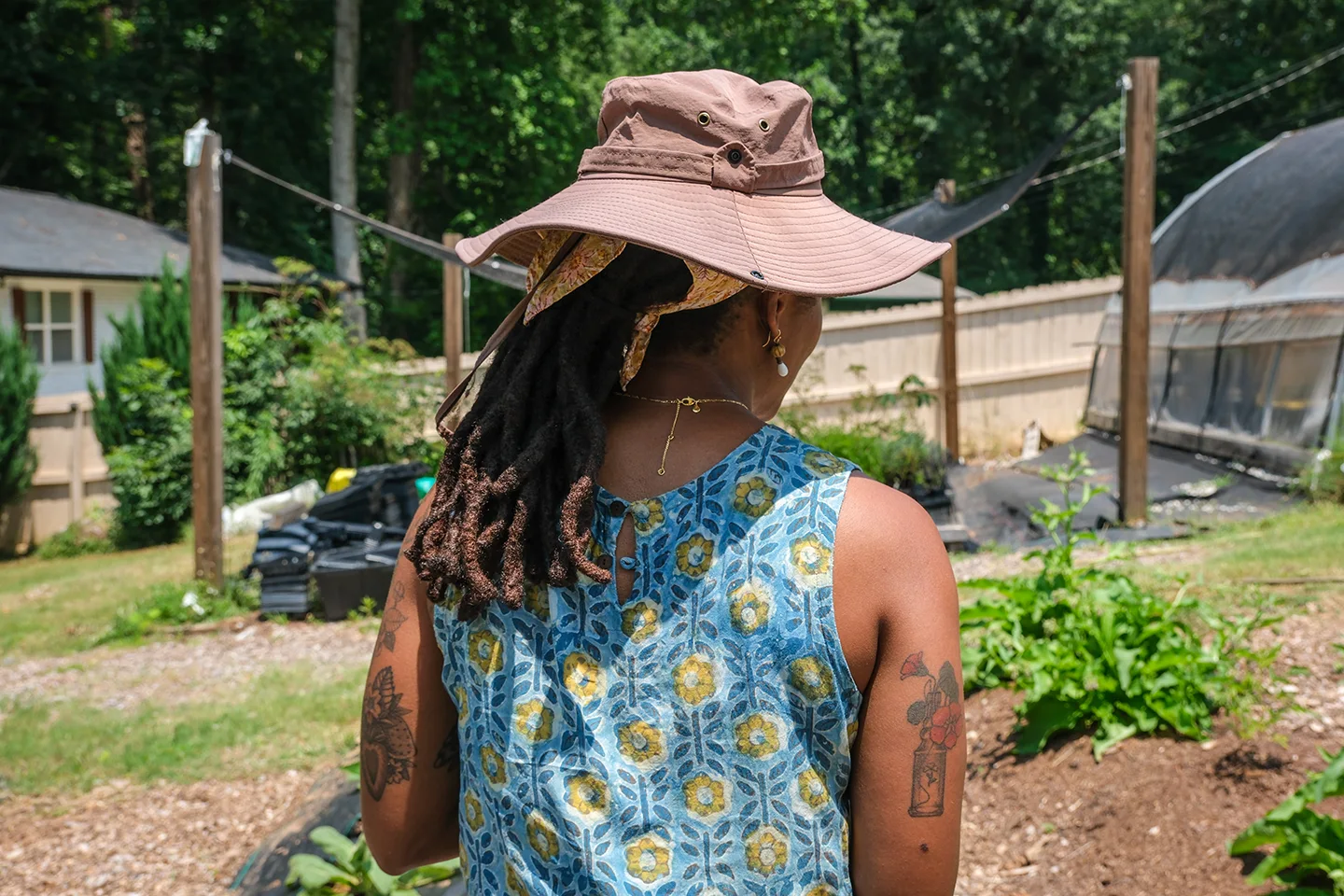
While Lacrete has returned to the tech industry, Bed Head is her “5-to-9.” From March to June and August to October, you can find Lacrete or Brabeck every Sunday at the Grant Park Farmers Market, offering up native flowers, medicinal plants, culinary herbs, and even the occasional fruit tree.
Lacrete is also training the next generation of Atlanta agricultural experts, through workshops and “community learning work days” typically held monthly. “We just want to teach everyone a new skill that they can then walk away and use in their own gardens.”
In an ideal world, Lacrete wants a nonprofit wing of Bed Head to train cohorts of young, Black farmers from southwest Atlanta, where “you have a very slim chance of moving out of poverty.”
“I hope to create a space for innovation and for folks that can’t go to UGA, that can’t go to school, or that are working full-time, or they’re taking care of their parents and they can’t do things outside of their neighborhood.”
“It’s a group project, keeping the city fed . . . We do not gatekeep in this community.”
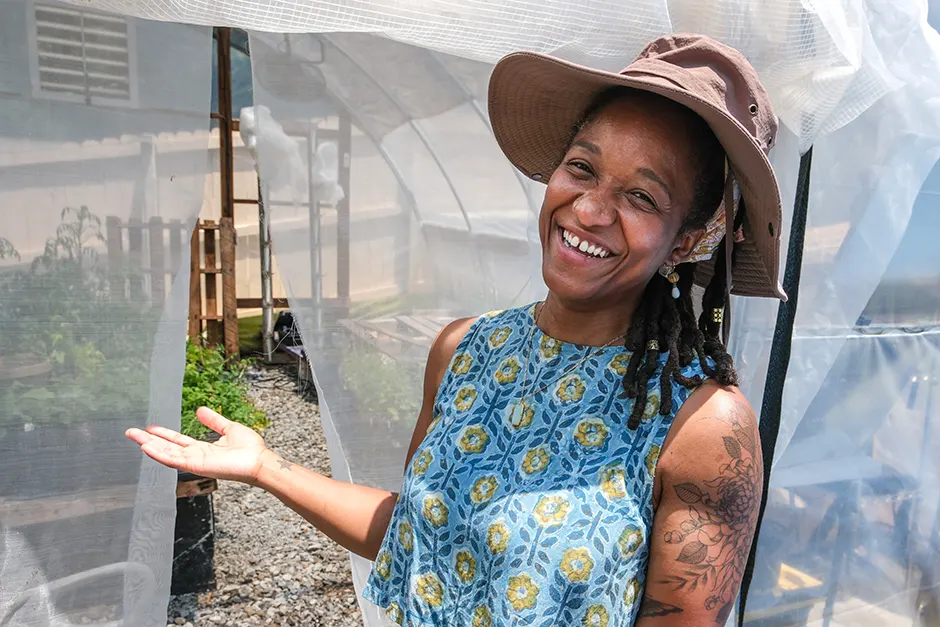

If you’d like to learn more about community learning work days, follow Bed Head on Instagram or subscribe to its newsletter here.
Editor: Christina Lee
Fact Checker: Joey Goodall
Canopy Atlanta Reader: Kamille Whittaker
I hope this story leaves you inspired by the power of community-focused journalism. Here at Canopy Atlanta, we're driven by a unique mission: to uncover and amplify the voices and stories that often go unheard in traditional newsrooms.
Our nonprofit model allows us to prioritize meaningful journalism that truly serves the needs of our community. We're dedicated to providing you with insightful, thought-provoking stories that shed light on the issues and stories that matter most to neighborhoods across Atlanta.
By supporting our newsroom, you're not just supporting journalism – you're investing in Atlanta. Small and large donations enable us to continue our vital work of uncovering stories in underrepresented communities, stories that deserve to be told and heard.
From Bankhead to South DeKalb to Norcross, I believe in the power of our journalism and the impact it can have on our city.
If you can, please consider supporting us with a small gift today. Your support is vital to continuing our mission.
Floyd Hall, co-founder