Canopy Atlanta asked over 180 Clarkston community members about the journalism they needed. This story emerged from that feedback.
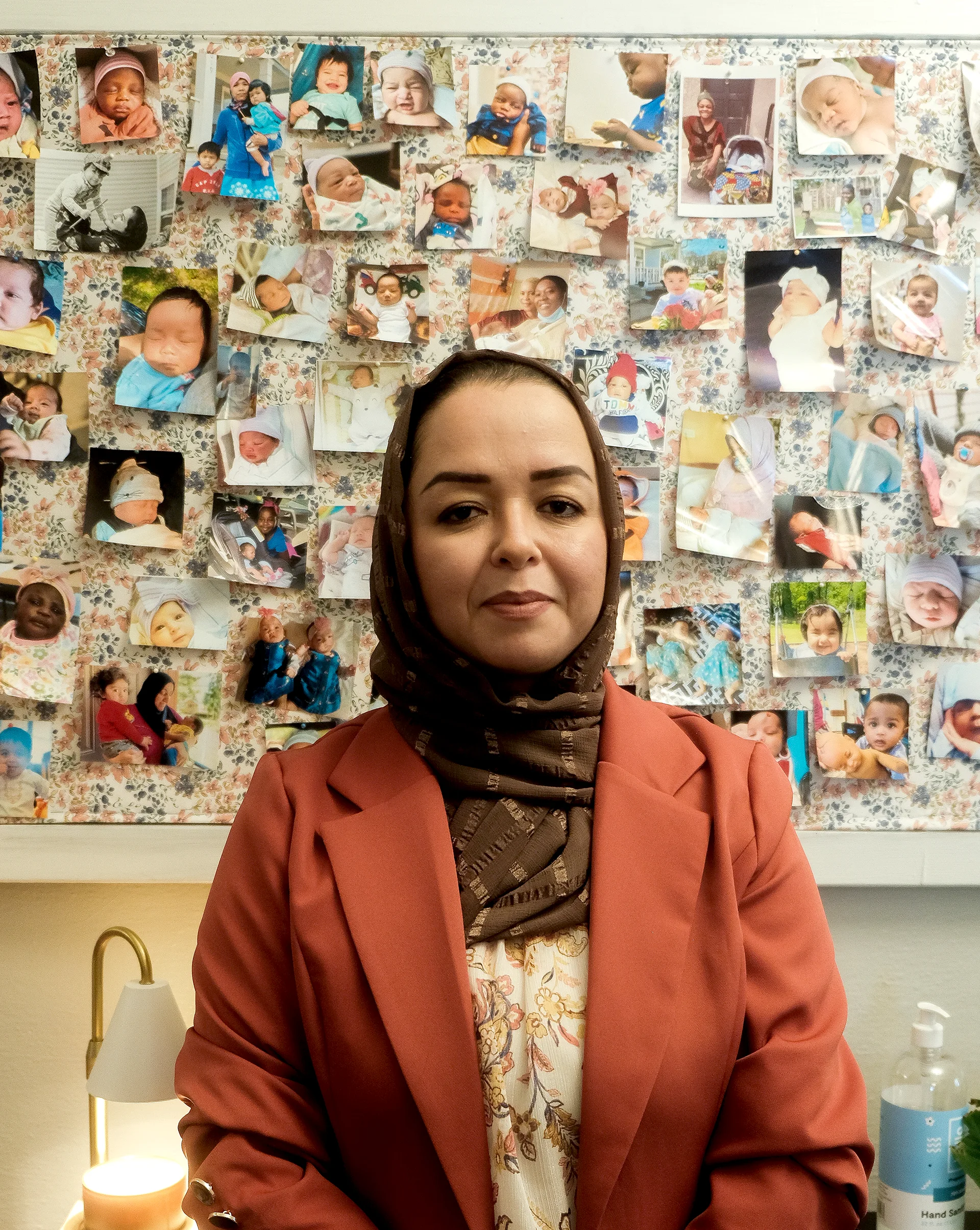
Canopy Atlanta also trains and pays community members, our Fellows, to learn reporting skills to better serve their community. Meena Khodayar, a reporter on this story, is a Canopy Atlanta Fellow.

I live with a small family of my own in a house with warm lights, steady internet, and a kitchen full of food.
But the truth I carry is quieter and heavier.
I have everything and still feel like I have nothing.
That emptiness comes from Afghanistan. From the people I love who are still there: my brother and two sisters, with their families.
My family’s life has always been marked by impossible choices. As a teenager, I remember my older brother and my mother sitting in her small brick house with fresh mint in the yard, surrounded by her young grandkids playing around her, trying to decide whether to buy flour to feed us or to pay for my school tuition. Even when there was no clear answer, my mother always chose my future. She believed that if I could study, I could create something better for all of us.
My mother’s greatest dream was simple: a house of her own.

When I came to America 12 years ago, I arrived in pursuit of better education and freedom. For the first time, I was choosing what was best for me—as a girl who deserved equal opportunity. I thought I would finally be able to fulfill my mother’s dream. But she passed away in 2022, and I could never give her what she truly deserved: a happy, safe, and peaceful life. For her, just a house.
That guilt follows me everywhere. Every time I sit in my room here, I think of the house my mother never lived to see. Soft light pours in from every side, slipping through the windows and settling on the family pictures I’ve placed around the room. When I open the window, the smell of fresh air and the sight of trees outside remind me of the greenery she always dreamed of having in a home of her own. Maybe that’s why this room is the only place where I truly feel like myself. Her pictures watch over me, pulling me back to the familiarity of home.
My family back in Afghanistan lives in a place where peace is rare and opportunities are rarer. They have less than I do. Less food, less safety, less hope for a future that feels fair.
I carry their souls with me.
My mother’s hands, rough and bleeding from crocheting washcloths and sweaters nonstop to pay for my tuition. She would quietly sell them to her sisters and cousins to avoid shame and embarrassment; where we come from, it is often not accepted for women to work or sell goods publicly.
My nephews’ and siblings’ laughter, which has grown quieter with time.
The way my father refused to ask for help even when he needed it.
It’s all with me, like my shadow. My inner voice.
Every morning I wake up to the same sounds: cars; my neighbor’s loud music; my other neighbor walking her dog, Flash. I make my saffron tea. I scroll through messages and the news. Life moves forward as usual. Inside me, a small persistent ache waits.
As a child, I used to sit by the window of my mother’s room at sunset, writing and looking up at the sky. I would watch planes tracing white lines across the clouds and tell myself: One day, that will be me. I dreamed of becoming a pilot, of flying like a bird, of traveling the world and living freely. I imagined myself soaring but always with my family in my heart, in my prayers, in my dreams. I whisper, God, help me get where I want to go, but with my family beside me.
That prayer is still with me. Even now, when people look at my life and think I should be happy, I feel the heavy truth. My family has nothing, and without them, all my achievements feel empty.
I carry both grief and gratitude.
My life in America has taught me that the world can be kind in practical ways and cruel in emotional ones. I learned how to present myself as composed and grateful. But compassion from strangers, their welcoming smiles, cannot reach the hollow place where my family’s laughter should be.
Guilt is its own heavy currency. It buys sleepless nights and the feeling that every small pleasure I allow myself is a betrayal. When friends celebrate promotions and small wins, I smile. But inside, I count the missed chances I think I owe my family. I think of all the times I turned down plans because I needed to save. I think of the times I spent money on myself and then lay awake imagining how that same money could have fixed a leak in our roof or paid for a medical bill.
I left because I believed leaving would be a way to save us. I left hoping I could build a life that would reach back and pull them forward. Instead, I find myself stuck in an impossible middle— materially safe, yet emotionally bankrupt.
Sometimes I feel like I don’t deserve any of this good life. Thinking of my sisters, I ask: How can we come from the same parents yet live such different realities? They are struggling with everything, while I have stability, safety, and choices. I ask myself all the time, how is this fair? That question keeps me from ever truly letting go, from living freely, from seeing what life in America can really feel like. There is always this quiet whisper: How? Why? Did you get everything you wanted? And I never know how to answer, because I never wanted to be alone. I never wanted to abandon my family and leave them behind.
I wanted this life, yes. But I never imagined the price would be endless loneliness.

I clearly remember telling God: Get me where I want to go, but with my family beside me. I never dreamed of a life where they were not part of it. I never imagined any reality without them in it.
To know that your loved ones are living in such a fragile situation that something as basic as internet access can disappear overnight—it is heartbreaking. When the Taliban shuts down an entire country’s internet services, you are left helpless. Unable to reach your own family. Unable to hear their voices. Thousands of families around the world are suddenly cut off from the people they love, with no news and no way to know if they are safe.
We are pushed back into the Stone Age, denied even the most basic right to speak, to reach out, to be seen. This kind of isolation is beyond physical—it’s emotional. It crushes your spirit in a way that feels almost irreversible.
I had hope that I would be able to bring my brother here after the Taliban took over Afghanistan. I worked day and night through the legal humanitarian parole process. Following USCIS guidance, he traveled to a third country, Pakistan, where he faced racism from local authorities and spent four years largely alone. He can’t stay in Pakistan, yet he can’t come to me either. Now he is being forced to return Afghanistan to nothing, to start his life over, while years of hope and effort are dismissed as though they meant nothing.
The recent statements from the U.S. president have affected me deeply, making me feel small and unworthy, as if those in power can simply decide that countries like Afghanistan, Somalia, and other Muslim-majority or minority nations are acceptable targets for a ban, without any regard for the human beings whose lives are destroyed in the process.
My prayer hasn’t changed. I still ask God to get me where I want to go, with my family beside me. I am still waiting for the answer.
Editor: Ann Hill Bond
Copy Editor: Christina Lee
Fact Checker: J.P. Irie
Canopy Atlanta Reader: TiBerni Hall
I hope this story leaves you inspired by the power of community-focused journalism. Here at Canopy Atlanta, we're driven by a unique mission: to uncover and amplify the voices and stories that often go unheard in traditional newsrooms.
Our nonprofit model allows us to prioritize meaningful journalism that truly serves the needs of our community. We're dedicated to providing you with insightful, thought-provoking stories that shed light on the issues and stories that matter most to neighborhoods across Atlanta.
By supporting our newsroom, you're not just supporting journalism – you're investing in Atlanta. Small and large donations enable us to continue our vital work of uncovering stories in underrepresented communities, stories that deserve to be told and heard.
From Bankhead to South DeKalb to Norcross, I believe in the power of our journalism and the impact it can have on our city.
If you can, please consider supporting us with a small gift today. Your support is vital to continuing our mission.
Floyd Hall, co-founder